


 Create Document

 Adobe PDF
 Microsoft Word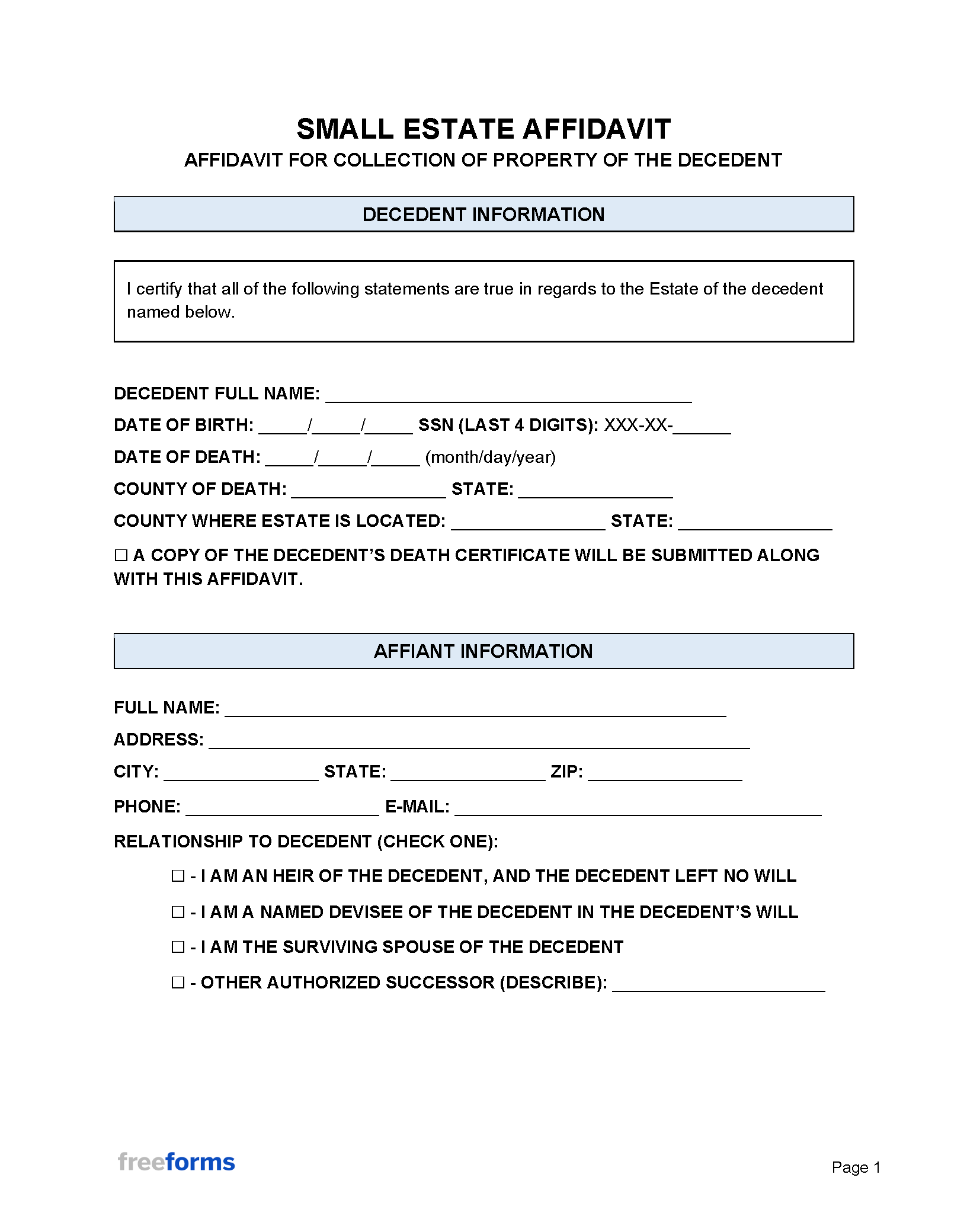
Key Features
- Filing Status: Can be filed by any rightful heir or beneficiary.
- Bypass Probate: Allows the estate to bypass the probate process.
- Transfer Time: Estate is transferred in weeks, not months or years.
- Cost ($): Can be filed without an attorney by paying the filing fee.
- Will or no Will: Can be filed whether or not a will was written.
By State
- Alabama
- Alaska
- Arizona
- Arkansas
- California
- Colorado
- Connecticut
- Delaware
- Florida
- Georgia
- Hawaii
- Idaho
- Illinois
- Indiana
- Iowa
- Kansas
- Kentucky
- Louisiana
- Maine
- Maryland
- Massachusetts
- Michigan
- Minnesota
- Mississippi
- Missouri
- Montana
- Nebraska
- Nevada
- New Hampshire
- New Jersey
- New Mexico
- New York
- North Carolina
- North Dakota
- Ohio
- Oklahoma
- Oregon
- Pennsylvania
- Rhode Island
- South Carolina
- South Dakota
- Tennessee
- Texas
- Utah
- Vermont
- Virginia
- Washington
- Washington D.C.
- West Virginia
- Wisconsin
- Wyoming
Who Can File a Small Estate Affidavit?
Typically, a spouse, child, or close family member of the deceased can file the document.
However, if the decedent left a will, the named executor is responsible for distributing the estate. Heirs will follow state “intestate succession” rules if there’s no will, prioritizing spouses, children, grandchildren, parents, and other close relatives.
The small estate affidavit goes by different names in varying states, such as “petition for summary distribution” or “affidavit for collection of personal property.” However, the process is generally similar.
How to File a Small Estate
1. Check State Requirements
Each state requires a waiting period before filing after the date of death. This ranges from 15 to 60 days, depending on state law. If no state-specific rule exists, contact the local probate court for guidance.
Determine the estate’s net value by subtracting debts and liabilities (like mortgages or funeral expenses) from total assets (like property, bank accounts, and insurance).
2. Gather the Required Documents
Depending on the State, commonly the local court will require the following documents:
- Death certificate: Commonly available from the Bureau of Vital Statistics or the local recorder.
- Last will: Any applicable wills written by the decedent.
- Ownership certificates: Such as ownership records, titles, and deeds for real property.
- Itemized list: An itemized list of the estate’s assets and debts.
3. Complete the Affidavit
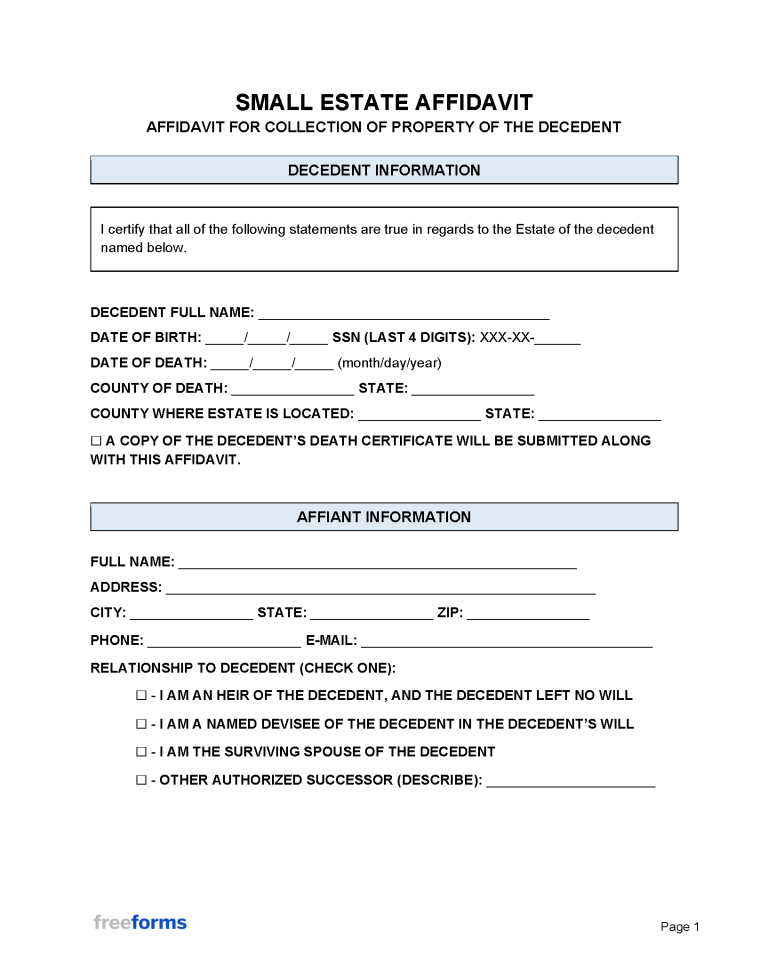
Using the state-specific version of the small estate affidavit increases the chances of court approval. Details within the form include:
- Information on the decedent.
- Information on the heir of contact and heirs.
- All required personal details (your relationship to the decedent).
- A breakdown of assets, debts, and intended recipients.
- Notarization or witness signatures (depending on your state’s requirements).
If there’s no executor named in a will, an heir can usually complete and submit the form.
4. Notify Family and Heirs
All known heirs and potential beneficiaries must be notified of the filing, typically via certified mail with return receipt.
Keep proof of delivery for your records. If the decedent died without a will, contact heirs in the order defined by state succession laws.
5. File With the Probate Court and Collect the Assets
Submit the completed affidavit, all required attachments, and filing fees to the probate court or county clerk where the decedent lived.
If accepted, the affidavit becomes your legal tool to claim the decedent’s property from banks, title offices, or other holders of the assets.
Requirements By State
| State | Maximum Amounts ($) | Time to Wait After Decedent’s Death | Signing Requirements |
| Alabama | $47,000 | No time requirement | Must be “verified” |
| Alaska | $150,000 – $150k max for vehicles & $50k for personal property | 30 days | Notary public |
| Arizona | $200,000 for personal property | 30 days | Notary public |
| Arkansas | $100,000, less encumbrances (excluding homestead & statutory allowances) | 45 days | Notary public |
| California | $208,850 (adjusted for inflation every 3 years) | 40 days | Signed under penalty of perjury |
| Colorado | $88,000 (adjusted annually; personal property only) | 10 days | Notary public |
| Connecticut | $40,000 in personal property only | No time requirement | Signed under penalty of false statement |
| Delaware | $30,000 in personal property; no real estate | 30 days | Sworn through the Register of Wills |
| Florida | $75,000 (summary administration) | No time requirement | Signed & verified |
| Georgia | No dollar limit; $15,000 cap for bank-account affidavit | No time requirement | Notary public or probate court clerk |
| Hawaii | $100,000 (vehicles excluded from limit) | No time requirement | Sworn under oath |
| Idaho | $100,000, less liens & encumbrances | 30 days | Sworn under oath |
| Illinois | $150,000 in personal property | No time requirement | Notary public |
| Indiana | $100,000, less liens & encumbrances (personal property only) | 45 days | Notary public |
| Iowa | $100,000 in personal property | 40 days | Under penalty of perjury |
| Kansas | $75,000 (personal property only) | No time requirement | Notary public |
| Kentucky | $30,000 in personal property | No time requirement | Notary public |
| Louisiana | $125,000 gross estate (real & movable property) | No time requirement | Surviving spouse & competent heir(s), two signers |
| Maine | $52,500 (base $40,000, adjusted annually) | 30 days | Notary public (Form AF-102) |
| Maryland | $50,000 ($100,000 if spouse is sole heir) | No time requirement | Under penalties of perjury (Form RW1103) |
| Massachusetts | $25,000 in personal property, plus one vehicle | 30 days | Under penalties of perjury |
| Michigan | $53,000 (adjusted annually; no real property) | 28 days | Notary public |
| Minnesota | $75,000, less liens & encumbrances | 30 days | Sworn affidavit, with certified death record |
| Mississippi | $75,000 (personal property only) | 30 days | Notary public |
| Missouri | $40,000, less liens & encumbrances | 30 days | Sworn affidavit, with clerk’s certificate |
| Montana | $100,000, less liens & encumbrances | 30 days | Notary public |
| Nebraska | $100,000 in personal property | 30 days | Notary public |
| Nevada | $25,000 ($150,000 for surviving spouse) | 40 days | Notary public |
| New Hampshire | No dollar limit | 6–12 months after administrator appointed | Sworn closing affidavit |
| New Jersey | $50,000 for spouse/partner; $20,000 for other heirs | No time requirement | Sworn before the Surrogate |
| New Mexico | $50,000, less liens & encumbrances (no real estate) | 30 days | Notary public |
| New York | $50,000 in personal property | No time requirement | Notary public |
| North Carolina | $20,000 ($30,000 if spouse is sole heir) | 30 days | Notary public or Clerk of Superior Court |
| North Dakota | $100,000, less liens & encumbrances | 30 days | Sworn affidavit |
| Ohio | $35,000 ($100,000 if spouse is sole heir) | No time requirement | Notary public or probate deputy clerk |
| Oklahoma | $50,000, less liens & encumbrances | 10 days | Notary public |
| Oregon | $75,000 personal property + $200,000 real property | 30 days | Under penalty of perjury |
| Pennsylvania | $50,000 gross personal estate | No time requirement | Verified petition |
| Rhode Island | $15,000 in personal property | 30 days | Verified by oath or affirmation |
| South Carolina | $45,000, less liens & encumbrances | 30 days | Sworn affidavit, filed with probate court |
| South Dakota | $100,000 (personal property only) | 30 days | Sworn affidavit |
| Tennessee | $50,000 in personal property | 45 days | Sworn affidavit (bond may be required) |
| Texas | $75,000, excluding homestead & exempt property (intestate only) | 30 days | Two disinterested witnesses + distributees; notarized |
| Utah | $100,000, less liens & encumbrances | 30 days | Notary public |
| Vermont | $45,000 (personal property only) | No time requirement | Sworn closing statement, with bond |
| Virginia | $75,000 personal estate | 60 days | Sworn by all known successors |
| Washington | $100,000, less liens & encumbrances | 40 days | Notary public |
| Washington D.C. | $40,000 (no real property) | 60 days | Sworn by all known successors |
| West Virginia | $50,000 personal + $100,000 real property | 30–60 days | Notary public |
| Wisconsin | $50,000 (real & personal property) | No time requirement | Notary public |
| Wyoming | $400,000, less liens & encumbrances | 30 days | Notary public |
 Chat with a Lawyer