


 Create Document

 Adobe PDF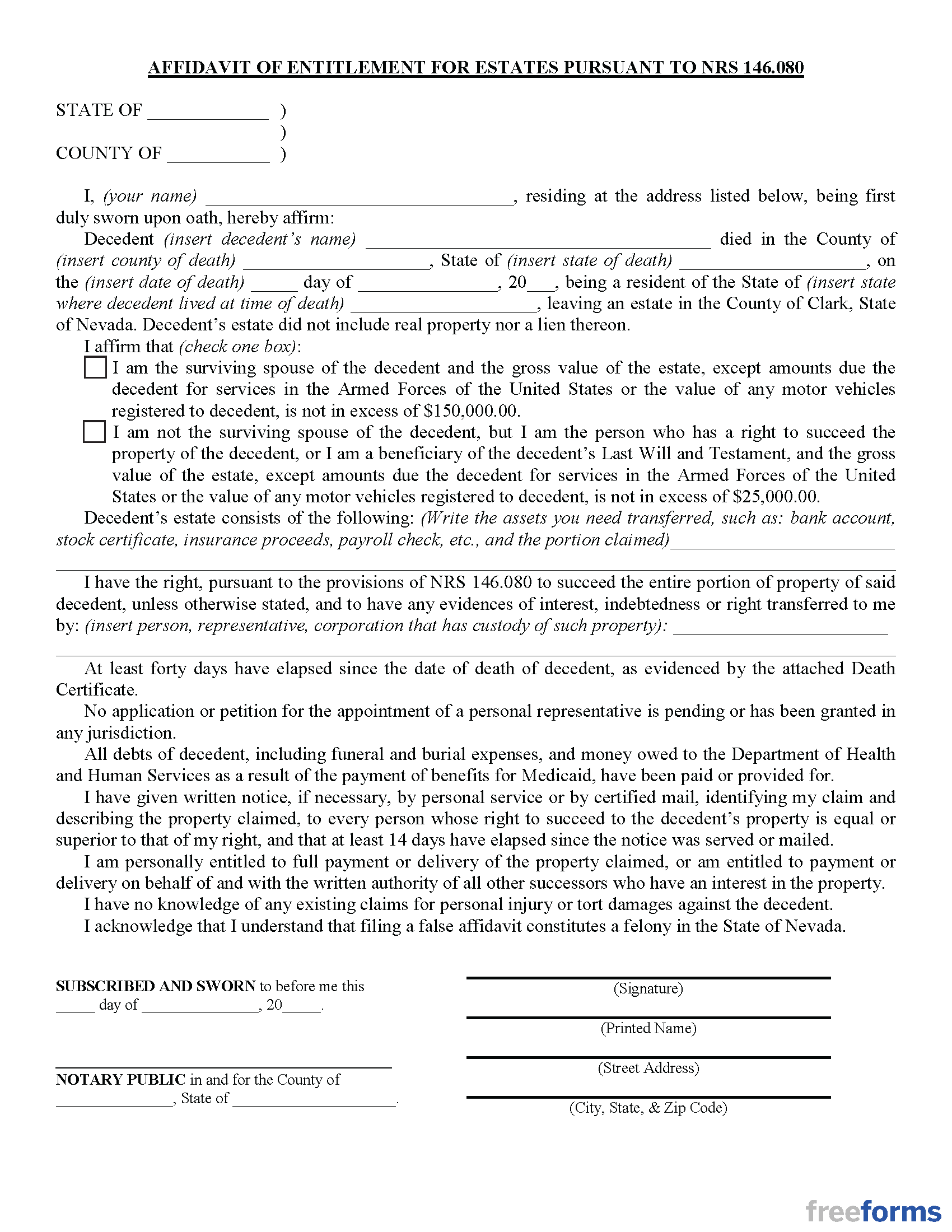
State Laws
- Maximum Amount: $25,000 (gross value of the decedent’s Nevada property) for most claimants, or $150,000 when the affiant is the surviving spouse.[1]
- Signing Requirements: Sworn before a notary public.[2]
- Where to File: The affidavit is presented directly to the person or institution holding the asset.[3]
- When to File: 40 days after death for the affidavit.[4]
- Survivor Requirements: Nevada does not use a 120-hour survival rule.[5]
Rightful Heirs (Hierarchy)
If the decedent did not have a will, the beneficiary hierarchy is as follows:
- Spouse: The surviving spouse receives all of the community property.[6] For the decedent’s separate property, the spouse receives one-half if the decedent left one child (or that child’s descendants); one-third if the decedent left more than one child; one-half if the decedent left no children but a parent or sibling; and all of it if the decedent left no children, parent, or sibling.[7][8]
- No Spouse, Children: The separate property not passing to the spouse goes to the children; one child takes one-half; two or more children share the rest by representation. If there is no surviving spouse, the children take the entire estate.[9]
How to File a Small Estate
Step 1 – Wait 40 Days
At least 40 days must pass after the decedent’s death before the affidavit may be used.[10]
Step 2 – Confirm the Estate Qualifies
The decedent must have left no Nevada real property, and the gross value of the Nevada property (excluding military pay and registered vehicles) must be $25,000 or less, or $150,000 or less if the affiant is the surviving spouse. Funeral expenses and debts must be paid or provided for, and no probate may be pending.[11]
Step 3 – Give Notice to Other Successors
Give written notice of the claim and a description of the property to any other successors at least 14 days before presenting the affidavit.[12]
Step 4 – Prepare and Notarize the Affidavit
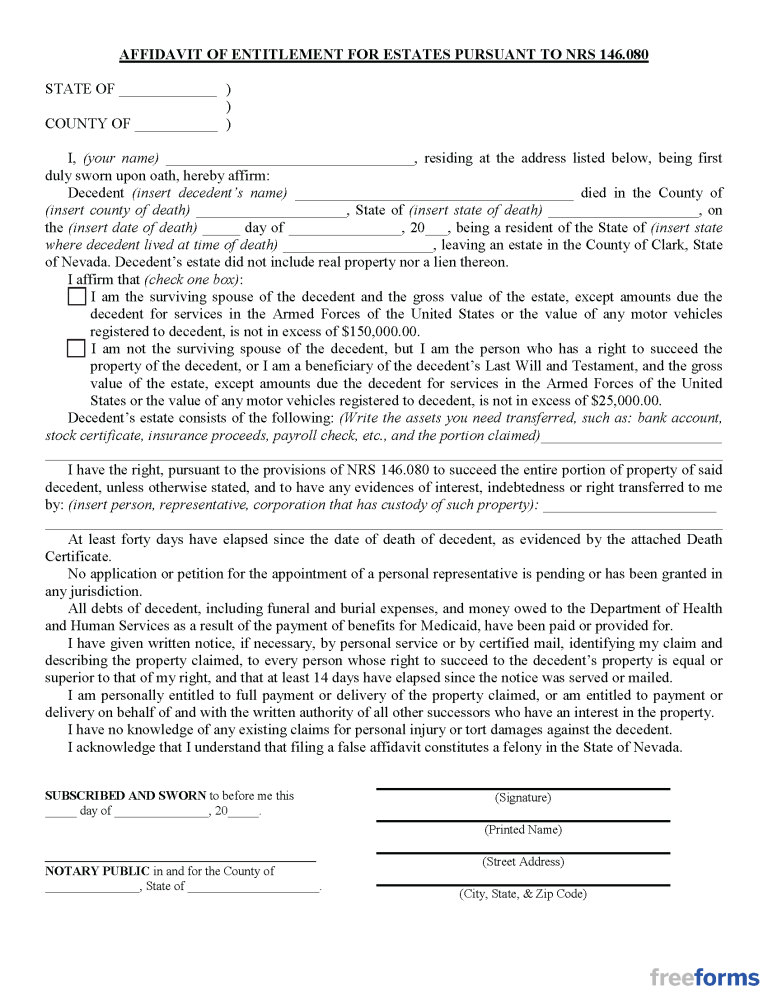
Complete the Affidavit of Entitlement stating the required facts, and sign it before a notary public.[13]
Step 5 – Present the Affidavit to the Asset Holder
Present the affidavit, with a certified copy of the death certificate, to the bank, transfer agent, or other holder of the property to obtain payment or transfer. (For larger estates, file a petition for a set-aside without administration with the district court.)[14]
Sample
Download: PDF
Sources
- Nev. Rev. Stat. § 146.080
- Nev. Rev. Stat. § 146.080
- Nev. Rev. Stat. § 146.080
- Nev. Rev. Stat. § 146.080
- Nev. Rev. Stat. § 135.020
- Nev. Rev. Stat. § 123.250
- Nev. Rev. Stat. § 134.040
- Nev. Rev. Stat. § 134.050
- Nev. Rev. Stat. § 134.040
- Nev. Rev. Stat. § 146.080
- Nev. Rev. Stat. § 146.080
- Nev. Rev. Stat. § 146.080
- Nev. Rev. Stat. § 146.080
- Nev. Rev. Stat. § 146.080
 Chat with a Lawyer