


 Create Document

 Adobe PDF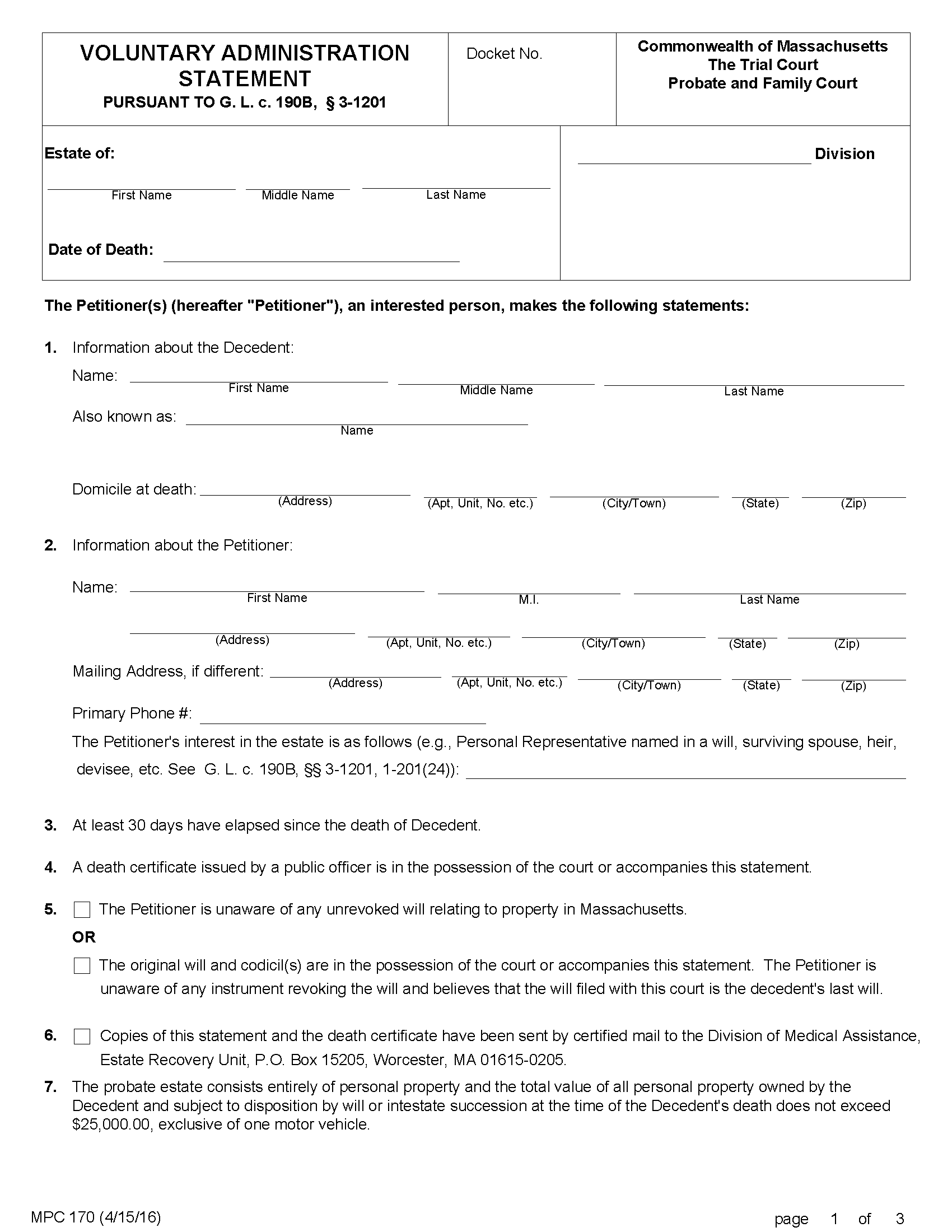
State Laws
- Maximum Amount: $25,000 in personal property, excluding one motor vehicle owned by the decedent. The estate cannot include real estate.[1]
- Signing Requirements: The statement is signed under the penalties of perjury.[2]
- Where to File: With the Probate and Family Court of the county of the decedent’s domicile, after confirming no petition for a personal representative has been filed.[3]
- When to File: 30 days after death.[4]
- Survivor Requirements: None.
Rightful Heirs (Hierarchy)
If the decedent did not have a will, the beneficiary hierarchy is as follows:
- Spouse: The surviving spouse receives the entire estate. Massachusetts guarantees the spouse a first share of at least $100,000, which is more than the $25,000 voluntary administration limit.[5]
- No Spouse, Children: If there is no surviving spouse, the estate passes to the decedent’s descendants, with a deceased child’s share passing to that child’s descendants.[6]
How to File a Small Estate
Step 1 – Wait 30 Days
At least 30 days must pass after the decedent’s death, and no petition for a personal representative may have been filed.[7]
Step 2 – Confirm the Estate Qualifies
The estate must consist entirely of personal property worth $25,000 or less, not counting one motor vehicle, with no real estate.[8]
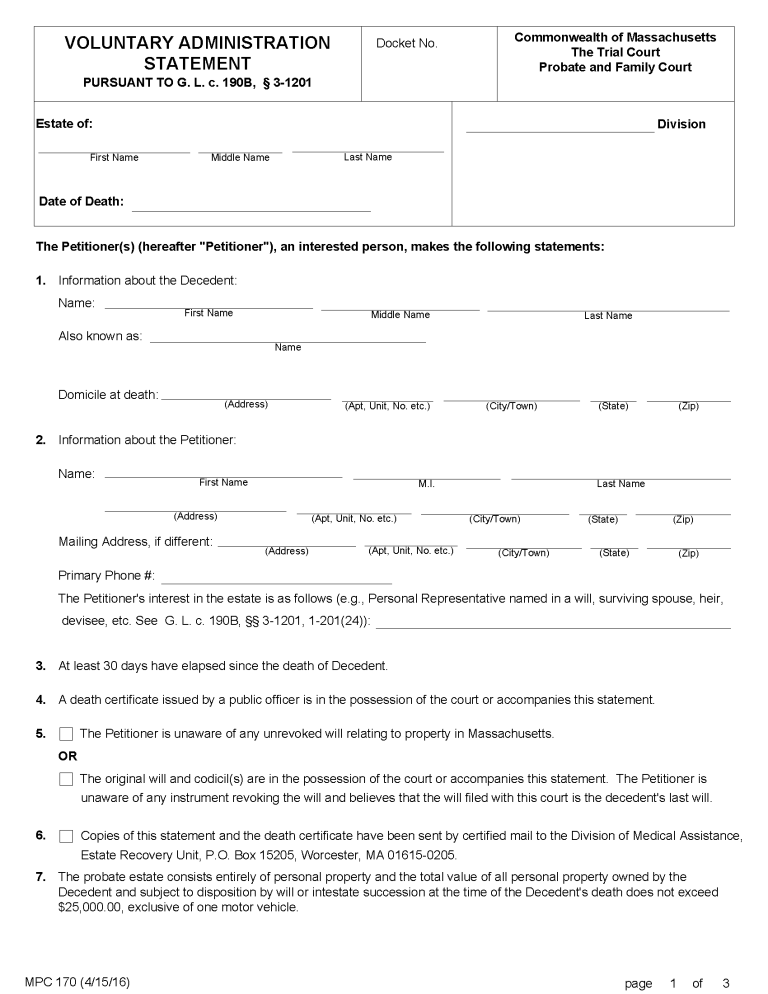
Step 3 – Complete the Voluntary Administration Statement (MPC 170)
Complete Form MPC 170, listing the assets and their values and the persons entitled to the estate.[9]
Step 4 – File With the Probate and Family Court
Sign the statement under the penalties of perjury and file it, with a certified copy of the death certificate (and the will, if any), in the Probate and Family Court of the decedent’s county.[10]
Step 5 – Collect and Distribute the Property
As voluntary personal representative, collect the assets, pay the funeral and last-illness expenses, and then debts, and distribute the balance to those entitled.[11]
Sample
Download: PDF
 Chat with a Lawyer