


 Create Document

 Adobe PDF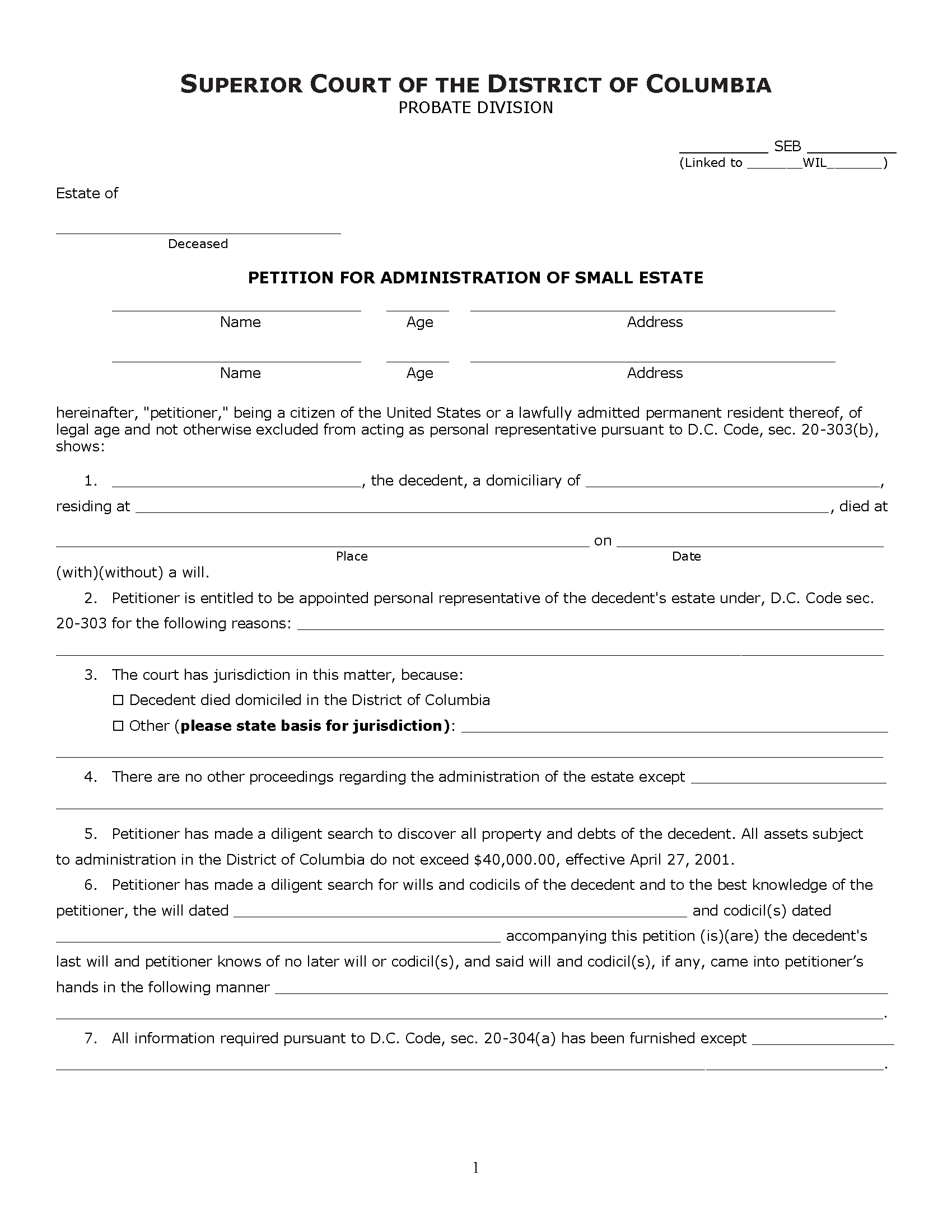
State Laws
- Maximum Amount: $40,000, the value of the decedent’s estate. The affidavit cannot be used if the estate includes an interest in real property.[1][2]
- Signing Requirements: A sworn affidavit made by all of the known successors.[3]
- Where to File: Not filed with the court, presented directly to the person or institution holding the asset.[4]
- When to File: 60 days after death.[5]
- Survivor Requirements: A rightful heir must survive the decedent by at least 120 hours (5 days).[6]
Rightful Heirs (Hierarchy)
If the decedent did not have a will, the beneficiary hierarchy is as follows:
- Spouse: The surviving spouse or domestic partner receives the entire estate if the decedent left no descendants or parents; three-quarters if there are no descendants but a surviving parent; two-thirds if all of the decedent’s descendants are also the spouse’s and the spouse has no other descendants; and one-half if the decedent left descendants from another relationship (or the spouse has other descendants).[7]
- No Spouse, Children: The share not passing to the spouse is divided equally among the decedent’s children, with a deceased child’s share passing to that child’s descendants. If there is no surviving spouse, the children take the entire estate.[8]
How to File a Small Estate
Step 1 – Wait 60 Days
At least 60 days must pass after the decedent’s death before the affidavit may be used.[9]
Step 2 – Confirm the Estate Qualifies
The value of the estate must be $40,000 or less, the estate must not include an interest in real property, and no personal representative may have been appointed.[10]
Step 3 – Prepare the Affidavit
All of the known successors prepare the affidavit, stating the value of the estate, that 60 days have elapsed, that the estate includes no real property, and each successor’s basis of entitlement, and naming the designated successor to receive the asset.[11]
Step 4 – Sign and Notarize
All known successors sign and swear to the affidavit before a notary.[12]
Step 5 – Present the Affidavit to the Asset Holder
Present the affidavit to the bank, transfer agent, or other holder of the small asset to obtain payment or delivery to the designated successor.[13]
Sample
Download: PDF
 Chat with a Lawyer