


 Create Document

 Adobe PDF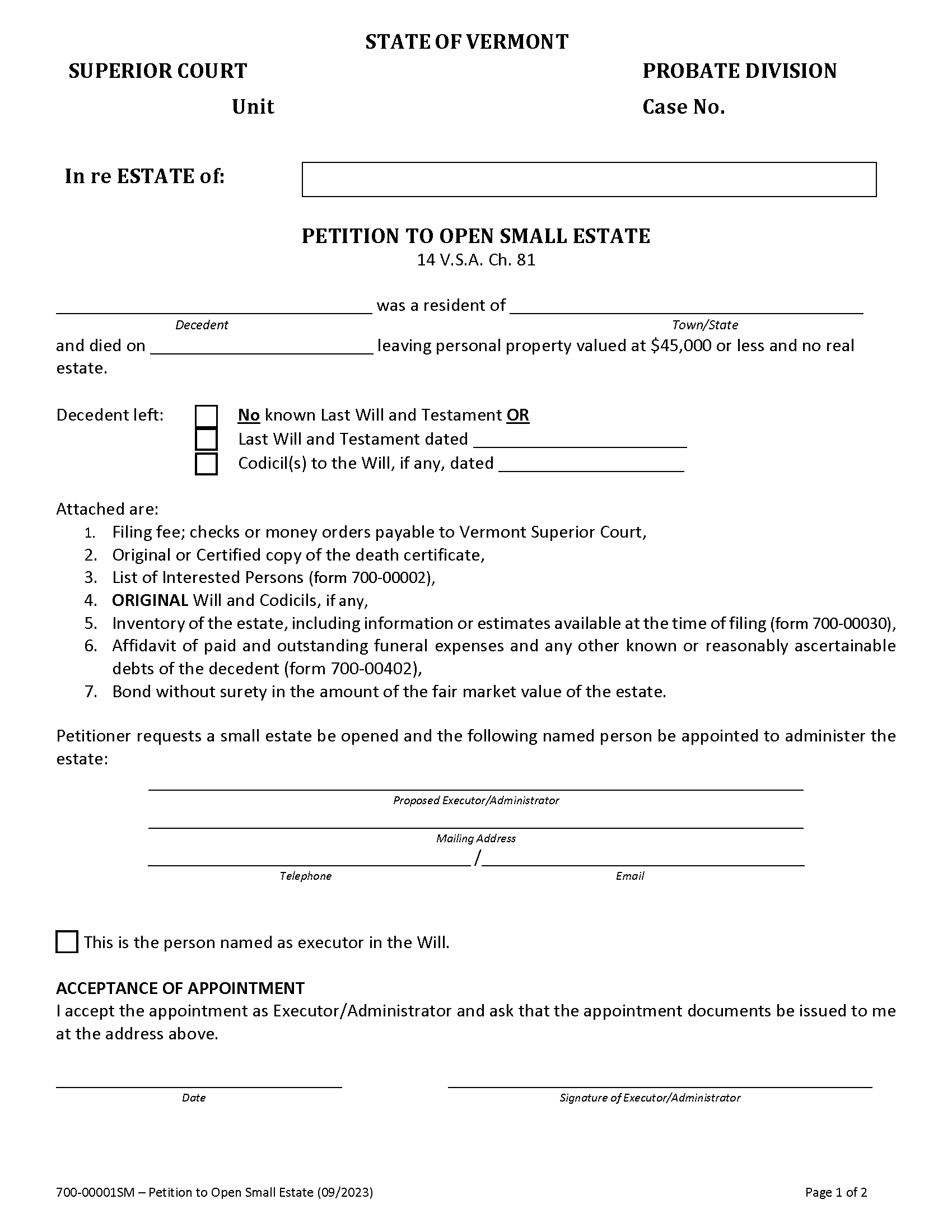
State Laws
- Maximum Amount: $45,000, the fair market value of the estate, which must consist entirely of personal property (a qualifying timeshare is allowed). Real property is not eligible.[1]
- Signing Requirements: The closing statement is sworn; a small-estate administration bond is filed (without surety unless the judge orders otherwise).[2][3]
- Where to File: With the Probate Division of the Superior Court in the unit where the decedent was domiciled.[4]
- When to File: No pre-filing waiting period; interested persons who have not consented receive 14 days to object.[5]
- Survivor Requirements: A rightful heir must survive the decedent by at least 120 hours (5 days).[6]
Rightful Heirs (Hierarchy)
If the decedent did not have a will, the beneficiary hierarchy is as follows:
- Spouse: The surviving spouse receives the entire estate if the decedent left no descendants, or if all of the decedent’s descendants are also the spouse’s.[7] If the decedent left descendants from another relationship, the spouse receives one-half, and the descendants share the other half.[8]
- No Spouse, Children: The share not passing to the spouse goes to the decedent’s descendants by representation, with a deceased child’s share passing to that child’s descendants. If there is no surviving spouse, the descendants take the entire estate.[9]
How to File a Small Estate
Step 1 – Confirm the Estate Qualifies
The estate must consist entirely of personal property worth $45,000 or less, with no real estate (a qualifying timeshare is allowed).[10]
Step 2 – Gather the Documents
Gather a certified death certificate, the original will (if any), and the paid funeral expense bill.[11]
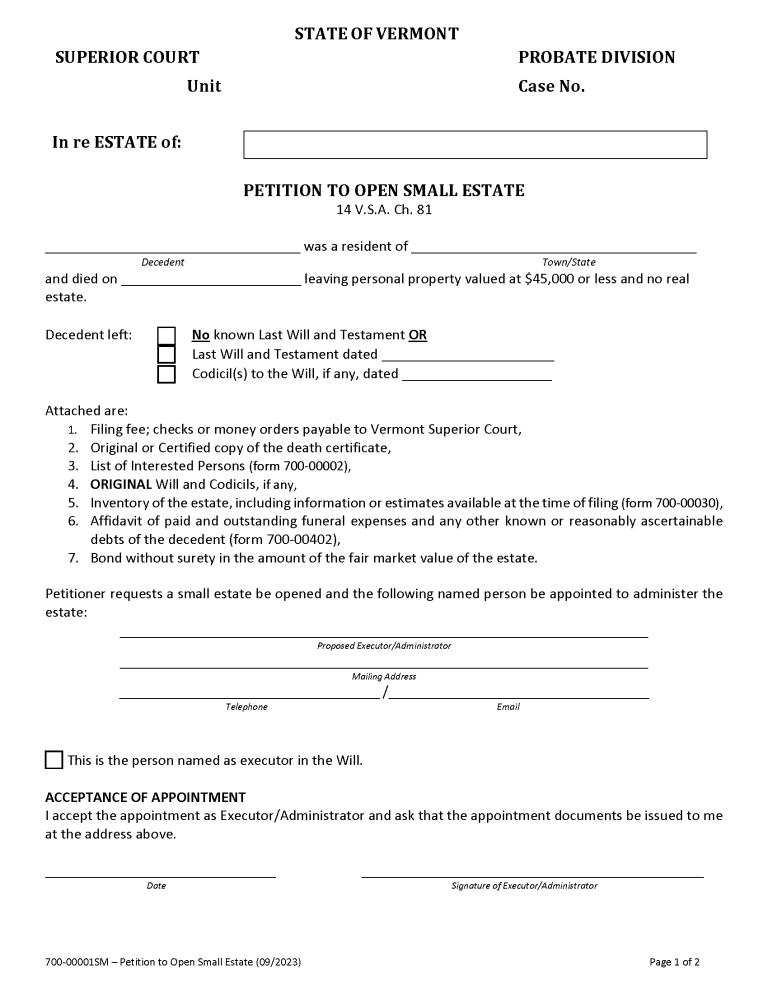
Step 3 – File the Petition to Open a Small Estate
File the petition with the Probate Division of the decedent’s unit, along with the list of interested persons, the inventory schedule, the affidavit of funeral expenses and debts, and the small-estate bond.[12][13]
Step 4 – Give Notice and Receive Letters
Interested persons who did not consent are notified and have 14 days to object; absent objection, the court approves the appointment and issues letters of administration.[14][15]
Step 5 – Pay Debts, Distribute, and Close
Pay the known debts, distribute the balance to those entitled, and file the sworn closing statement; the court may then discharge the fiduciary.[16]
Sample
Download: PDF
 Chat with a Lawyer