


 Create Document

 Adobe PDF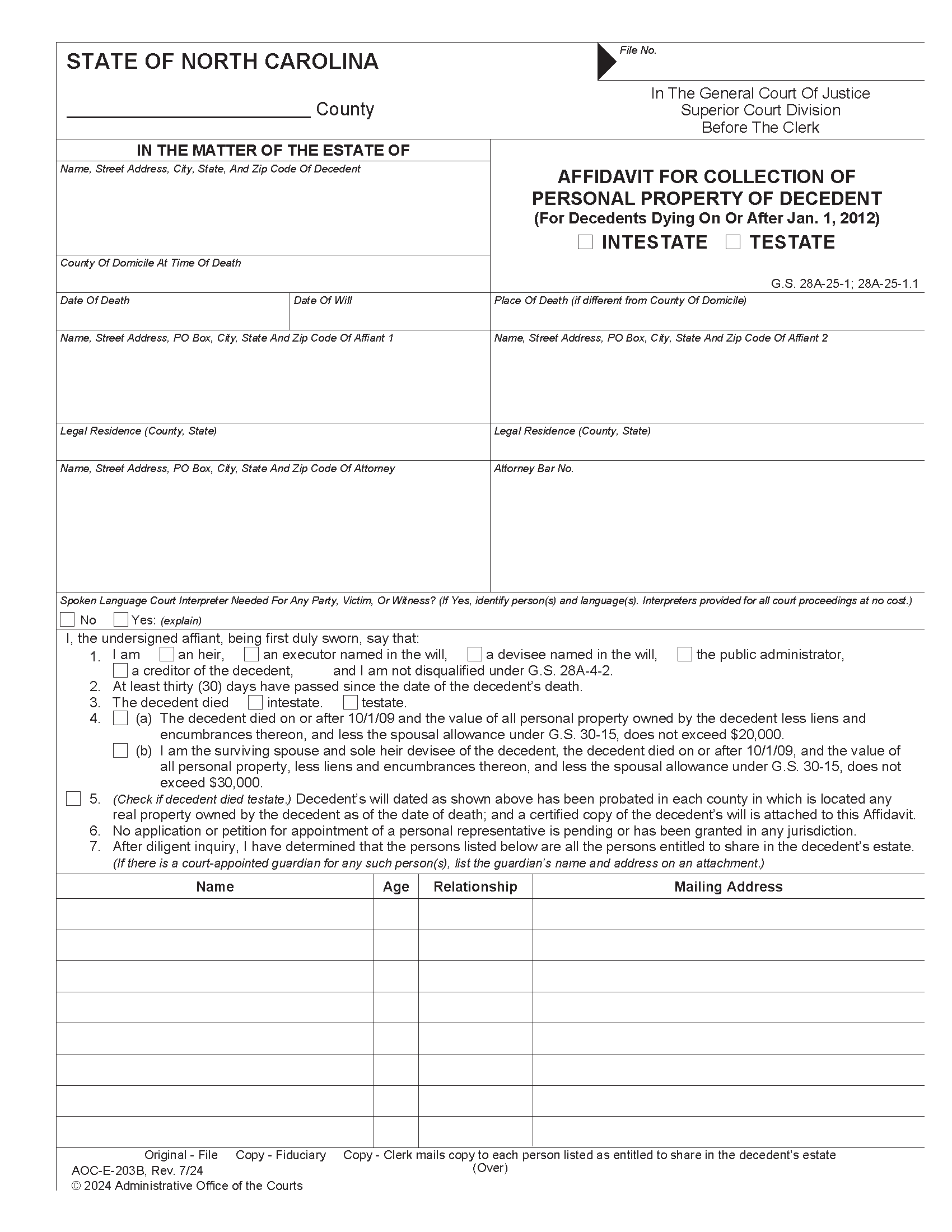
State Laws
- Maximum Amount: $20,000 in personal property after liens and encumbrances, or $30,000 if the surviving spouse is the sole heir (after the spousal year’s allowance).[1]
- Signing Requirements: Sworn before a notary public or the Clerk of Superior Court.[2]
- Where to File: With the Clerk of Superior Court of the county where the decedent was domiciled.[3]
- When to File: 30 days after death.[4]
- Survivor Requirements: A rightful heir must survive the decedent by at least 120 hours (5 days).[5]
Rightful Heirs (Hierarchy)
If the decedent did not have a will, the beneficiary hierarchy is as follows:
- Spouse: The surviving spouse receives all of the personal property collected through this affidavit. North Carolina gives the spouse the first $60,000 of personal property before any sharing with children, and the small estate limit ($20,000, or $30,000 for a sole-heir spouse) falls entirely below that floor.[6]
- No Spouse, Children: If there is no surviving spouse, the personal property passes to the decedent’s descendants, with a deceased child’s share passing to that child’s descendants.[7][8]
How to File a Small Estate
Step 1 – Wait 30 Days
At least 30 days must pass after the decedent’s death before the affidavit may be used.[9]
Step 2 – Confirm the Estate Qualifies
The decedent’s personal property after liens and encumbrances must be $20,000 or less, or $30,000 or less if the surviving spouse is the sole heir, and no personal representative may have been appointed or be pending.[10]
Step 3 – Complete Form AOC-E-203B
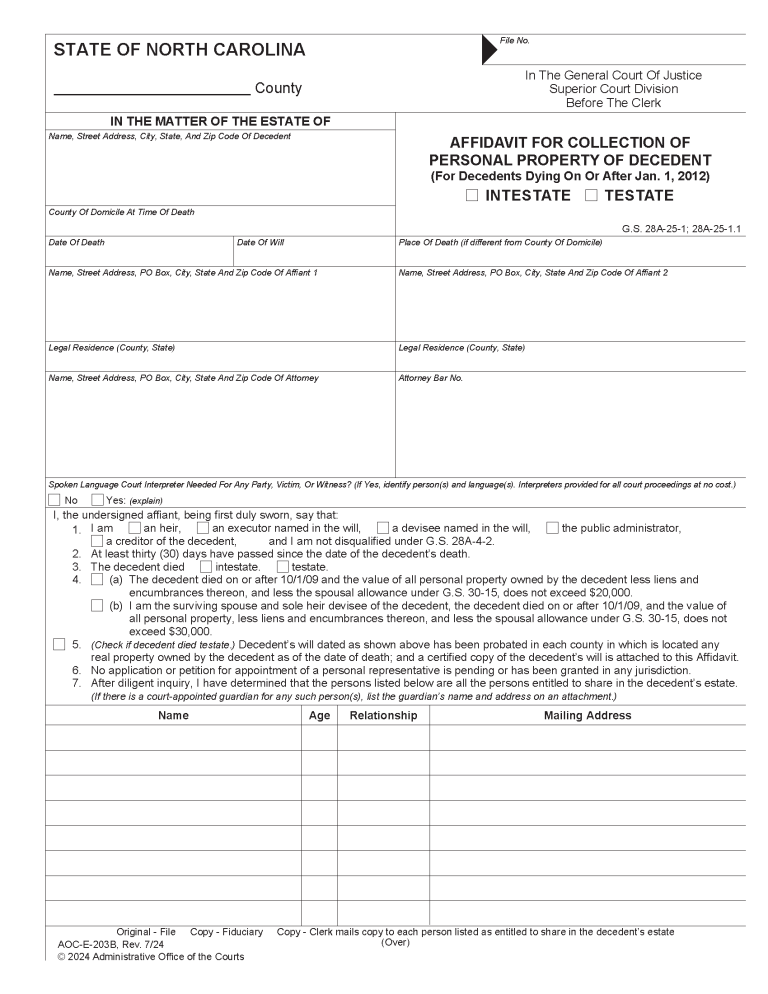
Complete the Affidavit for Collection of Personal Property of Decedent (Form AOC-E-203B), listing the heirs, their relationships, and a description of the property.[11]
Step 4 – Swear and File the Affidavit
Swear the affidavit before a notary public or the Clerk of Superior Court, and file it with the Clerk of Superior Court in the decedent’s county.[12]
Step 5 – Collect, Distribute, and Close
Present a certified copy of the affidavit to collect the property. Pay the spouse’s and children’s allowances first, then debts and claims in statutory priority, and distribute the remainder to those entitled. File Form AOC-E-204 within 90 days after filing the initial affidavit, unless the clerk grants an extension after a timely report.[13][14]
Sample
Download: PDF
Sources
- N.C. Gen. Stat. § 28A-25-1
- N.C. Gen. Stat. § 28A-25-1
- N.C. Gen. Stat. § 28A-25-1(b)
- N.C. Gen. Stat. § 28A-25-1(a)
- N.C. Gen. Stat. § 28A-24-2
- N.C. Gen. Stat. § 29-14
- N.C. Gen. Stat. § 29-15
- N.C. Gen. Stat. § 29-16
- N.C. Gen. Stat. § 28A-25-1(a)
- N.C. Gen. Stat. § 28A-25-1
- N.C. Gen. Stat. § 28A-25-1
- N.C. Gen. Stat. § 28A-25-1(b)
- N.C. Gen. Stat. § 28A-25-1
- N.C. Gen. Stat. § 28A-25-3
 Chat with a Lawyer