


 Create Document

 Adobe PDF
 Microsoft Word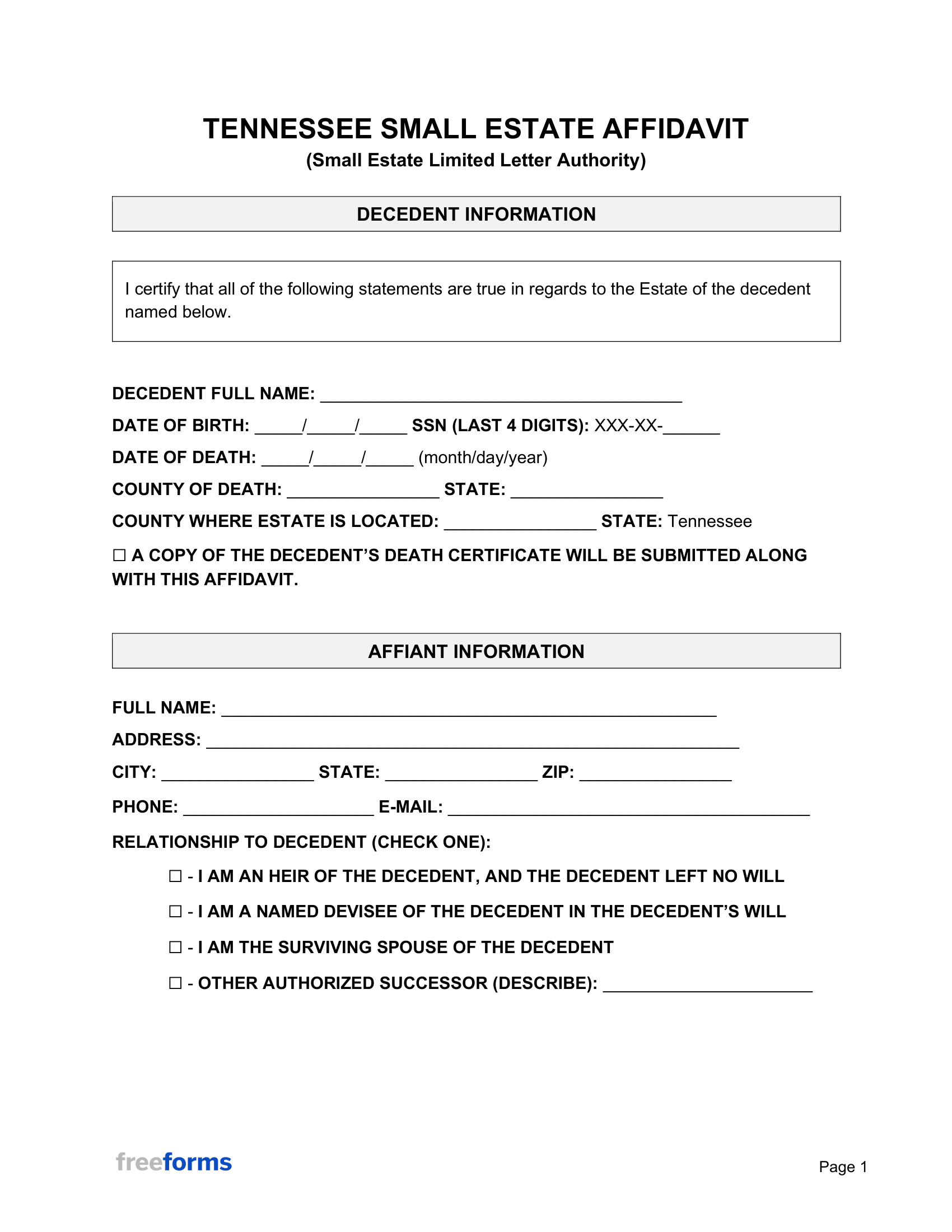
State Laws
- Maximum Amount: $50,000, the value of the decedent’s probate personal property. The affidavit covers personal property only, not real estate.[1][2]
- Signing Requirements: A sworn affidavit; the affiant may be required to post a bond equal to the value of the estate, unless waived.[3]
- Where to File: With the clerk of the court exercising probate jurisdiction in the decedent’s county.[4]
- When to File: 45 days after death, if no petition for a personal representative has been filed.[5]
- Survivor Requirements: A rightful heir must survive the decedent by at least 120 hours (5 days).[6]
Rightful Heirs (Hierarchy)
If the decedent did not have a will, the beneficiary hierarchy is as follows:
- Spouse: If the decedent left no descendants, the surviving spouse receives the entire estate. If the decedent left children, the spouse takes a child’s share, but never less than one-third, so with one child the spouse takes one-half, and with two or more children the spouse takes one-third.[7]
- No Spouse, Children: The children share the estate with the surviving spouse, each taking an equal share (subject to the spouse’s one-third minimum), with a deceased child’s share passing to that child’s descendants. If there is no surviving spouse, the children take the entire estate.[8]
How to File a Small Estate
Step 1 – Wait 45 Days
At least 45 days must pass after the decedent’s death unless the court waives the waiting period for good cause, and no petition for a personal representative may have been filed.[9]
Step 2 – Confirm the Estate Qualifies
The decedent’s probate personal property must be $50,000 or less, with no real property included in the small-estate proceeding.[10]
Step 3 – Prepare the Sworn Small-Estate Filing
Prepare the sworn small-estate petition or affidavit required by the court, listing the assets, debts, and persons entitled, and attach the original will if one exists.[11]
Step 4 – File With the Probate Clerk and Address Bond
File with the clerk of the court exercising probate jurisdiction, pay the filing fee, and post bond equal to the estate value unless the bond is waived under the statute.[12]
Step 5 – Receive Limited Authority and Administer the Asset
After the court accepts the filing, obtain the limited letters or certified authority issued for the small estate. Use that authority to collect and preserve the personal property, pay proper expenses and claims, and distribute the remainder to those entitled.[13]
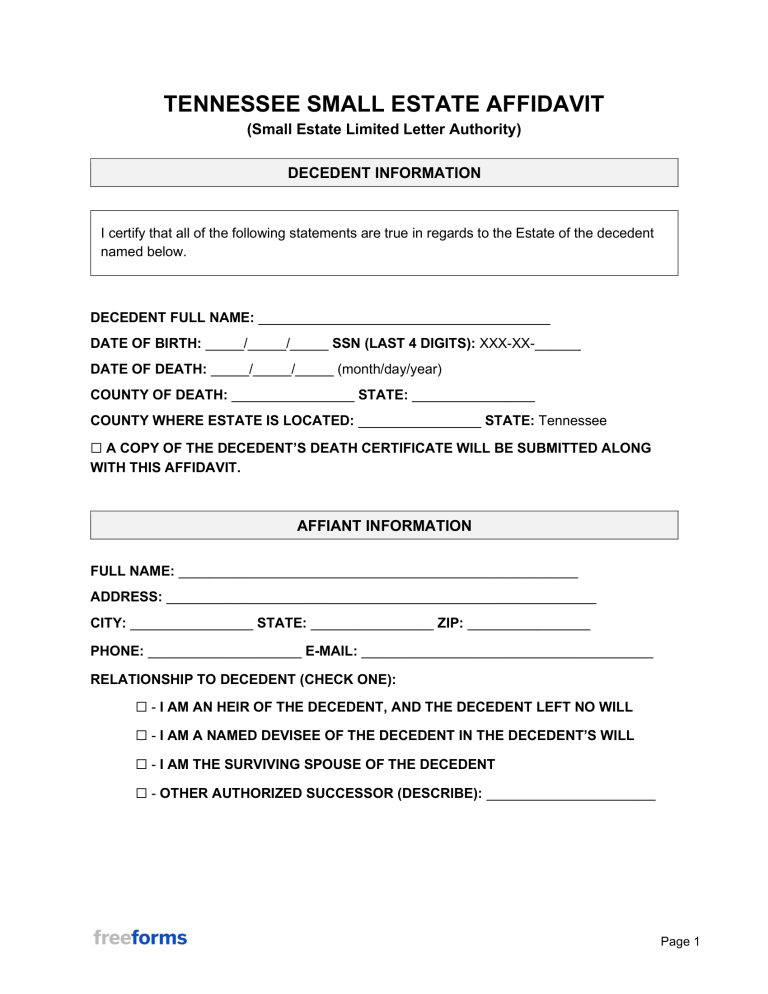
Sample
Sources
- Tenn. Code Ann. § 30-4-102(9)
- Tenn. Code Ann. § 30-4-103
- Tenn. Code Ann. § 30-4-103
- Tenn. Code Ann. § 30-4-103
- Tenn. Code Ann. § 30-4-103
- Tenn. Code Ann. § 31-3-120
- Tenn. Code Ann. § 31-2-104
- Tenn. Code Ann. § 31-2-104
- Tenn. Code Ann. § 30-4-103
- Tenn. Code Ann. § 30-4-102(9)
- Tenn. Code Ann. § 30-4-103
- Tenn. Code Ann. § 30-4-103
- Tenn. Code Ann. § 30-4-103
 Chat with a Lawyer