


 Create Document

 Adobe PDF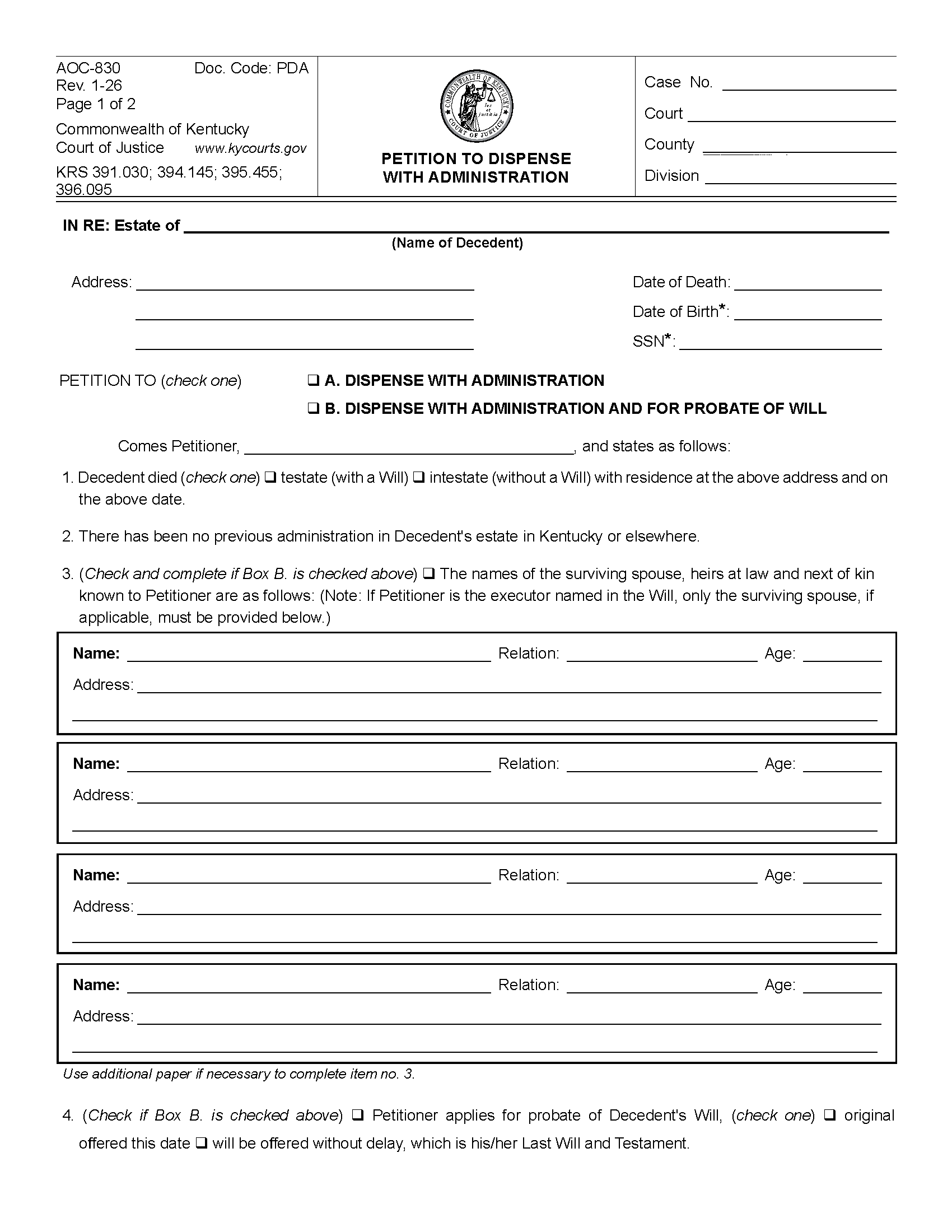
State Laws
- Maximum Amount: $30,000, the value of the personal estate. Real property is not transferred by this procedure.[1][2]
- Signing Requirements: Sworn before a notary public.
- Where to File: With the District Court of the county of the decedent’s domicile.[3]
- When to File: No waiting period.[4]
- Survivor Requirements: A rightful heir must survive the decedent by at least 120 hours (5 days).[5]
Rightful Heirs (Hierarchy)
If the decedent did not have a will, the beneficiary hierarchy is as follows:
- Spouse: The surviving spouse receives the entire estate. Kentucky gives the spouse a $30,000 exemption from the personal estate, which covers any estate small enough to use this procedure.[6]
- No Spouse, Children: If there is no surviving spouse, the estate passes to the decedent’s children and their descendants, with a deceased child’s share passing to that child’s descendants.[7]
How to File a Small Estate
Step 1 – Confirm the Exemption or Preferred Claims Cover the Estate
The court may dispense with administration when the surviving spouse’s $30,000 statutory exemption. If there is no surviving spouse, the surviving children’s exemption equals or exceeds the distributable personal assets. If the exemption is waived, or there is no surviving spouse or child, a person who paid or is entitled to preferred claims may qualify under the statute.[8][9]
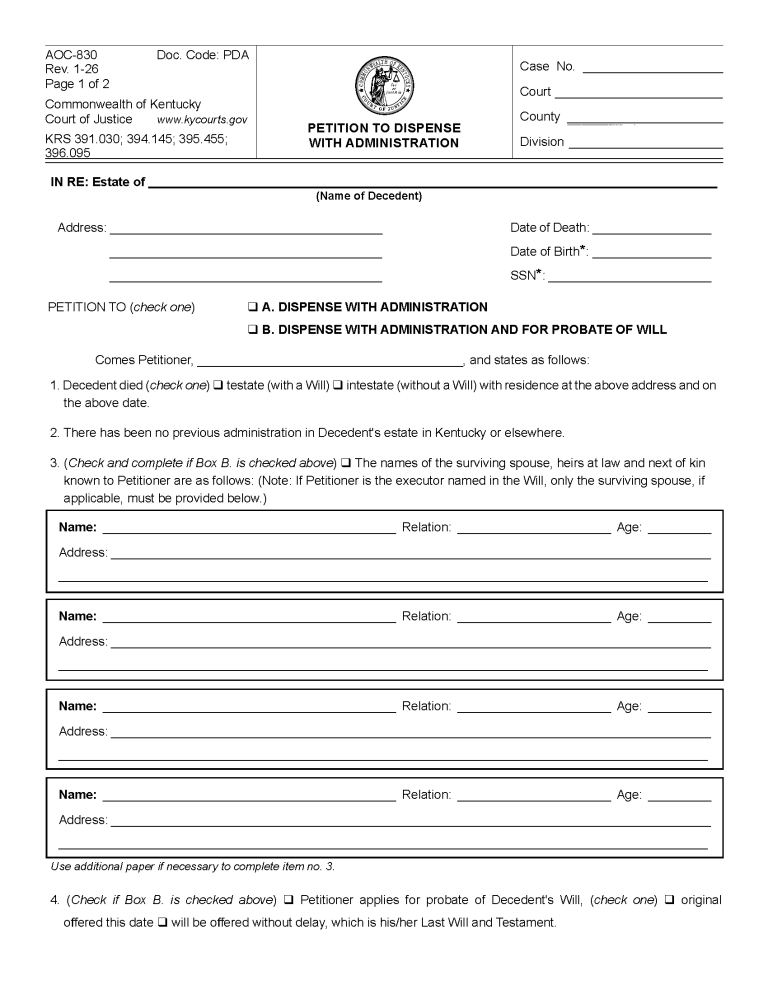
Step 2 – Complete Form AOC-830
Complete the Petition to Dispense With Administration (Small Estate Affidavit) form, listing the decedent’s personal property and values, the preferred claims paid, and the petitioner’s relationship or basis for relief.[10]
Step 3 – Sign Before a Notary
Sign the petition before a notary public (subscribed and sworn).
Step 4 – File With the District Court
File the petition with the District Court of the county of the decedent’s domicile.[11]
Step 5 – Receive the Order
If the statutory exemption and preferred-claim requirements are satisfied, the court enters an order dispensing with administration and transferring the personal property without appointing a personal representative.[12]
Sample
Download: PDF
 Chat with a Lawyer