


 Create Document

 Adobe PDF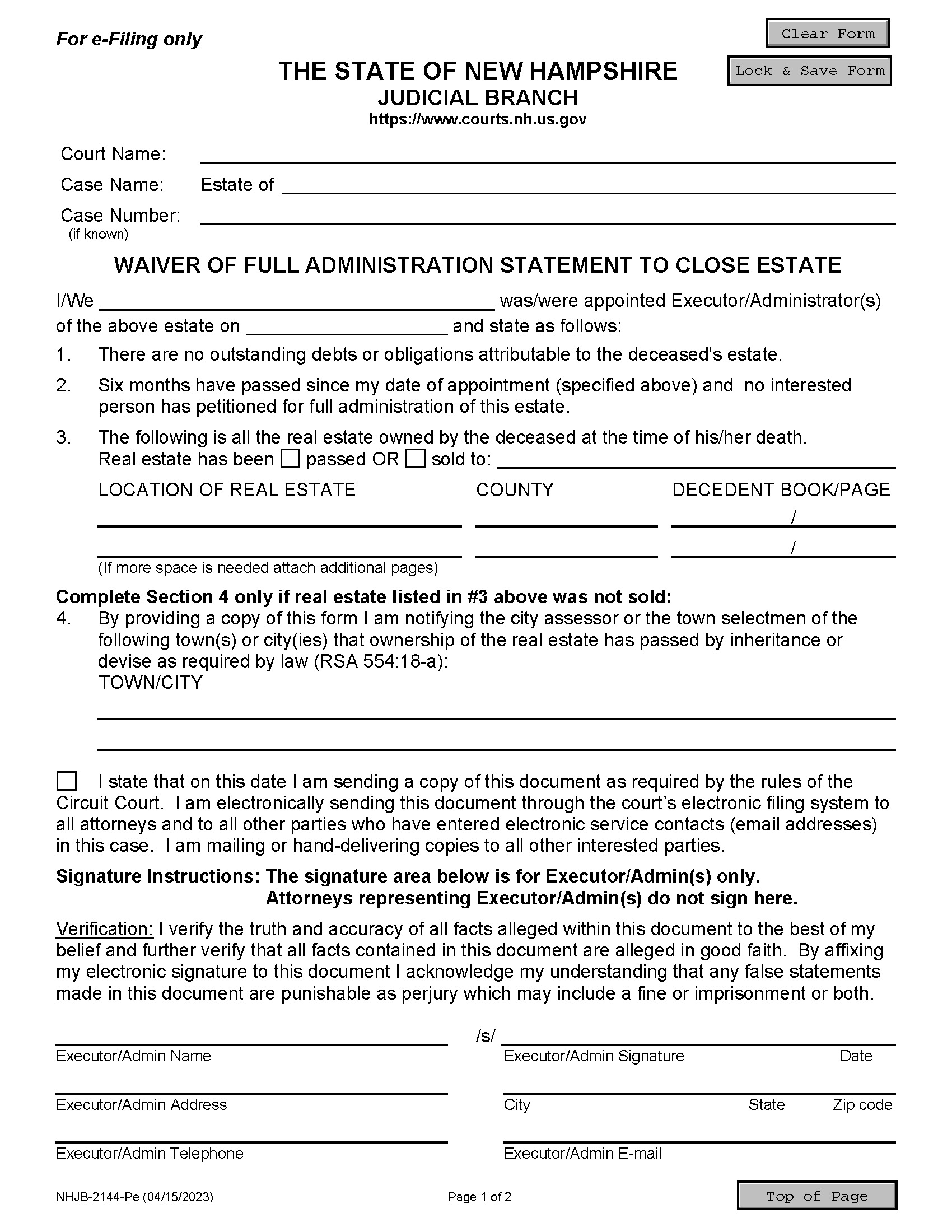
State Laws
- Maximum Amount: No dollar limit.[1]
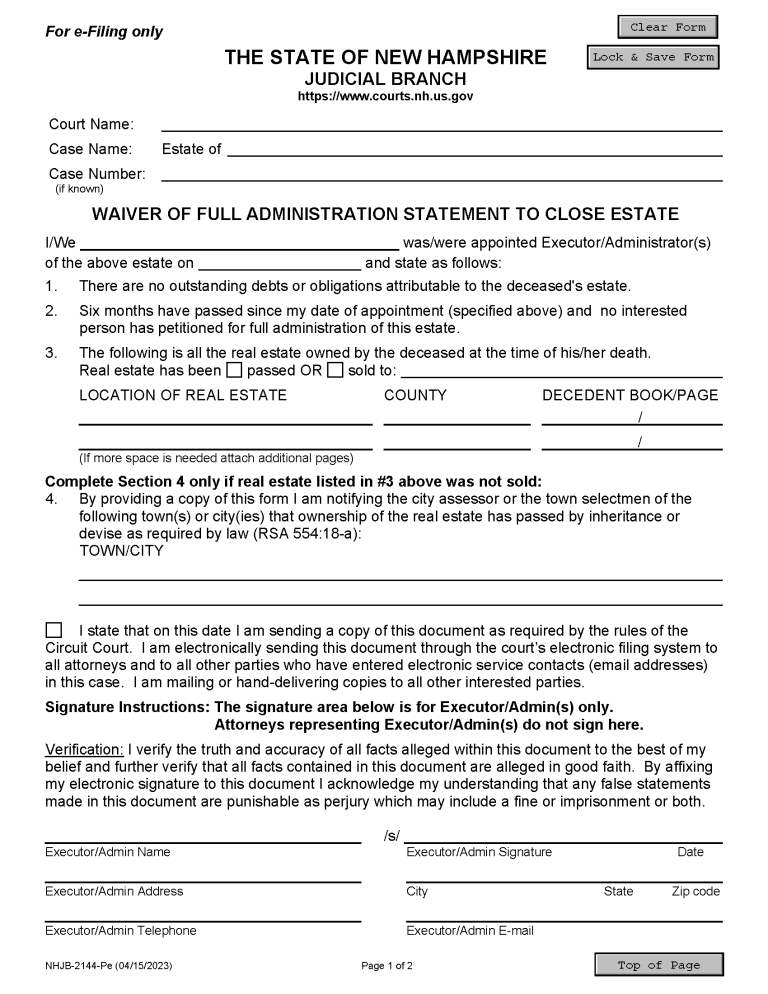
- Signing Requirements: The closing affidavit of administration is sworn.[2]
- Where to File: With the Circuit Court Probate Division of the county of the decedent’s domicile.[3]
- When to File: The closing affidavit is filed not less than 6 months nor more than 1 year after the administrator is appointed.[4]
- Survivor Requirements: A rightful heir must survive the decedent by at least 120 hours (5 days).[5]
Rightful Heirs (Hierarchy)
If the decedent did not have a will, the beneficiary hierarchy is as follows:
- Spouse: The surviving spouse receives the entire estate if the decedent left no descendants or parents. If all of the decedent’s children are also the spouse’s and the spouse has no other descendants, the spouse receives the first $250,000 plus one-half of the rest. The spouse also receives the first $250,000 plus three-quarters of the rest if there are no descendants but a parent survives. If the spouse has other descendants, the spouse receives the first $150,000 plus one-half of the rest. If the decedent had descendants from another relationship, the spouse receives the first $100,000 plus one-half of the rest.[6]
- No Spouse, Children: The share not passing to the spouse goes to the children equally (or by representation), with a deceased child’s share passing to that child’s descendants. If there is no surviving spouse, the children take the entire estate.[7]
How to File a Small Estate
Step 1 – Confirm the Estate May Use Waiver of Administration
Confirm that the proposed administrator and the heirs or beneficiaries satisfy New Hampshire’s waiver requirements. The procedure may be available to a surviving spouse, a sole heir or beneficiary, all heirs or beneficiaries acting together, or another suitable administrator when the required written assents are filed, and the court approves.[8]
Step 2 – Open the Estate and Request Waiver
File the estate-administration petition in the Circuit Court Probate Division for the proper county, with the death certificate, the original will (if any), and the required assents. If the court grants a waiver of administration, the estate generally proceeds without the usual bond, inventory, or accounting requirements.[9]
Step 3 – Pay Debts and Resolve Claims
Pay administration expenses and the decedent’s debts from estate assets, and resolve all claims.[10]
Step 4 – Wait the Required Period
Wait at least six months, but no more than one year, before filing to close the estate.[11]
Step 5 – File the Closing Affidavit
File the sworn Waiver of Full Administration affidavit (Form NHJB-2144-Pe), stating that there are no outstanding debts and providing the required estate information. Court approval completes the administration.[12]
Sample
Download: PDF
 Chat with a Lawyer