


 Create Document

 Adobe PDF
 Microsoft Word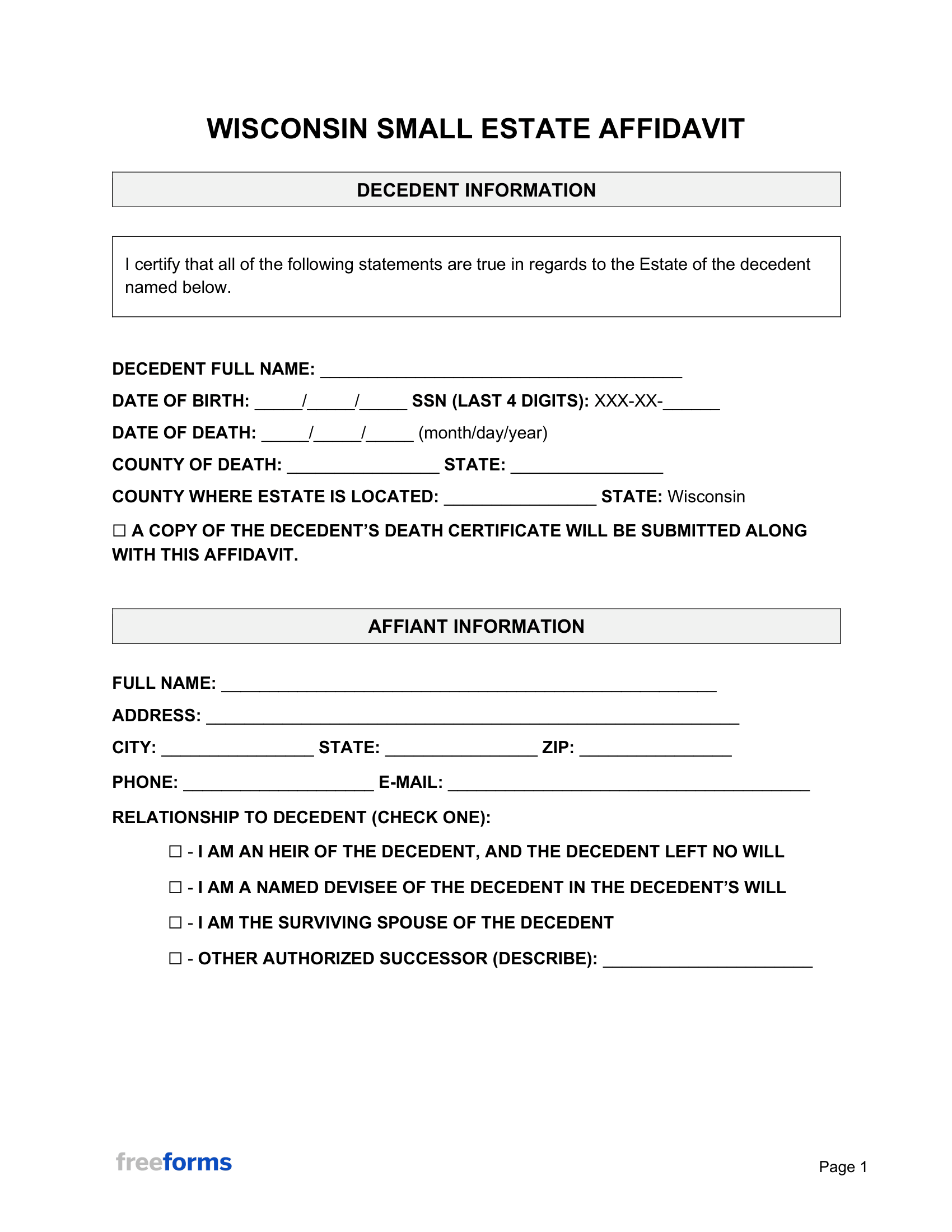
State Laws
- Maximum Amount: $50,000, the gross value of the property subject to administration, less the debts for which estate property is security. The affidavit can transfer both real and personal property.[1]
- Signing Requirements: Sworn before a notary public (if real estate is claimed, accompanying affidavits of heirship and service are also notarized).[2]
- Where to File: Presented directly to the asset holder; for real property, a certified copy is recorded with the register of deeds in each county where the property is located, and a copy is provided to the register in probate.[3]
- When to File: No general waiting period (a 30-day wait applies only if the affiant is the person named in the will to act as personal representative, who also cannot transfer real property by affidavit).[4]
- Survivor Requirements: A rightful heir must survive the decedent by at least 120 hours (5 days).[5]
Rightful Heirs (Hierarchy)
If the decedent did not have a will, the beneficiary hierarchy is as follows:
- Spouse: The surviving spouse (or domestic partner) receives the entire estate if the decedent left no descendants, or if all of the decedent’s descendants are also the spouse’s.[6] If the decedent left descendants from another relationship, the spouse receives one-half of the decedent’s individual (non-marital) property, and the descendants take the rest.[7]
- No Spouse, Children: The share not passing to the spouse goes to the decedent’s descendants, with a deceased child’s share passing to that child’s descendants. If there is no surviving spouse, the descendants take the entire estate.[8]
How to File a Small Estate
Step 1 – Confirm the Estate Qualifies
The gross value of the decedent’s property subject to administration must be $50,000 or less. Do not subtract secured debts when applying the gross-value ceiling.[9]
Step 2 – Complete
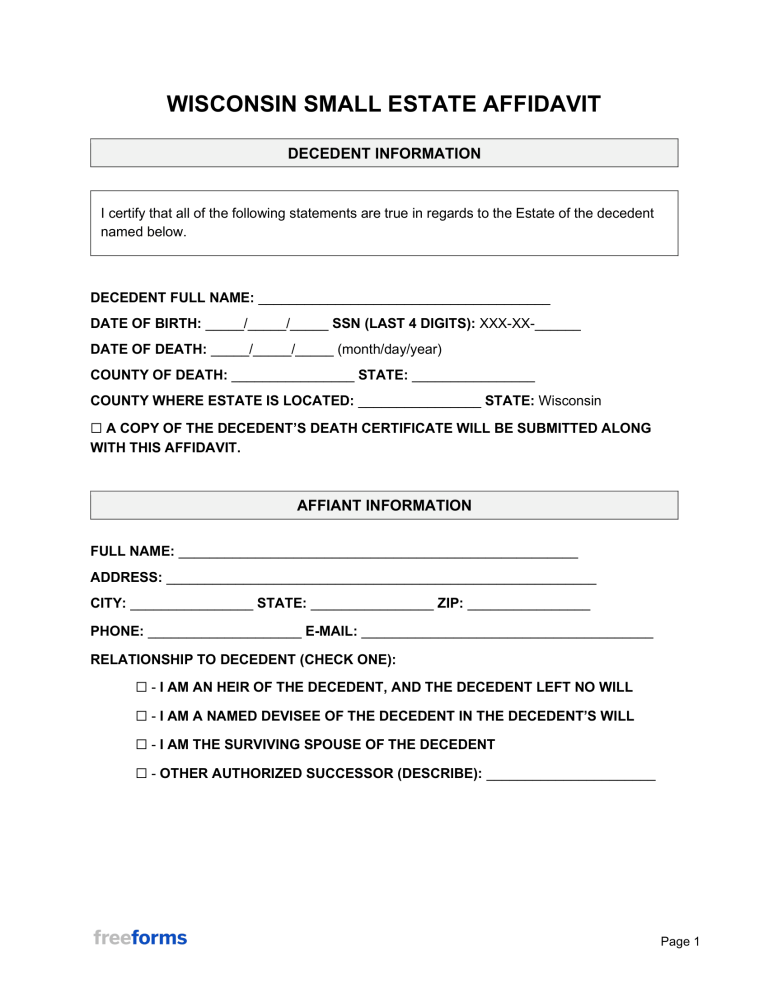
Complete form ($50,000 and Under), and any additional heirship or service documents required for the property involved.[10]
Step 3 – Sign Before a Notary
Sign the affidavit before a notary public.[11]
Step 4 – Give Required Notices and Present or Record the Affidavit
Present the affidavit to banks and other holders of personal property. Give any required estate-recovery notice to the Wisconsin Department of Health Services. If real property is involved, give the required advance notice to the decedent’s heirs, record a certified copy with the register of deeds in each county where the property is located, and provide the required copy to the register in probate.[12]
Step 5 – Pay Debts and Distribute
As affiant, apply the property to the decedent’s obligations in statutory priority, then distribute the balance under the will or by intestate succession.[13]
 Chat with a Lawyer