


 Create Document

 Adobe PDF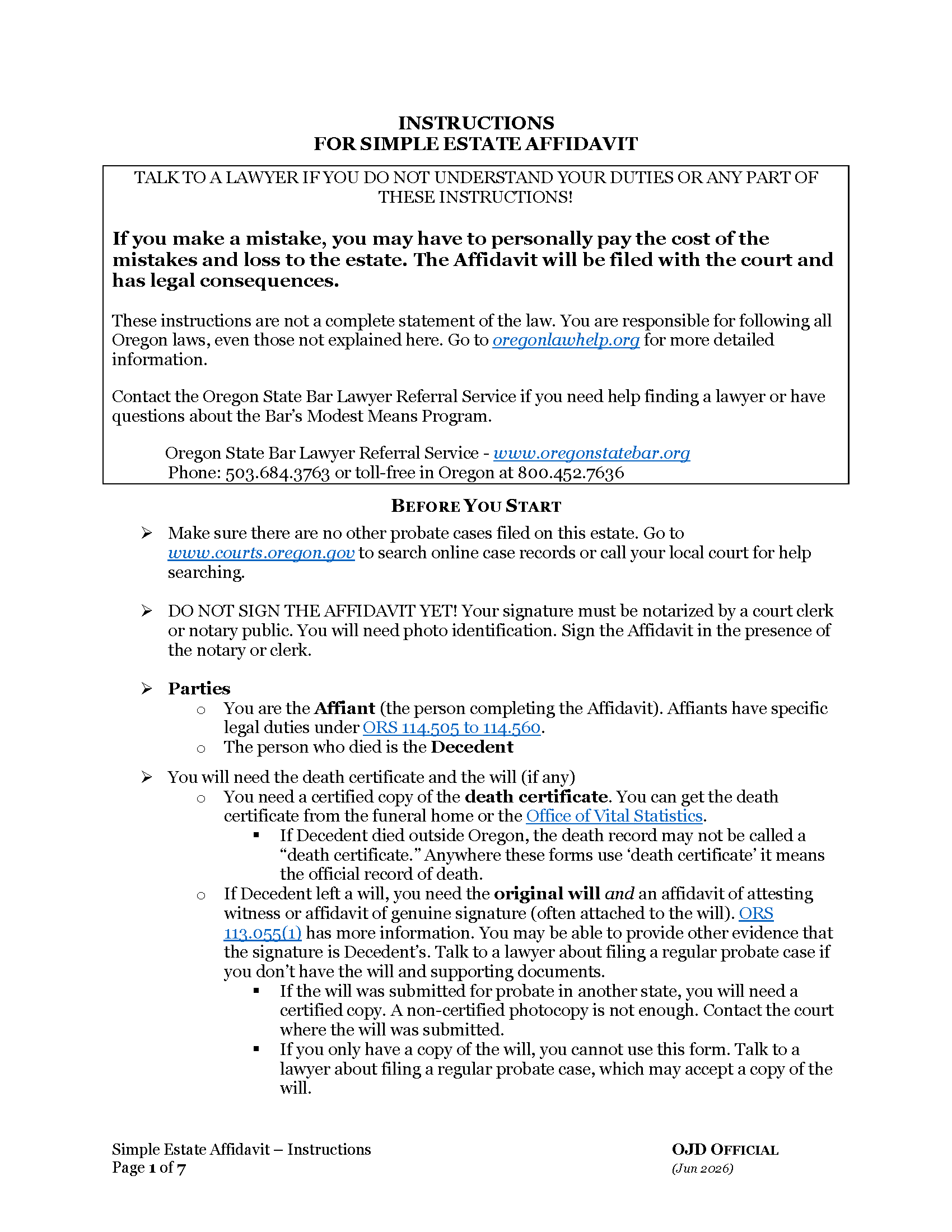
State Laws
- Maximum Amount: Not more than $75,000 in personal property and not more than $200,000 in real property and manufactured homes (combined). Both limits must be met.[1]
- Signing Requirements: Made under penalty of perjury; the clerk may acknowledge the affidavit on presentation of the affiant’s identification.[2]
- Where to File: With the clerk of the probate (circuit) court of the county where there is venue (generally the decedent’s county of residence).[3]
- When to File: 30 days after death.[4]
- Survivor Requirements: A rightful heir must survive the decedent by at least 120 hours (5 days).[5]
Rightful Heirs (Hierarchy)
If the decedent did not have a will, the beneficiary hierarchy is as follows:
- Spouse: The surviving spouse receives the entire estate if the decedent left no descendants, or if all of the decedent’s descendants are also the spouse’s.[6] If the decedent left descendants from another relationship, the spouse receives one-half, and the descendants share the other half.[7][8]
- No Spouse, Children: The share not passing to the spouse goes to the decedent’s descendants by representation, with a deceased child’s share passing to that child’s descendants. If there is no surviving spouse, the descendants take the entire estate.[9]
How to File a Small Estate
Step 1 – Wait 30 Days
At least 30 days must pass after the decedent’s death before the affidavit may be filed.[10]
Step 2 – Confirm the Estate Qualifies
The fair market value of personal property other than manufactured homes must be $75,000 or less, and the fair market value of real property and manufactured homes must be $200,000 or less. Do not subtract liens or debts when applying these limits.[11]
Step 3 – Complete the Simple Estate Affidavit
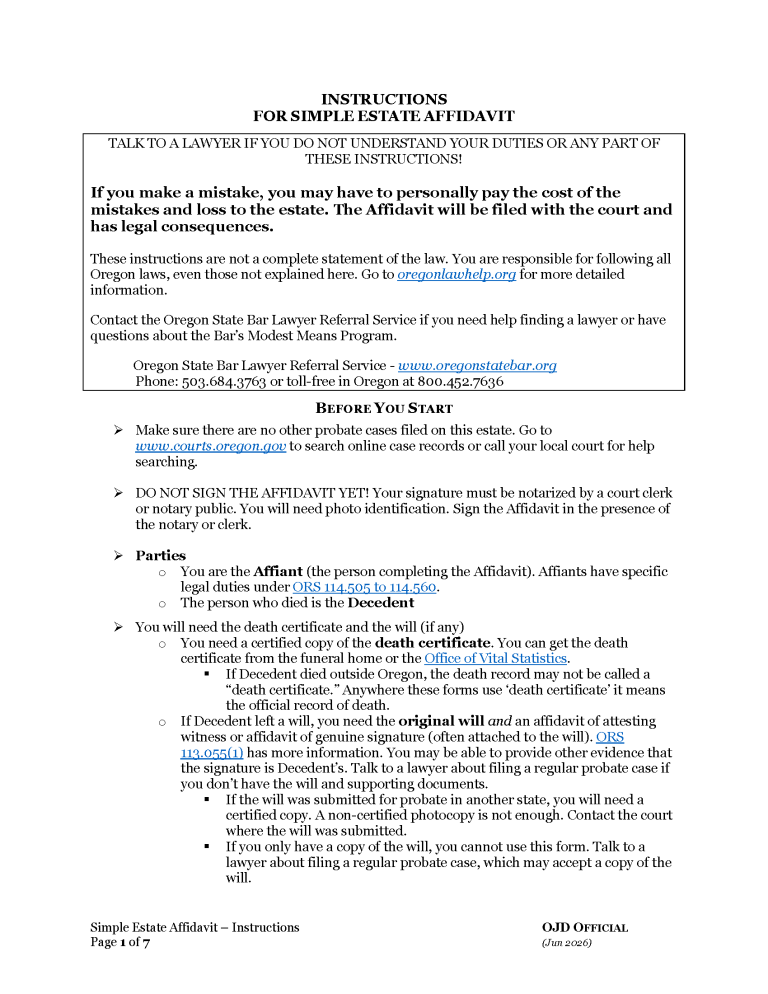
Use the Oregon Judicial Department’s Simple Estate Affidavit for a testate or intestate estate, as applicable, listing the property and values, heirs or devisees, claiming successors, creditors, and proposed distributions.[12]
Step 4 – Sign Under Penalty of Perjury
Sign the affidavit under penalty of perjury and have it acknowledged as required.[13]
Step 5 – File and Give the Required Notices
File the affidavit with the clerk of the circuit court in the proper county, pay the filing fee, and send the copies and notices required by statute and the official instructions, including notices to listed interested persons and government agencies when applicable.[14]
Step 6 – Collect, Pay Claims, and Distribute
Collect and preserve the estate property. Do not make final distributions until at least four months after filing and until the statutory claims and personal representative conditions are satisfied. Pay allowed claims in the required order, then distribute the remaining property to those entitled.[15]
Sample
Download: PDF
Sources
- Or. Rev. Stat. § 114.510
- Or. Rev. Stat. § 114.525
- Or. Rev. Stat. § 114.515
- Or. Rev. Stat. § 114.515(3)
- Or. Rev. Stat. § 112.572
- Or. Rev. Stat. § 112.035
- Or. Rev. Stat. § 112.025
- Or. Rev. Stat. § 112.025
- Or. Rev. Stat. § 112.045
- Or. Rev. Stat. § 114.515(3)
- Or. Rev. Stat. § 114.510
- Or. Rev. Stat. § 114.525
- Or. Rev. Stat. § 114.525
- Or. Rev. Stat. § 114.515
- Or. Rev. Stat. § 114.540
 Chat with a Lawyer