


 Create Document
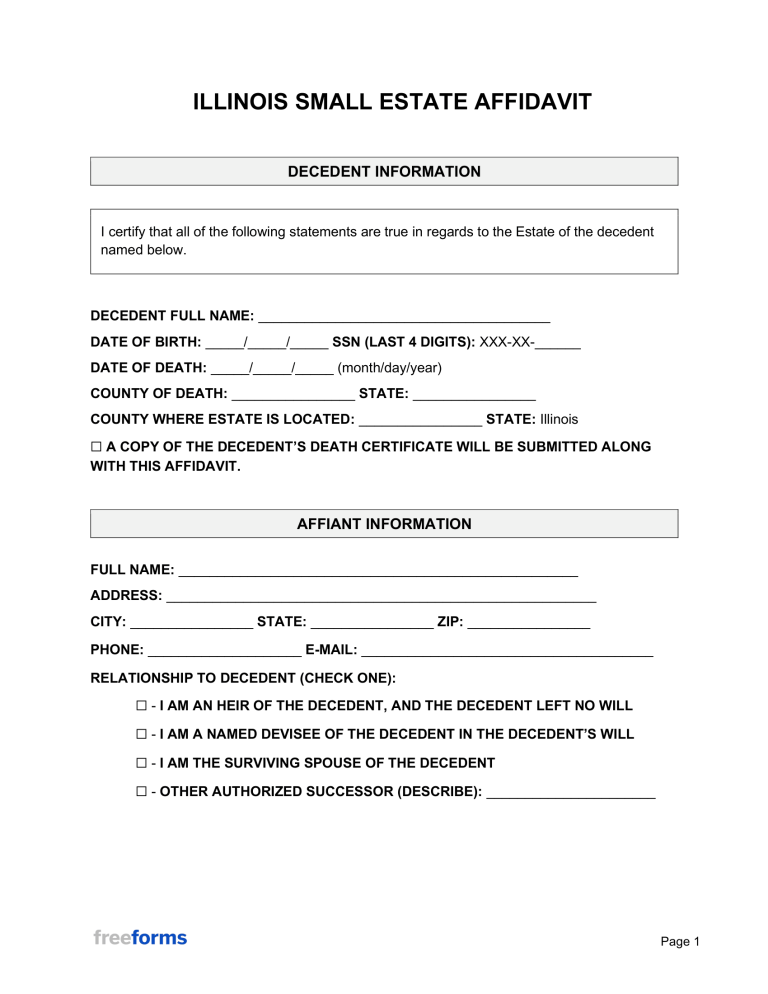

 Adobe PDF
 Microsoft Word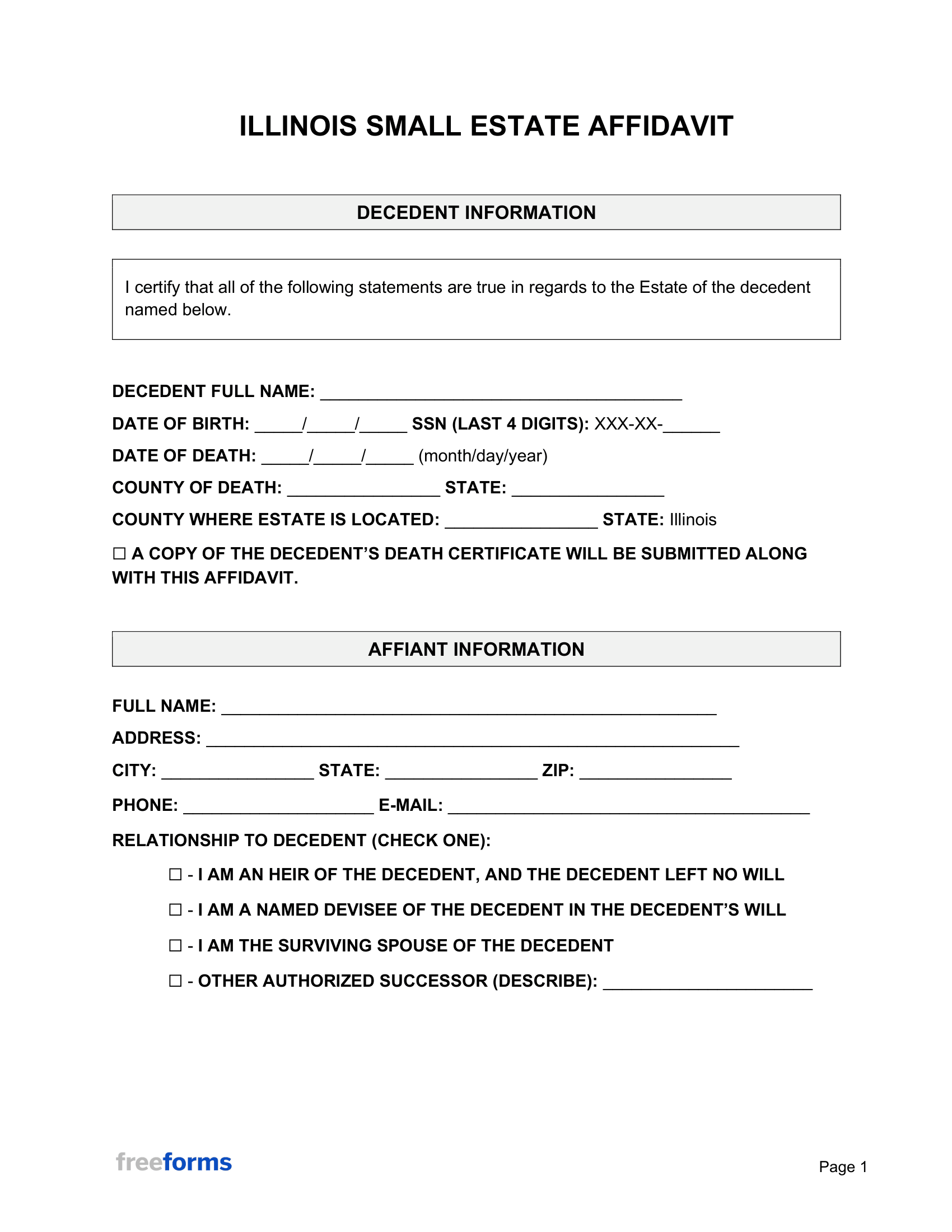
State Laws
- Maximum Amount: $150,000, the value of the decedent’s entire personal estate passing under a will or by intestacy. Motor vehicles registered with the Secretary of State are excluded from this count and transferred separately. The affidavit covers personal property only, not real estate.[1]
- Signing Requirements: Sworn before a notary public, under penalties of perjury.[2]
- Where to File: Not filed with the court, presented directly to the person or institution holding the asset, who then pays or transfers the property.[3]
- When to File: No waiting period. The conditions are that no letters of office are outstanding and no petition for letters is pending.[4]
- Survivor Requirements: Illinois does not use a 120-hour survival rule.[5]
Rightful Heirs (Hierarchy)
If the decedent did not have a will, the beneficiary hierarchy is as follows:
- Spouse: If the decedent left no descendants, the surviving spouse receives the entire estate. If the decedent left descendants, the spouse receives one-half, and the descendants share the other half.[6]
- No Spouse, Children: The descendants take their half, with a deceased child’s share passing to that child’s descendants. If there is no surviving spouse, the children take the entire estate.[7]
How to File a Small Estate
Step 1 – Confirm the Estate Qualifies
Excluding motor vehicles registered with the Illinois Secretary of State, the decedent’s personal estate passing by will or intestacy must be $150,000 or less. No letters of office may be outstanding, and no petition for letters may be contemplated or pending in Illinois or another jurisdiction. The affidavit transfers personal property only.[8]
Step 2 – Identify the Heirs and Their Shares
Determine who is entitled to the property under the will, or by succession under 755 ILCS 5/2-1.[9]
Step 3 – Complete the Small Estate Affidavit
Complete the affidavit using the contents, including the decedent information, will status, funeral and estate expenses, known debts, and the names and shares of the heirs or legatees.[10]
Step 4 – Sign Before a Notary
Sign and swear the affidavit before a notary public, under penalties of perjury.[11]
Step 5 – Present the Affidavit to the Asset Holder
Present the executed affidavit directly to each bank, brokerage, or other holder of the asset to obtain payment or transfer. Registered vehicles are listed separately and may be transferred through the Secretary of State under the applicable vehicle-title rules.[12]
 Chat with a Lawyer