


 Create Document

 Adobe PDF
 Microsoft Word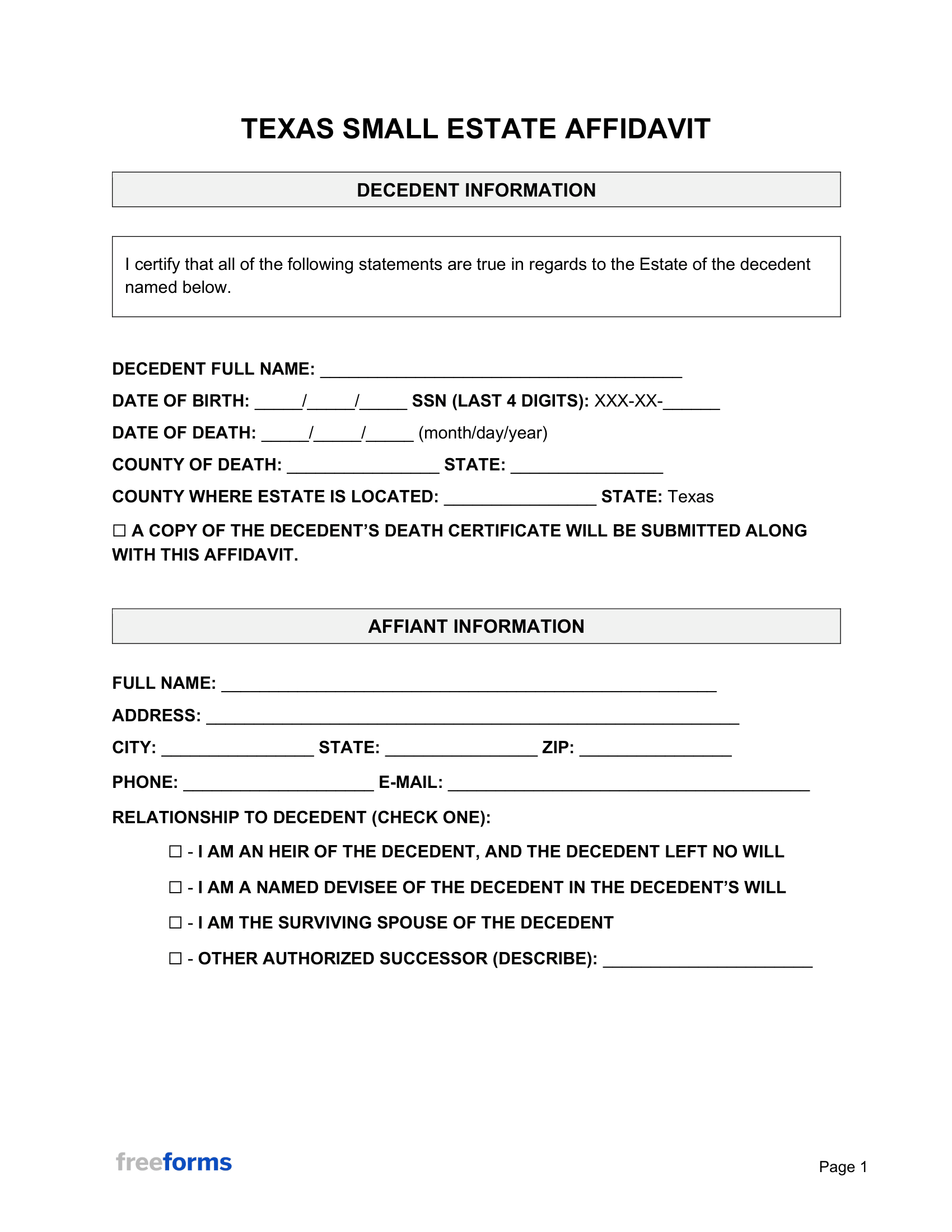
State Laws
- Maximum Amount: $75,000, the value of the estate assets, excluding the homestead and exempt property. The affidavit is available only when the decedent died intestate (no will).[1]
- Signing Requirements: Sworn to by two disinterested witnesses and by each distributee who has legal capacity; notarized.[2]
- Where to File: Filed with the county or probate court of the decedent’s county; a judge must examine and approve it before it takes effect.[3]
- When to File: 30 days after death, with no petition for a personal representative pending or granted.[4]
- Survivor Requirements: A rightful heir must survive the decedent by at least 120 hours (5 days).[5]
Rightful Heirs (Hierarchy)
If the decedent did not have a will, the beneficiary hierarchy is as follows:
- Spouse: The surviving spouse receives the decedent’s half of the community property, unless the decedent had a child from another relationship, in which case that half goes to the children. For separate property, if the decedent left children, the spouse receives one-third of the personal property and a life estate in one-third of the real estate; if there are no children, the spouse receives all of the personal property and at least one-half of the real estate.[6][7]
- No Spouse, Children: The children receive everything not passing to the spouse. If there is no surviving spouse, the children take the entire estate.[8]
How to File a Small Estate
Step 1 – Confirm the Estate Qualifies
The decedent must have died intestate, at least 30 days must have passed, no personal representative may be pending or appointed, and the assets excluding homestead and exempt property must be $75,000 or less and exceed the known debts.[9]
Step 2 – Identify the Heirs
Determine the distributees and their shares under Texas intestate succession.[10]
Step 3 – Prepare the Affidavit
Prepare the affidavit listing all assets and liabilities, the family and heirship facts, and each heir’s share.[11]
Step 4 – Swear and Notarize
Have the affidavit sworn by all distributees with legal capacity plus two disinterested witnesses, and notarized.[12]
Step 5 – File and Obtain Court Approval
File the affidavit with the court that has probate jurisdiction. After the judge approves it, present certified copies to those holding the assets. If the decedent’s homestead is the only real property in the estate, the approved affidavit may transfer title to the homestead. Record a certified copy of the approved affidavit and court order in the real-property records of the county where the homestead is located.[13][14]
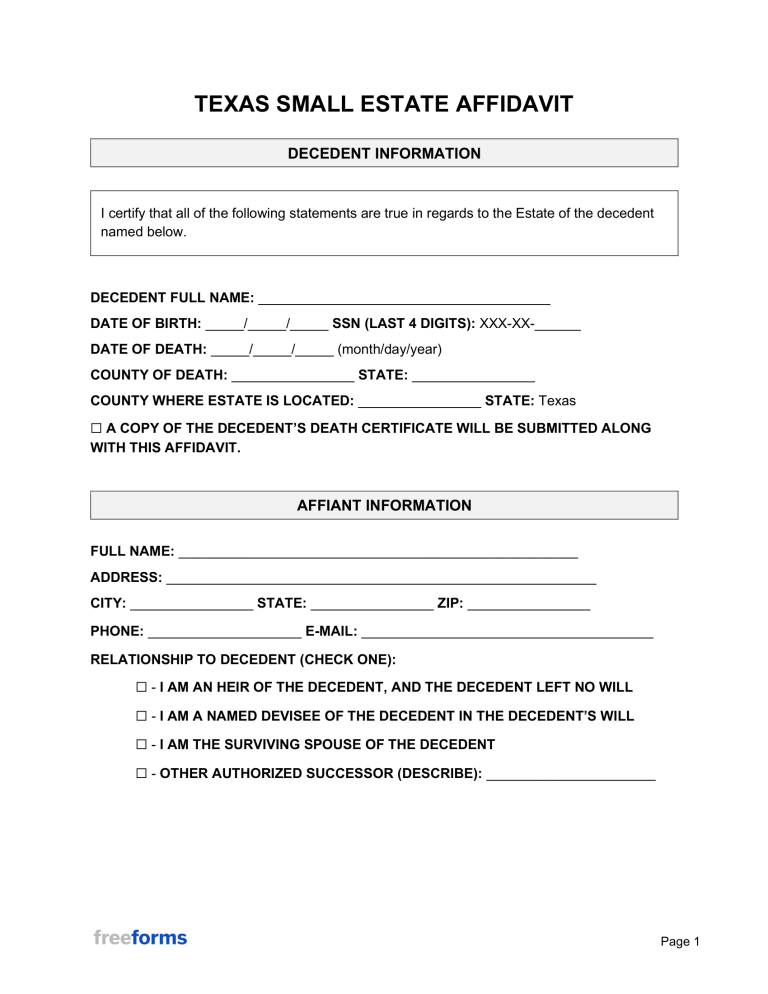
Sample
Sources
- Tex. Estates Code § 205.001
- Tex. Estates Code § 205.002
- Tex. Estates Code § 205.003
- Tex. Estates Code § 205.001
- Tex. Estates Code § 121.052
- Tex. Estates Code § 201.003
- Tex. Estates Code § 201.002
- Tex. Estates Code § 201.001
- Tex. Estates Code § 205.001
- Tex. Estates Code § 201.001
- Tex. Estates Code § 205.002
- Tex. Estates Code § 205.002
- Tex. Estates Code § 205.003
- Tex. Estates Code § 205.006
 Chat with a Lawyer