


 Create Document

 Adobe PDF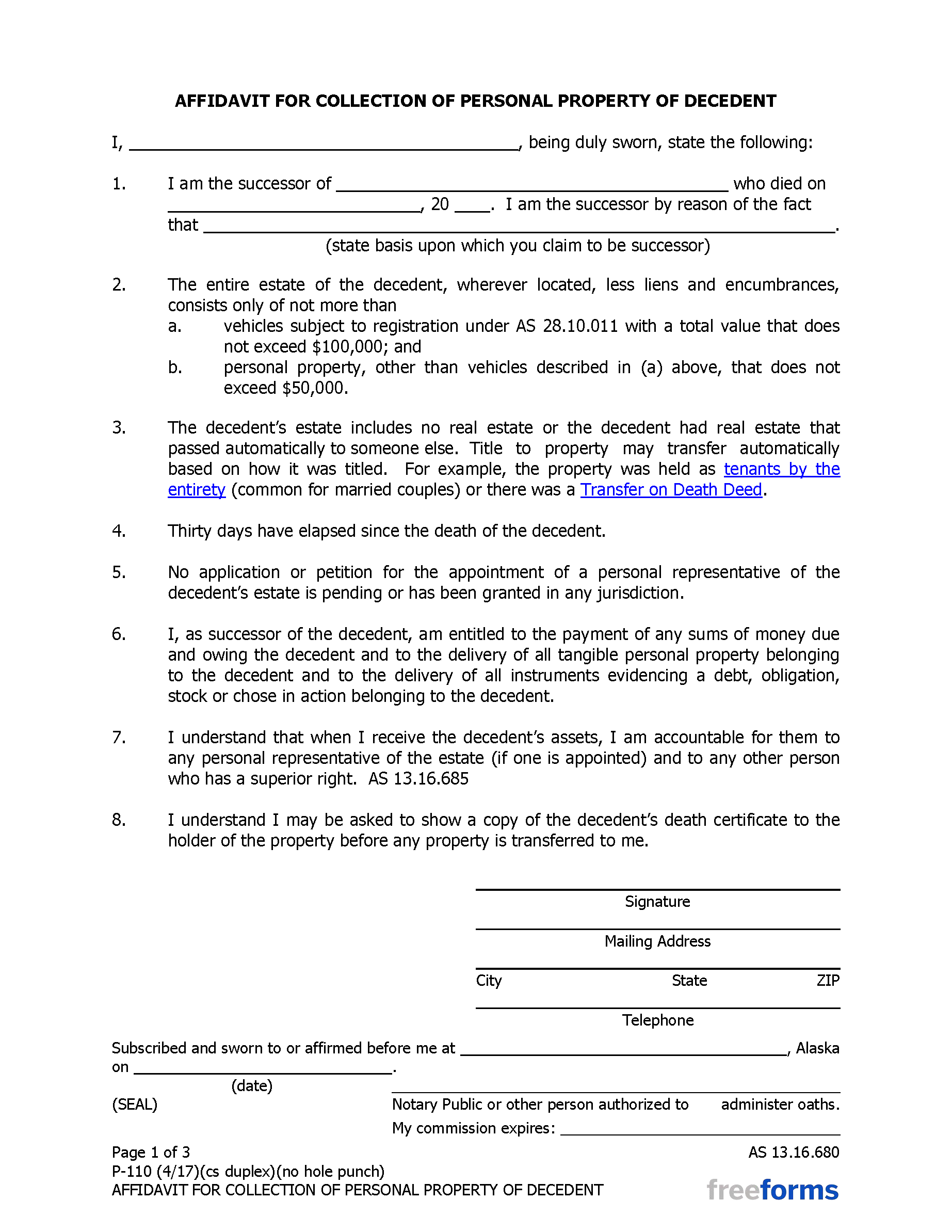
State Laws
- Maximum Amount: Total of $150,000, with the following thresholds:
- Signing Requirements: Sworn in the presence of a notary public.[3]
- Where to File: Not filed, but is “upon being presented” by the claiming successor to take possession of personal property and vehicles.[4]
- When to File: 30 days after death.[5]
- Survivor Requirements: Heirs must survive the decedent by at least 5 days.[6][7]
Rightful Heirs (Hierarchy)
In the event the decedent died without a will, the rightful beneficiaries are as follows:
- Spouse: Spouse obtains the entire estate except if the decedent had children with someone other than the spouse. In such a case, the spouse would obtain the initial $100,000, and the spouse and children would split 50/50 the remaining portion of the estate.[8]
- Children: If there is no surviving spouse of the decedent, the children split everything equally, even if there are surviving parents.[9]
How to Use a Small Estate
Step 1 – Wait 30 Days
Whether a claiming successor is taking possession of a bank account or a motor vehicle, there is a 30-day waiting period.
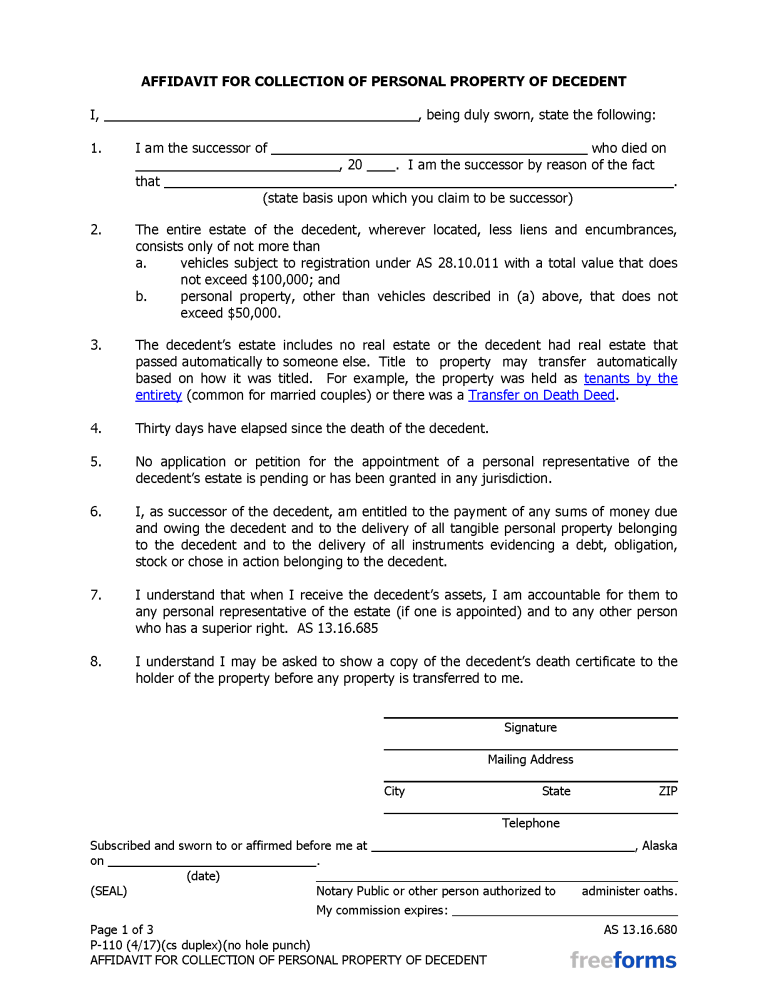
During this time, the claiming successor should complete the Affidavit for the Collection of Personal Property (Form P-110).
Step 2 – Get the Affidavit Notarized
It must be notarized and sworn to under oath to be used.
This means that the claiming successor can be criminally prosecuted for perjury if they falsely use this document.[10][11]
Step 3 – Retrieve a Death Certificate
Typically, a bank or a local DMV office requires proof of death before releasing property. A death certificate is the preferred record.
Step 4 – Obtain Possessions
At this time, the claiming successor has the documentation required to obtain the property from the decedent.
If at any point, an institution is reluctant to release property, sharing AS 13.16.680 may help, which specifically mentions:
“Upon being presented an affidavit made by or on behalf of the successor stating… that the claiming successor is entitled to payment or delivery of the property.”
Sample
Download: PDF
 Chat with a Lawyer