


 Create Document

 Adobe PDF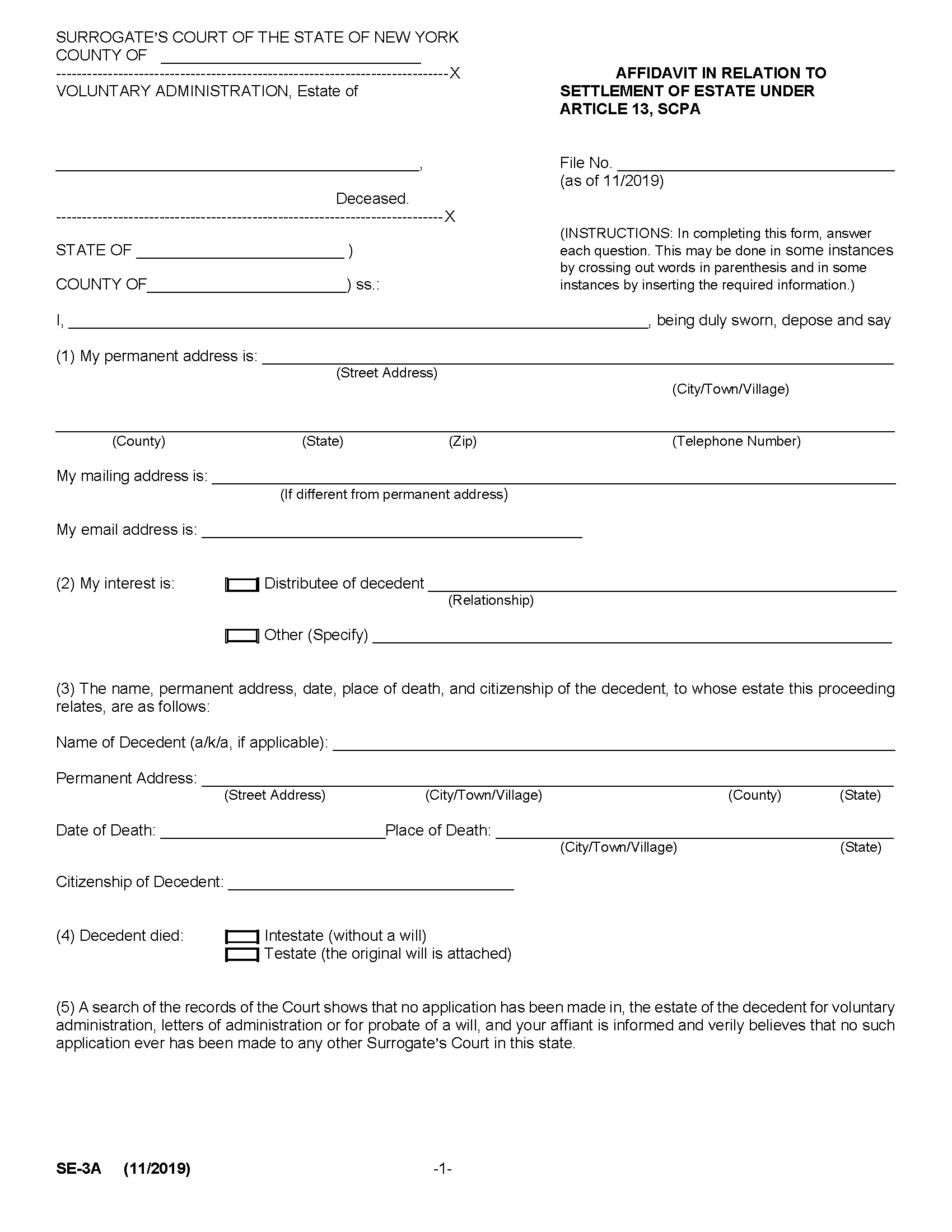
State Laws
- Maximum Amount: $50,000, the gross value of the decedent’s personal property. The procedure does not transfer real estate.[1][2]
- Signing Requirements: A sworn affidavit, signed before a notary public.[3]
- Where to File: With the clerk of the Surrogate’s Court of the county of the decedent’s domicile; the filing fee is $1.[4]
- When to File: No waiting period after death.[5]
- Survivor Requirements: A rightful heir must survive the decedent by at least 120 hours (5 days).[6]
Rightful Heirs (Hierarchy)
If the decedent did not have a will, the beneficiary hierarchy is as follows:
- Spouse: The surviving spouse receives the entire estate. Even when the decedent left children, New York gives the spouse the first $50,000, which equals the $50,000 small estate limit.[7]
- No Spouse, Children: If there is no surviving spouse, the decedent’s descendants inherit the entire estate by representation.[8]
How to File a Small Estate
Step 1 – Confirm the Estate Qualifies
The decedent’s personal property must be $50,000 or less, and the proceeding cannot transfer solely owned real estate.[9]
Step 2 – Confirm You May Serve as Voluntary Administrator
Eligible persons take priority in order: surviving spouse, then child, grandchild, parent, sibling, and other relatives (or the executor named in a will).[10]
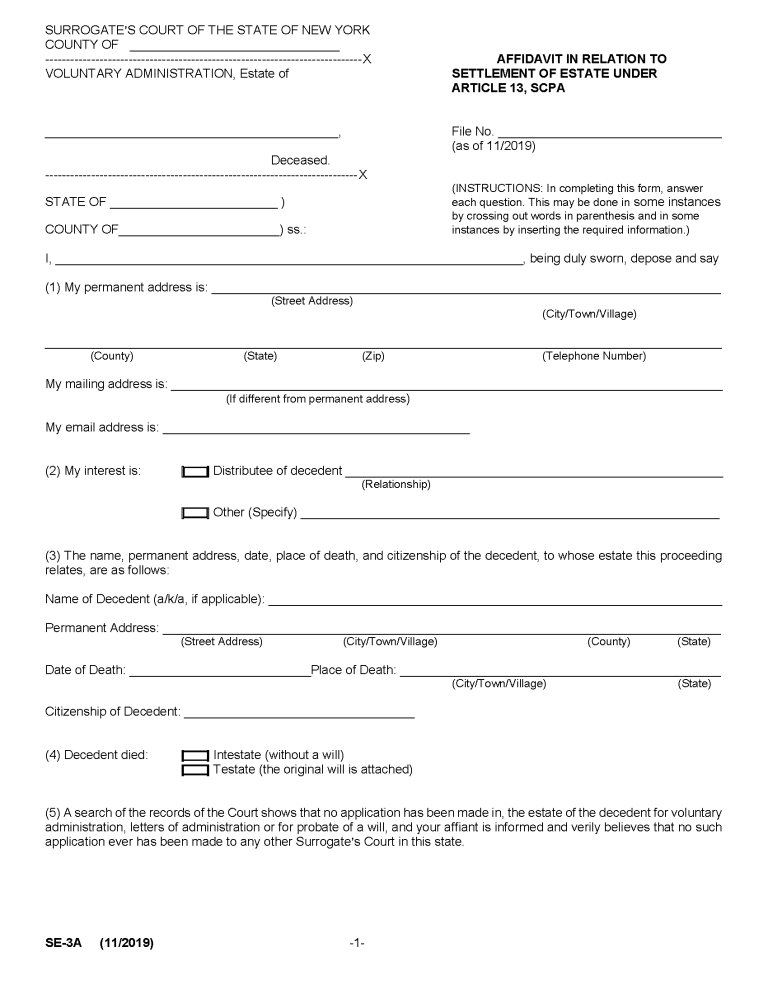
Step 3 – Complete the Affidavit
Complete the Affidavit listing the assets, distributees, and creditors, with a certified death certificate and the original will (if any).[11]
Step 4 – File With the Surrogate’s Court
Sign the affidavit before a notary and file it with the clerk of the Surrogate’s Court of the decedent’s county, with the $1 filing fee.[12]
Step 5 – Collect, Pay, and Distribute
The court issues a certificate; the voluntary administrator collects the personal property, pays debts and funeral and administration expenses, distributes the remainder to those entitled, and files a closing report and account.[13]
Sample
Download: PDF
 Chat with a Lawyer