


 Create Document

 Adobe PDF
 Microsoft Word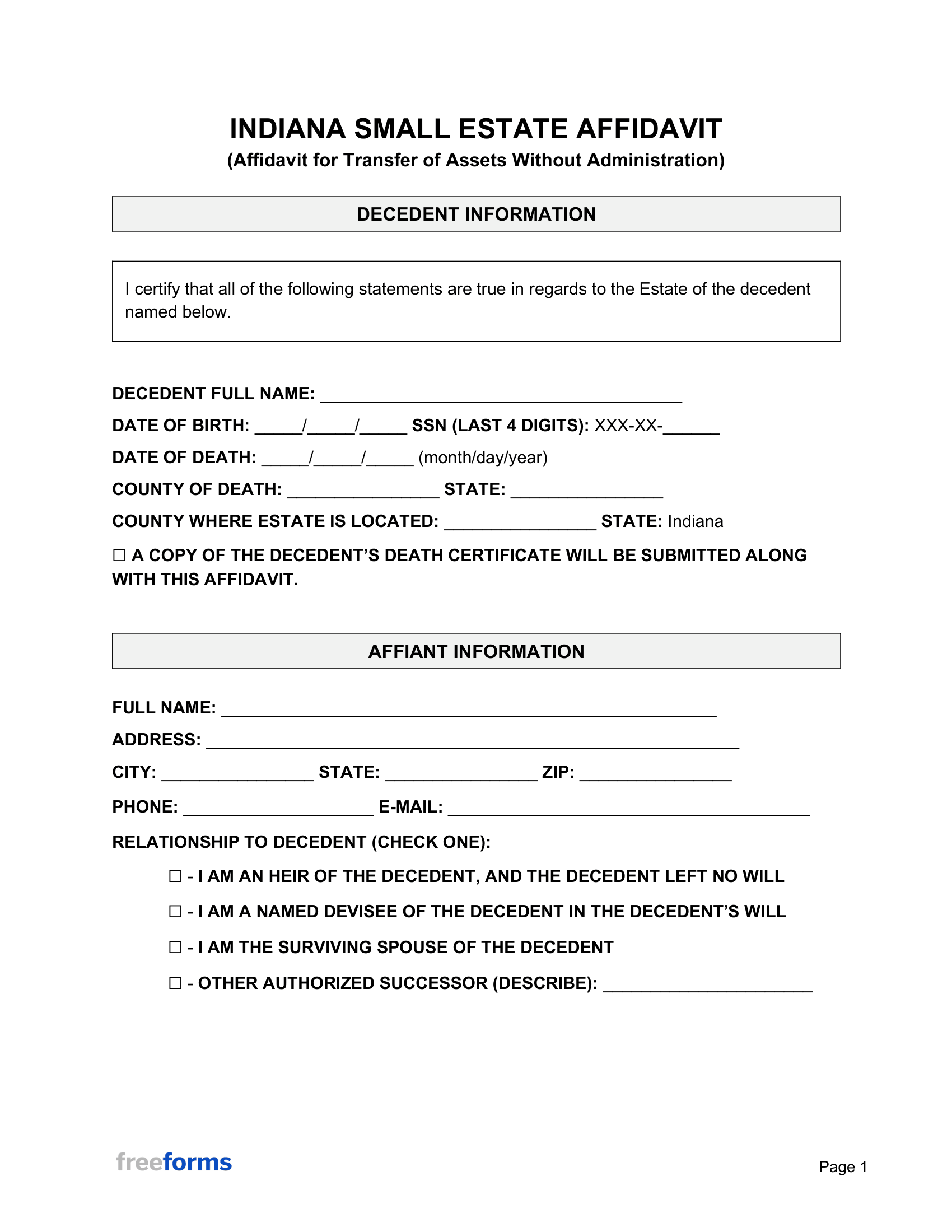
State Laws
- Maximum Amount: $100,000, the gross value of the probate estate, less liens, encumbrances, and reasonable funeral expenses. The affidavit covers personal property only, not real estate.[1]
- Signing Requirements: Sworn and notarized.[2]
- Where to File: Not filed with the court, presented directly to the bank, employer, or other holder of the asset.[3]
- When to File: 45 days after death (5 days for a motor vehicle or watercraft title).[4]
- Survivor Requirements: Under its simultaneous-death law, if the order of death cannot be established by sufficient evidence, each person’s property is distributed as if that person survived.[5]
Rightful Heirs (Hierarchy)
If the decedent did not have a will, the beneficiary hierarchy is as follows:
- Spouse: If the decedent left children or their descendants, the surviving spouse receives one-half, and the children share the other half.[6] If the decedent left no descendants but a surviving parent, the spouse receives three-quarters, and the parents share one-quarter. If the decedent left no descendants and no parents, the spouse receives the entire estate.[7]
- No Spouse, Children: The children take their share equally, with a deceased child’s share passing to that child’s descendants. If there is no surviving spouse, the children take the entire estate.[8]
How to File a Small Estate
Step 1 – Wait 45 Days
At least 45 days must pass after the decedent’s death before the affidavit may be presented (five days for a vehicle or watercraft title).[9]
Step 2 – Confirm the Estate Qualifies
For a decedent who died after June 30, 2022, the gross probate estate, wherever located, after subtracting liens, encumbrances, and funeral expenses, must be $100,000 or less. No personal representative may be pending or appointed. This affidavit is used to collect personal property; Indiana real property is handled through a separate statutory procedure.[10]
Step 3 – Identify the Distributees and Give Notice
List each person entitled to a share (by will or intestate succession) and notify them of your intent to present the affidavit.[11]
Step 4 – Complete and Notarize the Affidavit
Complete the affidavit, stating the value cap, the 45-day lapse, that no probate is pending, and the distributees and their shares, then sign it before a notary public.[12]
Step 5 – Present the Affidavit to the Asset Holder
Present the notarized affidavit to each bank, employer, or transfer agent to obtain payment or delivery, then distribute the property to the entitled distributees.[13]
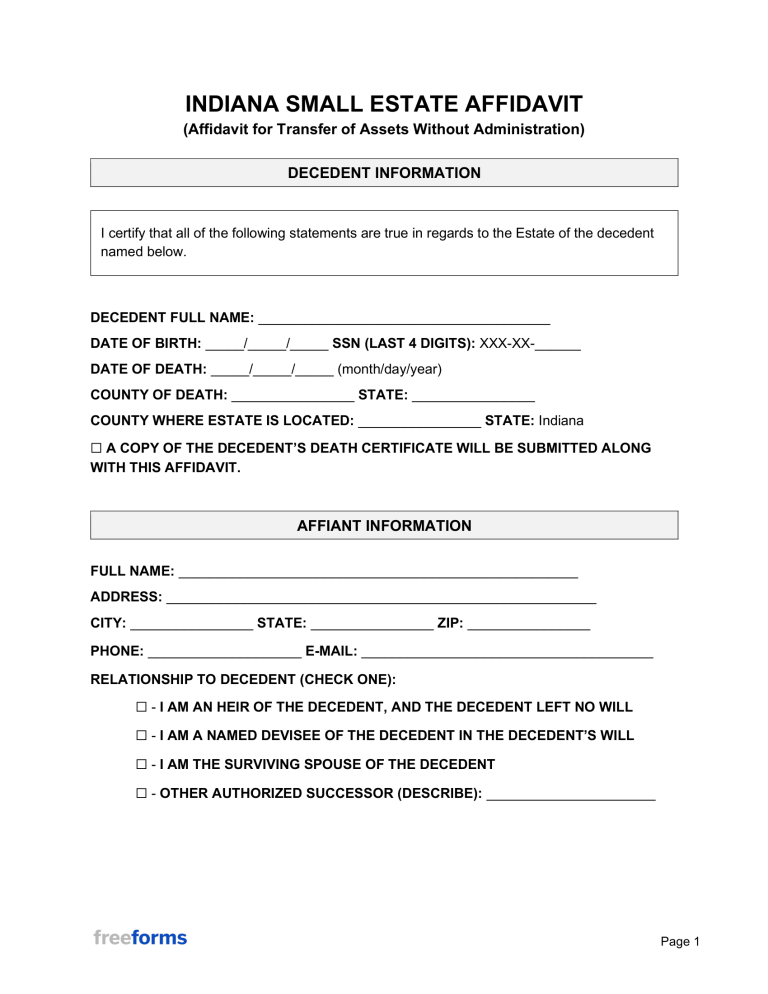
Sample
Sources
- Ind. Code § 29-1-8-1(a)
- Ind. Code § 29-1-8-1(b)
- Ind. Code § 29-1-8-1(a)
- Ind. Code § 29-1-8-1(a)
- Ind. Code § 29-2-14-1
- Ind. Code § 29-1-2-1(b)
- Ind. Code § 29-1-2-1(b)
- Ind. Code § 29-1-2-1(d)
- Ind. Code § 29-1-8-1(a)
- Ind. Code § 29-1-8-1(a)
- Ind. Code § 29-1-8-1(b)
- Ind. Code § 29-1-8-1(b)
- Ind. Code § 29-1-8-1(a)
 Chat with a Lawyer