


 Create Document

 Adobe PDF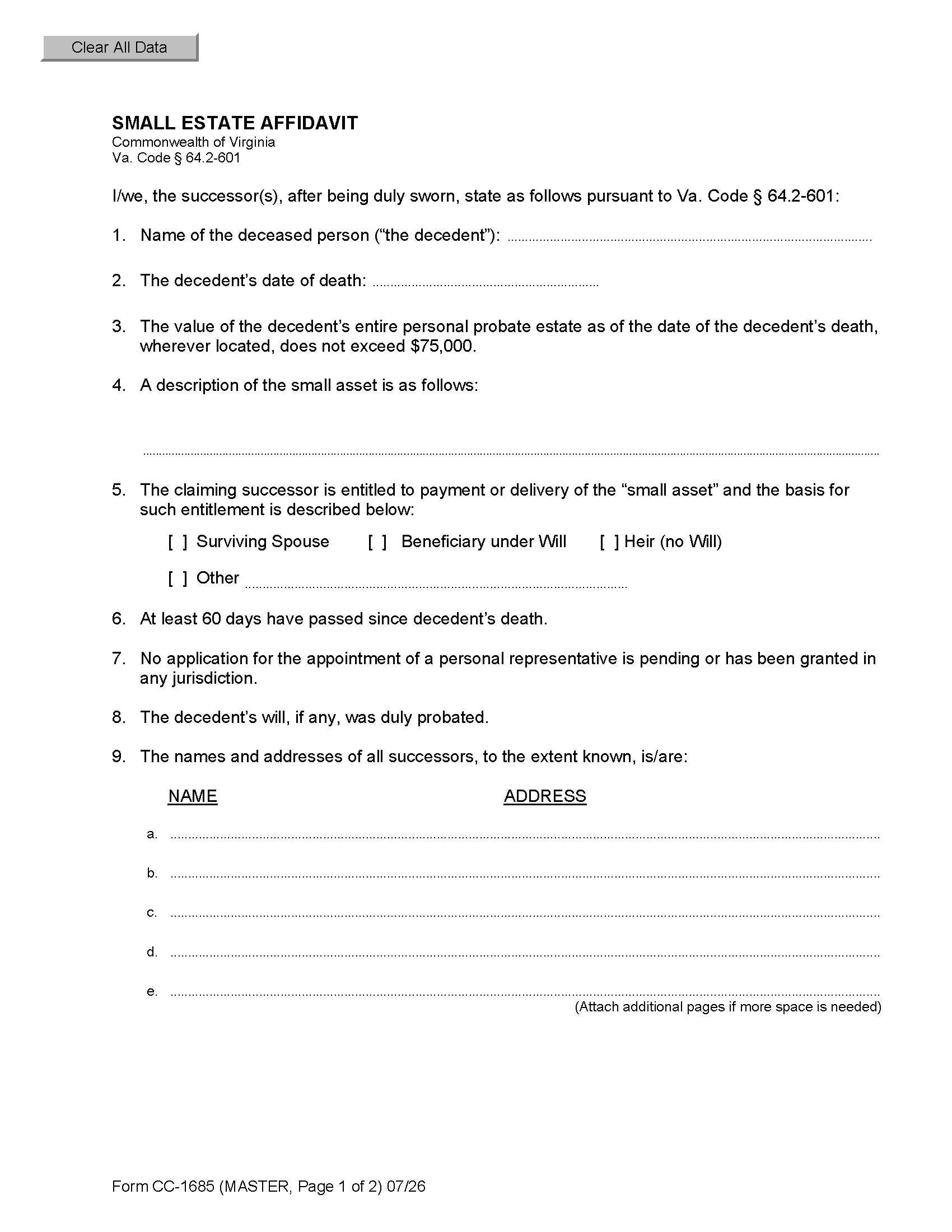
State Laws
- Maximum Amount: $75,000, the decedent’s entire personal probate estate. A single small asset valued at $35,000 or less may be paid without an affidavit. Real property is excluded from both procedures.[1][2][3]
- Signing Requirements: A sworn affidavit made by all of the known successors.[4]
- Where to File: Not filed with the court, presented directly to the person or institution holding the asset.[5][6]
- When to File: 60 days after death.[7]
- Survivor Requirements: A rightful heir must survive the decedent by at least 120 hours (5 days).[8]
Rightful Heirs (Hierarchy)
If the decedent did not have a will, the beneficiary hierarchy is as follows:
- Spouse: When the spouse takes one-third (decedent had a child from another relationship), the decedent’s children and their descendants share the other two-thirds. If there is no surviving spouse, the children take the entire estate.[9]
- No Spouse, Children: If the decedent left a child from another relationship, all of the decedent’s children and their descendants share two-thirds of the estate. If there is no surviving spouse, the children take the entire estate.[10]
How to File a Small Estate
Step 2 – Confirm the Estate Qualifies
The decedent’s entire personal probate estate must be $75,000 or less, and no personal representative may be pending or appointed. The small-estate affidavit transfers personal or other non-real-estate assets; it does not transfer real property.[12][13]
Step 3 – Prepare the Affidavit
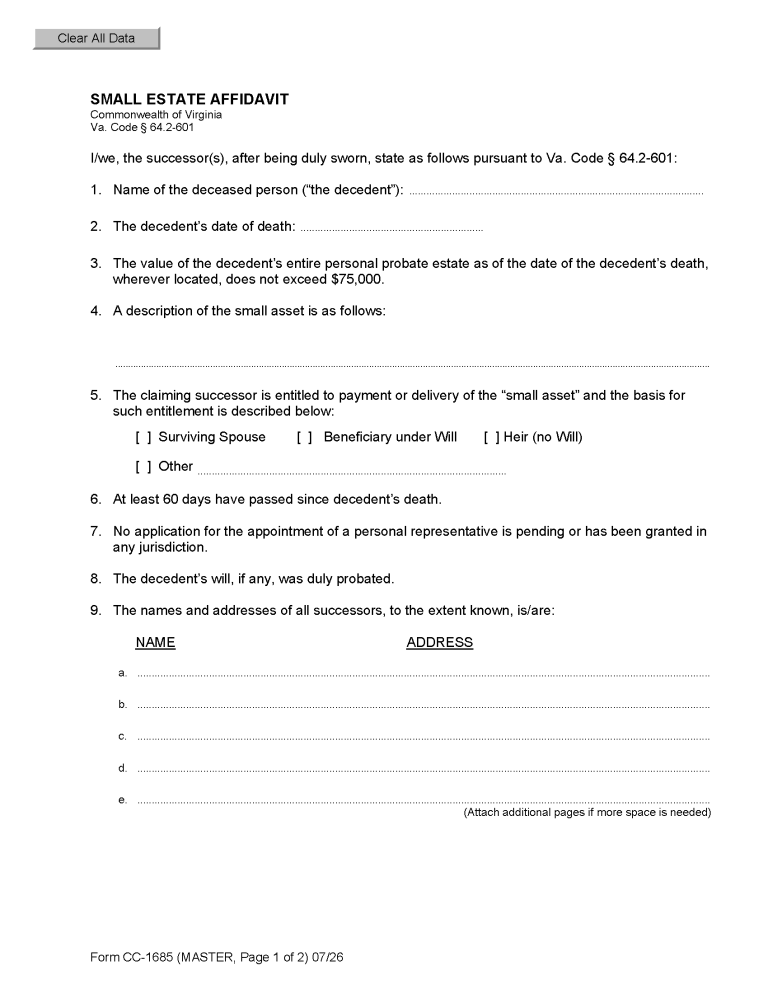
All known successors prepare and sign the affidavit, stating the estate value, that 60 days have elapsed, that no personal representative is pending, the basis of entitlement, and the designated successor.[14]
Step 4 – Present the Affidavit to the Asset Holder
Present the affidavit to the bank, transfer agent, or other holder of the asset to obtain payment or transfer. A single qualifying asset of $35,000 or less may be paid under the separate statutory provision without an affidavit.[15][16]
Step 5 – Distribute the Property
The designated successor holds the funds as a fiduciary and distributes them to the other successors under Virginia intestacy or the will.[17]
Sample
Download: PDF
Sources
- Va. Code § 64.2-601
- Va. Code § 64.2-600
- Va. Code § 64.2-602
- Va. Code § 64.2-601
- Va. Code § 64.2-601
- Va. Code § 64.2-603
- Va. Code § 64.2-601
- Va. Code § 64.2-2201
- Va. Code § 64.2-200
- Va. Code § 64.2-200
- Va. Code § 64.2-601
- Va. Code § 64.2-601
- Va. Code § 64.2-600
- Va. Code § 64.2-601
- Va. Code § 64.2-601
- Va. Code § 64.2-602
- Va. Code § 64.2-601
 Chat with a Lawyer