


 Create Document

 Adobe PDF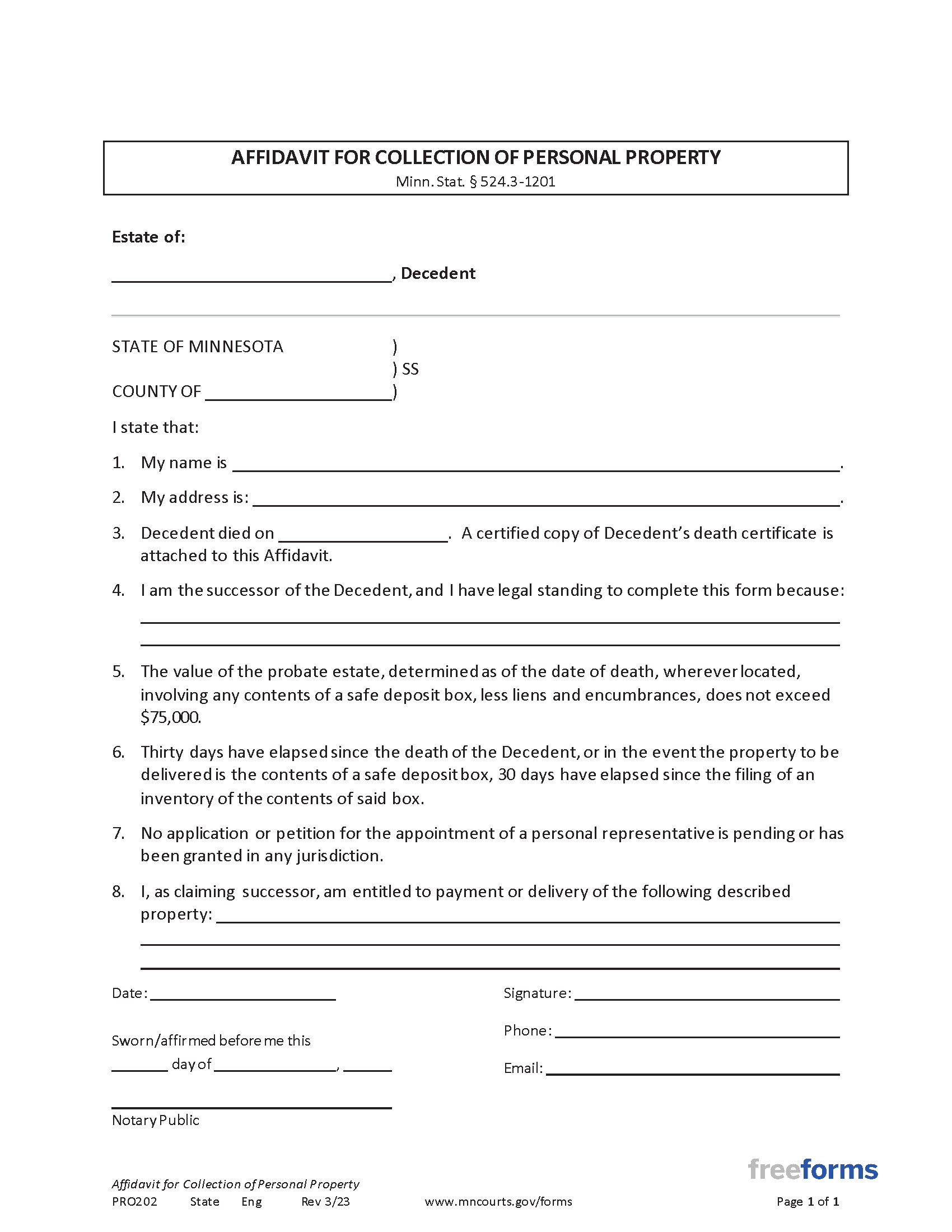
State Laws
- Maximum Amount: $75,000, the value of the entire probate estate at the date of death, wherever located (including safe-deposit-box contents), less liens and encumbrances.[1]
- Signing Requirements: Sworn affidavit, presented with a certified death record.[2]
- Where to File: Not filed with the court, presented directly to the person or institution holding the asset.[3]
- When to File: 30 days after death, and only if no personal representative appointment is pending.[4]
- Survivor Requirements: A rightful heir must survive the decedent by at least 120 hours (5 days).[5]
Rightful Heirs (Hierarchy)
If the decedent did not have a will, the beneficiary hierarchy is as follows:
- Spouse: The surviving spouse receives the entire estate. Minnesota guarantees the spouse a first share of at least $225,000, which is more than the $75,000 small estate limit.[6]
- No Spouse, Children: If there is no surviving spouse, the estate passes to the decedent’s descendants, with a deceased child’s share passing to that child’s descendants.[7]
Sample
Download: PDF
How to File a Small Estate
Step 1 – Wait 30 Days
At least 30 days must pass after the decedent’s death before the affidavit may be used.
Step 2 – Confirm the Estate Qualifies
The entire probate estate (less liens and encumbrances) must be $75,000 or less, the estate must contain no real estate, and no personal representative appointment may be pending.
Step 3 – Obtain a Certified Death Record
Obtain a certified copy of the death record to present with the affidavit.
Step 4 – Complete Form PRO202
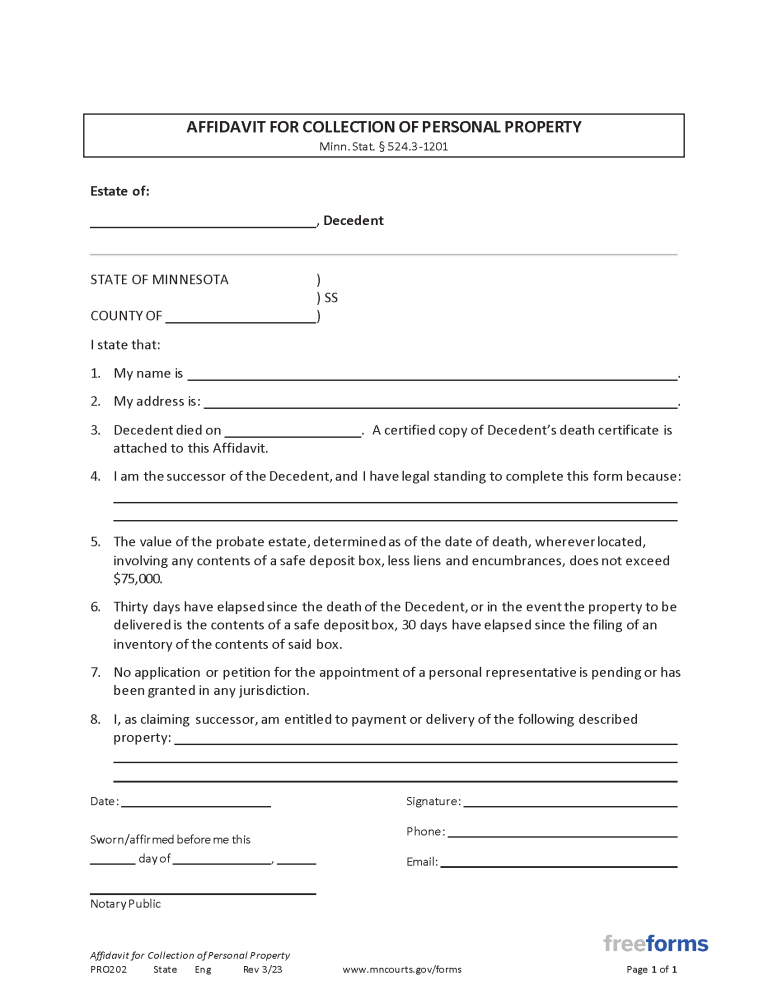
Complete the Affidavit for Collection of Personal Property (Form PRO202) and sign and swear to it.[8]
Step 5 – Present the Affidavit to the Asset Holder
Present the signed affidavit and certified death record to the bank, employer, or other holder of the property to obtain payment or transfer.[9]
 Chat with a Lawyer