


 Create Document

 Adobe PDF
 Microsoft Word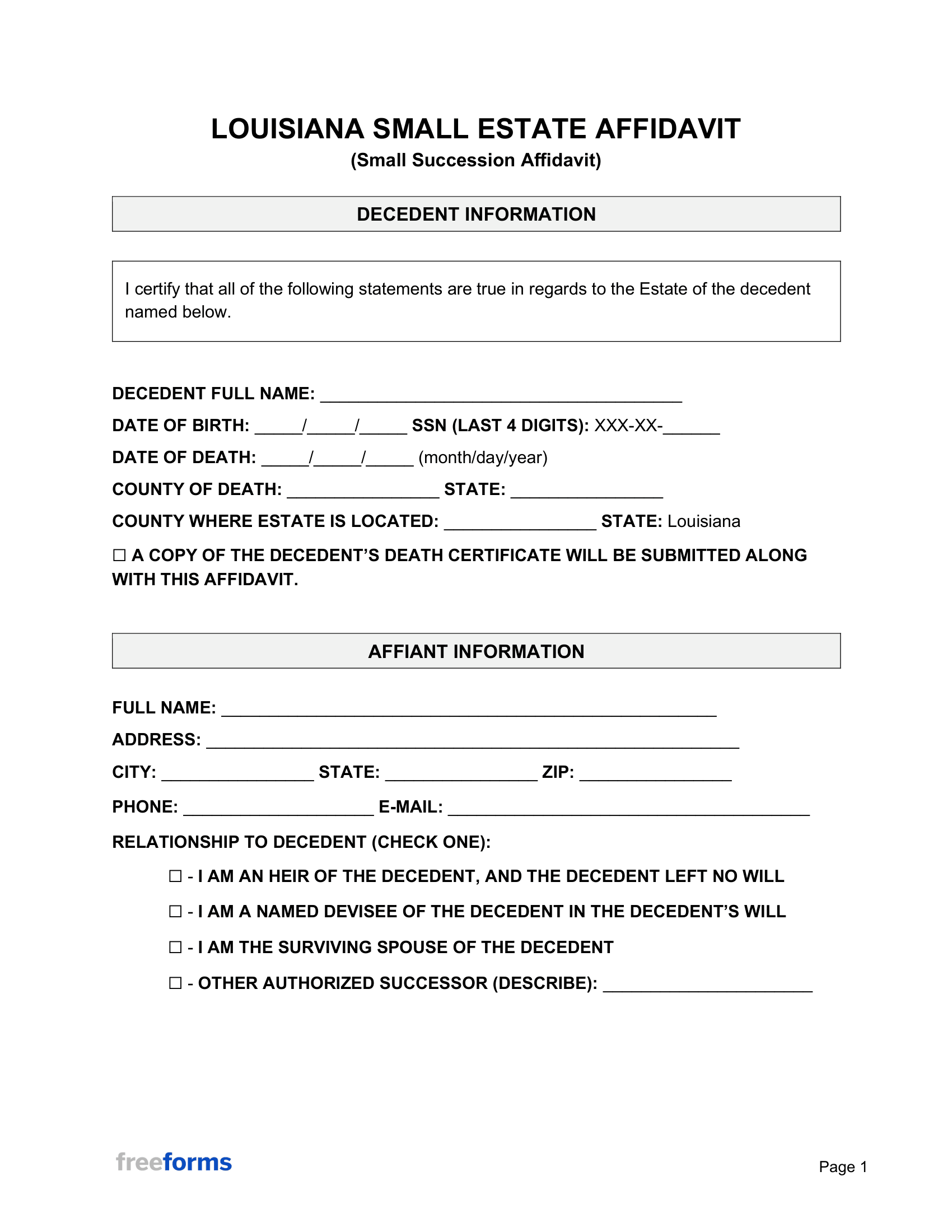
State Laws
- Maximum Amount: $125,000, the gross value of the estate at the date of death. The affidavit covers both immovable (real) and movable property.[1]
- Signing Requirements: Executed by at least two persons, the surviving spouse, if any, and one or more competent major heirs (or legatees).[2]
- Where to File: The affidavit is recorded in the conveyance records of the clerk of court in each parish where immovable property is located.[3]
- When to File: No statutory waiting period applies. If the affidavit includes immovable property, record it in the conveyance records of each parish where the property is located.[4]
- Survivor Requirements: Under Louisiana civil law, a successor must exist at the moment of the decedent’s death to inherit.[5]
Rightful Heirs (Hierarchy)
If the decedent did not have a will, the beneficiary hierarchy is as follows:
- Spouse: If the decedent left no descendants, the surviving spouse inherits the decedent’s share of the community property.[6] If there are descendants, the spouse instead receives a usufruct (a right to use the property) over the decedent’s share of the community property, which ends when the spouse dies or remarries.[7] The spouse inherits the decedent’s separate property only if the decedent left no descendants, parents, siblings, or descendants of siblings.[8]
- No Spouse, Children: The decedent’s children (descendants) inherit the estate. Separate property passes to them equally, with a deceased child’s share passing to that child’s descendants. The decedent’s share of community property also passes to them, subject to the surviving spouse’s usufruct.[9][10]
How to File a Small Estate
Step 1 – Confirm the Succession Qualifies
The gross value of the estate must be $125,000 or less at the date of death, or the decedent must have died at least 20 years ago.[11]
Step 2 – Identify the Heirs and Their Interests
Determine the heirs (or legatees) and their respective interests, including any usufruct of the surviving spouse over community property.[12][13]
Step 3 – Prepare the Small Succession Affidavit
Prepare the affidavit setting out the date of death and domicile, marital status, the heirs and their addresses, a description of the property and whether each item is community or separate, the value of each item, and each heir’s interest. For any heir who will not sign, either confirm they cannot be located after reasonable diligence or give them 30 days’ mailed notice.[14]
Step 4 – Sign Before a Notary
Have at least two qualifying persons (the surviving spouse and/or competent major heirs) sign and swear the affidavit before a notary, under penalty of perjury.[15]
Step 5 – Record the Affidavit
For immovable property, record a multiple original or certified copy of the affidavit, together with any attachments required under Article 3433, in the conveyance records of each parish where the property is located. For movable property, a multiple original or certified copy may be presented to the person or institution holding the property as authority for its delivery.[16]
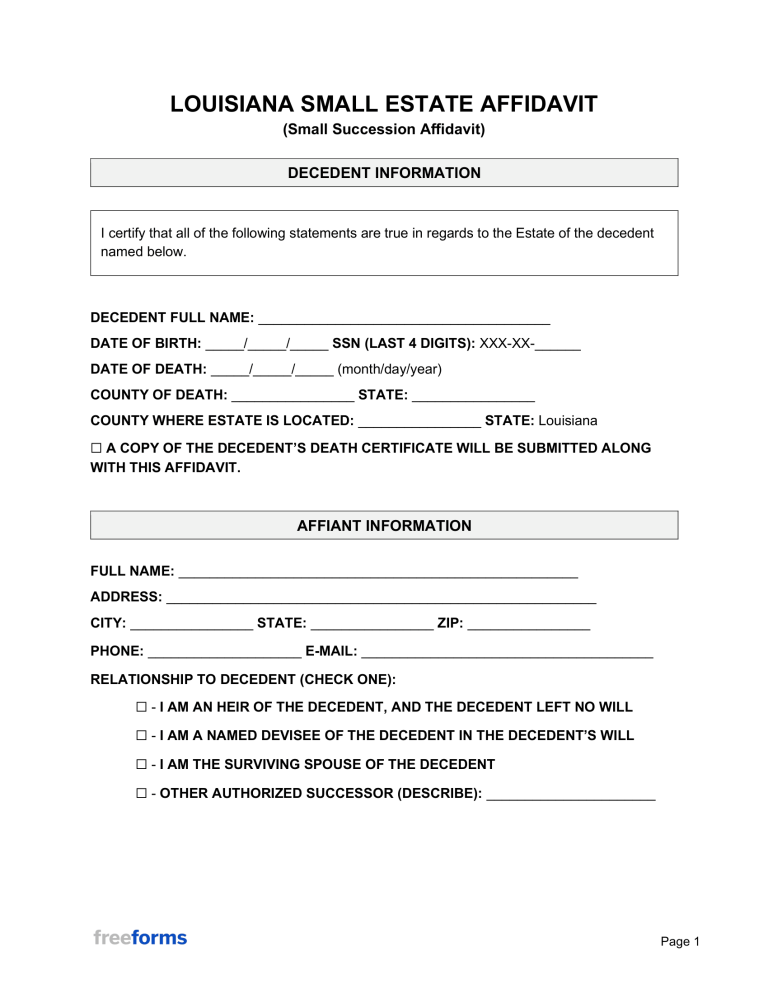
Sample
Sources
- La. Code Civ. Proc. art. 3421
- La. Code Civ. Proc. art. 3432
- La. Code Civ. Proc. art. 3434
- La. Code Civ. Proc. art. 3432
- La. Civ. Code art. 939
- La. Civ. Code art. 889
- La. Civ. Code art. 890
- La. Civ. Code art. 894
- La. Civ. Code art. 888
- La. Civ. Code art. 890
- La. Code Civ. Proc. art. 3421
- La. Code Civ. Proc. art. 3432
- La. Civ. Code art. 890
- La. Code Civ. Proc. art. 3432
- La. Code Civ. Proc. art. 3432
- La. Code Civ. Proc. art. 3434
 Chat with a Lawyer