


 Create Document

 Adobe PDF
 Microsoft Word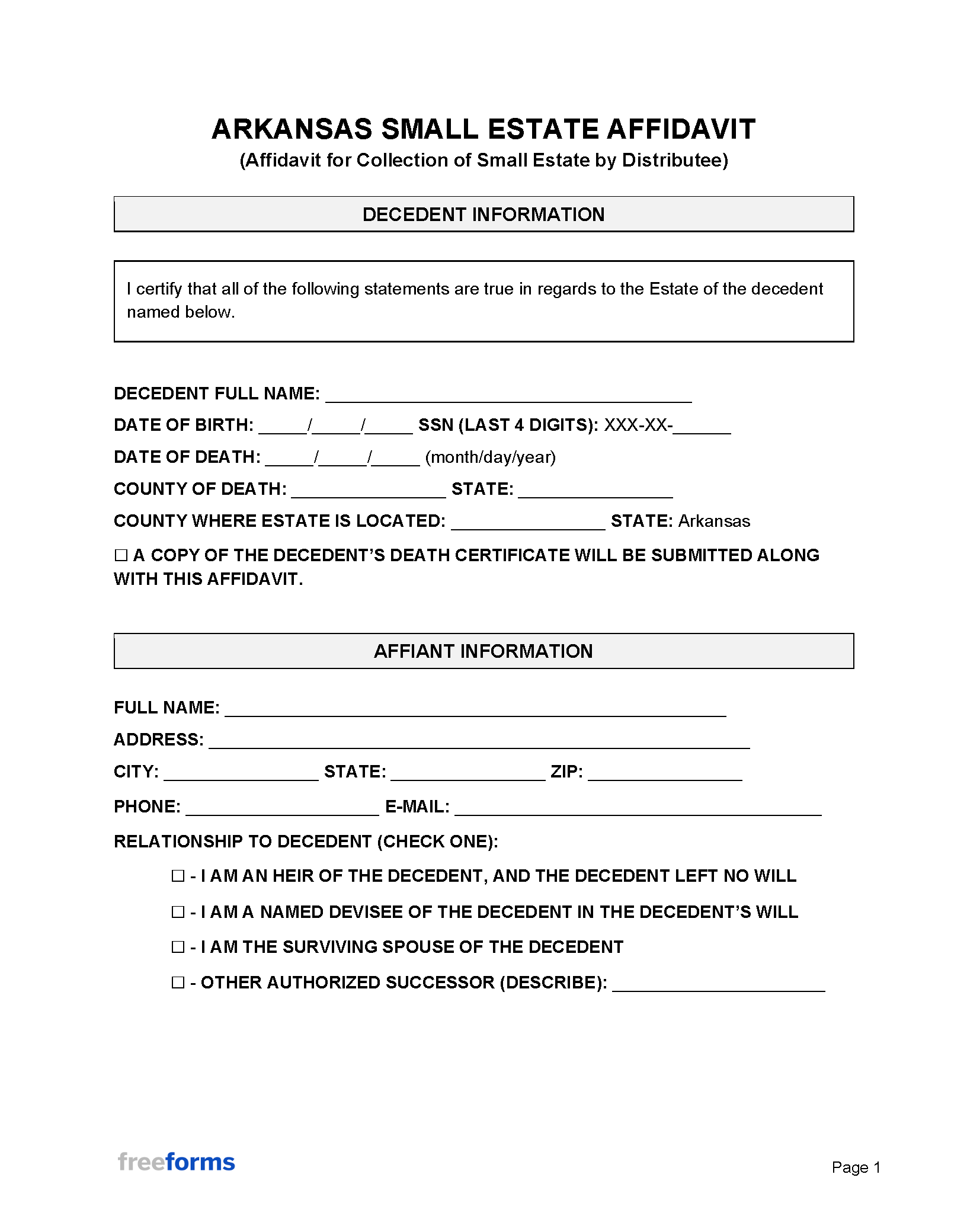
State Laws
- Maximum Amount: $100,000, less encumbrances, excluding the homestead and statutory allowances for a surviving spouse or minor children.[1][2]
- Signing Requirements: Sworn on oath and notarized.[3][4]
- Where to File: With the probate clerk of the circuit court (county clerk) for the county of proper venue.[5][6]
- When to File: 45 days after the decedent’s death.[7]
- Survivor Requirements: A rightful heir must survive the decedent by at least 120 hours (5 days).[8]
Rightful Heirs (Hierarchy)
If the decedent did not have a will, the beneficiary hierarchy is as follows:
- Spouse: If the decedent had no children, grandchildren, or other descendants, the surviving spouse receives the entire estate, unless the marriage lasted less than three years. In that case, the spouse receives one-half, and the rest passes to the decedent’s other heirs, such as parents.[9]
- No Spouse, Children: If the decedent had children or other descendants, they inherit subject to the surviving spouse’s dower or curtesy rights. A deceased child’s share passes to that child’s descendants.[10]
How to File a Small Estate
Step 1 – Wait 45 Days
At least 45 days must pass after the decedent’s death before the affidavit may be filed.[11]
Step 2 – Confirm the Estate Qualifies
The estate’s value (less encumbrances), excluding the homestead and statutory allowances, must be $100,000 or less. No petition for a personal representative may be pending or granted.[12]
Step 3 – Complete Form 23 and Have It Notarized
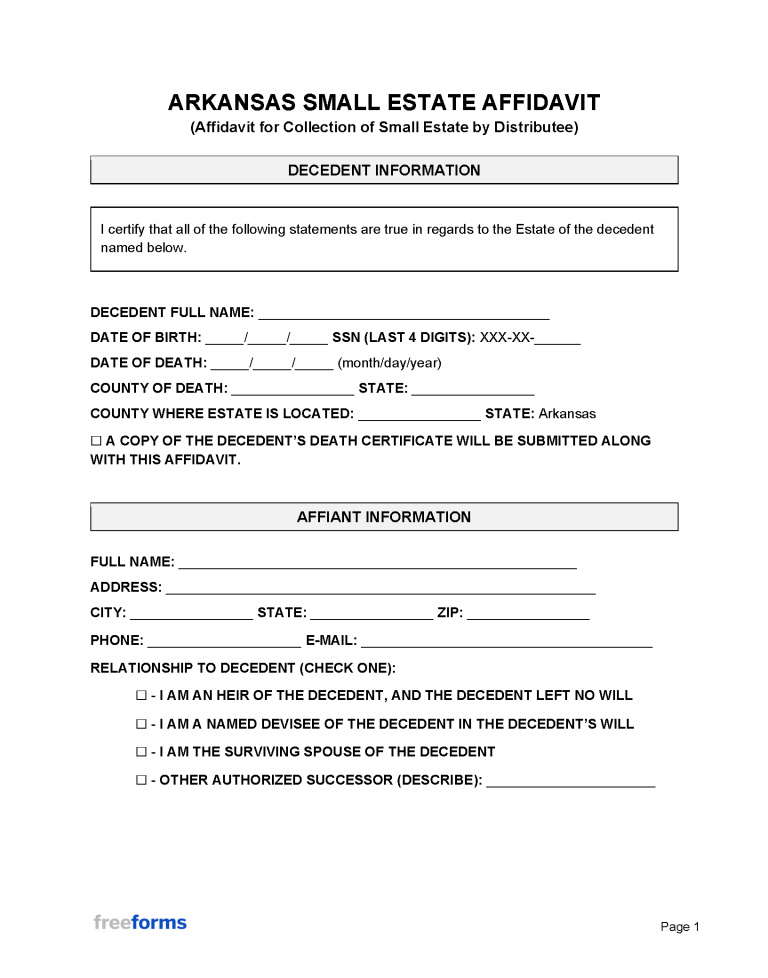
Complete the Affidavit for Collection of Small Estate by Distributee (Form 23), listing the assets, their values, the persons holding them, and the beneficiaries. The affidavit must state there are no unpaid claims and must be sworn on oath before a notary.[13]
Step 4 – File With the Circuit Court Clerk
File the notarized affidavit with the probate division of the circuit court in the county of proper venue, through the circuit clerk, and pay the filing fee.[14][15][16]
Step 5 – Publish Notice (If the Estate Includes Real Property)
If the estate contains real property, publish a notice of the death and the affidavit’s filing in a newspaper within 30 days after filing, so creditors may present claims.[17][18]
Step 6 – Collect and Distribute the Property
Present the certified copy of the filed affidavit to those holding the assets to collect and distribute the estate to the rightful heirs.[19]
Sample
Sources
- Ark. Code Ann. § 28-41-101(a)(1)
- Craighead County, Arkansas (Small Estate Instructions)
- Ark. Code Ann. § 28-41-101(a)(1)(D)
- Garland County, Arkansas (Affidavit for Collection of Small Estate by Distributees)
- Ark. Code Ann. § 28-41-101(a)(1)(D)
- Craighead County, Arkansas (Small Estate Instructions)
- Ark. Code Ann. § 28-41-101(a)(1)
- Ark. Code Ann. § 28-10-202
- Ark. Code Ann. § 28-9-214(2)
- Ark. Code Ann. § 28-9-214(1)
- Ark. Code Ann. § 28-41-101(a)(1)
- Ark. Code Ann. § 28-41-101(a)(1)
- Ark. Code Ann. § 28-41-101(a)(1)(D)
- Craighead County, Arkansas (Small Estate Instructions)
- Ark. Code Ann. § 28-41-101(b)(1)
- Garland County, Arkansas (Affidavit for Collection of Small Estate by Distributees)
- Ark. Code Ann. § 28-41-101(b)(2)
- Craighead County, Arkansas (Small Estate Instructions)
- Ark. Code Ann. § 28-41-101(a)(1)
 Chat with a Lawyer