


 Create Document
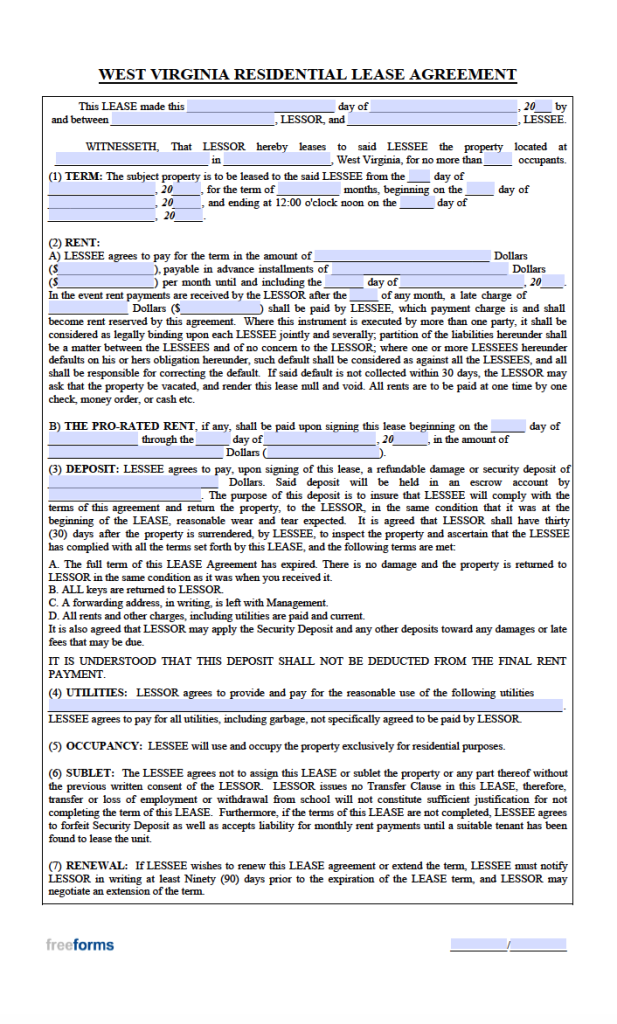
 Adobe PDF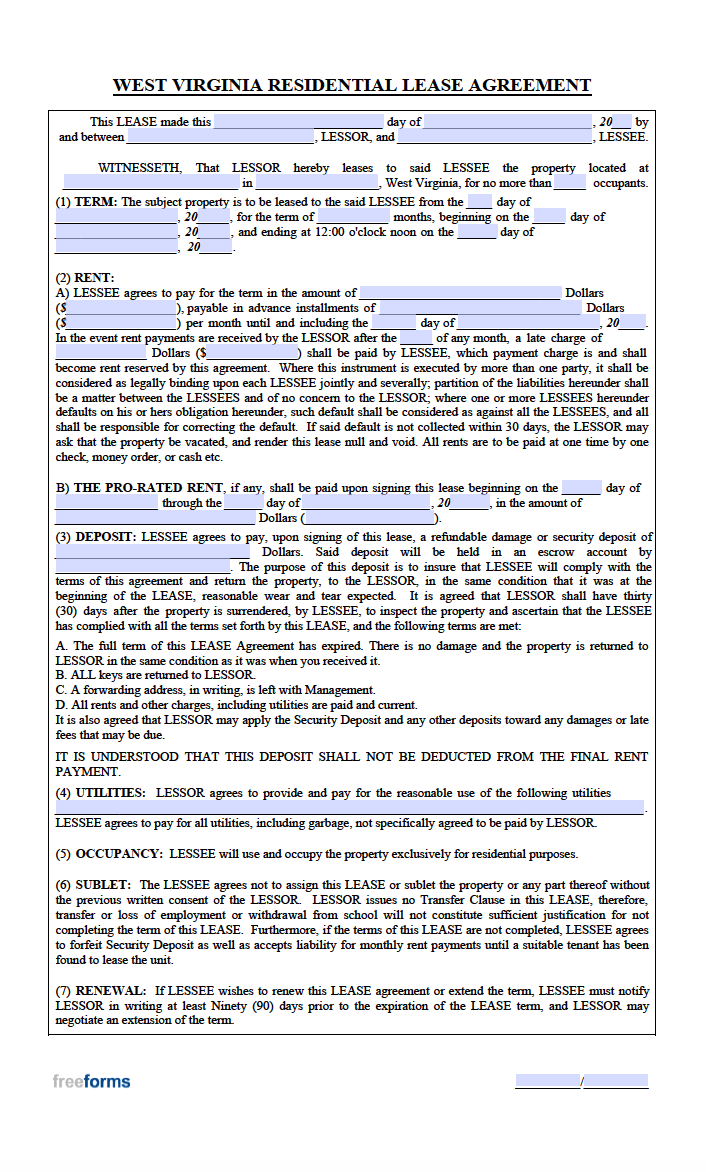
Lease Agreements By Type (6)
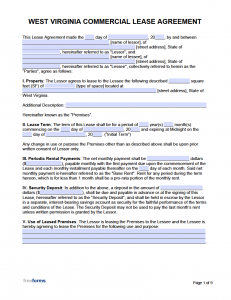 Commercial Lease Agreement: Documents the rental requirements a business entity meets whenever renting property from a landlord to do business. Commercial Lease Agreement: Documents the rental requirements a business entity meets whenever renting property from a landlord to do business.
Download: PDF, Word (.docx) |
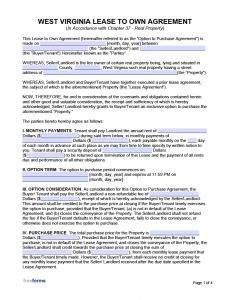 Lease to Own Agreement: A rental contract that includes purchase agreement terms for tenants, therefore enabling property purchase. Lease to Own Agreement: A rental contract that includes purchase agreement terms for tenants, therefore enabling property purchase.
Download: PDF, Word (.docx) |
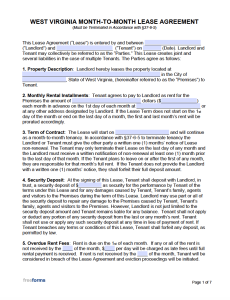 Month-to-Month Lease: Presents rental conditions in a 1 month term agreement that renews until one party terminates (30-day notice) accordingly. Month-to-Month Lease: Presents rental conditions in a 1 month term agreement that renews until one party terminates (30-day notice) accordingly.
Download: PDF, Word (.docx) |
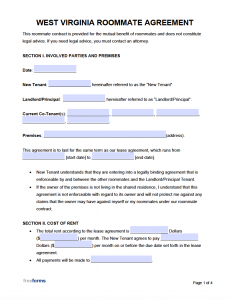 Roommate Agreement: Defines the responsibilities (e.g., rent, utilities, maintenance) that 2 or more cohabitants agree to when renting one property. Roommate Agreement: Defines the responsibilities (e.g., rent, utilities, maintenance) that 2 or more cohabitants agree to when renting one property.
Download: PDF, Word (.docx) |
|
Standard Lease Agreement Download: PDF |
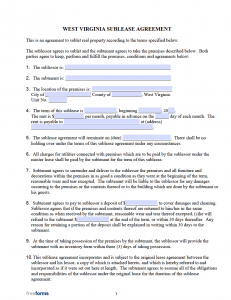 Sublease Agreement: Solidifies the acknowledgment of a sub-tenant to rent a property from the sub-landlord that is currently renting it. Sublease Agreement: Solidifies the acknowledgment of a sub-tenant to rent a property from the sub-landlord that is currently renting it.
Download: PDF, Word (.docx) |
Required Landlord Disclosures
1.) Non-Refundable Fees: Landlords explicitly disclose all charges tenants must pay at the time of execution that the landlord retains.
2.) Lead-Based Paint (42 U.S. Code § 4852d): Discusses potential dangers of lead exposure from lead paint on a pre-1978 property.
When is Rent Due?
Grace Period: West Virginia does not govern a lease’s grace period; however, it expects compliance with such provisions (W. Va. Code § 37-6-19).
Unpaid Rent: Landlords respond to unpaid rent by filing for possession, prompting:
- The magistrate court to set a court date in 5-10 days
- The tenant receives notice of the court date (W. Va. Code § 55-3A-1).
Late Fees
NSF Fees
Security Deposit Maximum ($)
Security Deposit Return
Returning to Tenant: Landlords return the security deposit, specifically, within 60 days of termination, or 45 days of a new tenant’s move-in (whichever is shorter) (W. Va. Code §§ 37-6A-1(7)), (W. Va. Code § 37-6A-2(a)).
Itemized List: An account sheet of every deduction must accompany the security deposit return whenever the landlord subtracts for damages (W. Va. Code §§ 37-6A-1(7)), (W. Va. Code § 37-6A-2(a)).
Landlord’s Right To Enter
Standard Entry: While West Virginia does not explicitly govern landlord entry, it requires notice before entry to investigate abandonment (W. Va. Code art. 37-6).
Emergency Entry: West Virginia does not require or govern landlord notice in order to access the property in emergencies (W. Va. Code art. 37-6).
Absence
Repair and Deduct
When a Tenant Terminates (early)
Duty to Mitigate: Landlords do not need to mitigate, especially when the lease states tenants remain liable after abandonment. ((W. Va. Code § 37-6-7).
Domestic Violence: Domestic violence victims cannot terminate their lease without court orders; however, they may gain sole possession (W. Va. Code § 48-27-503).
Active Military: Whenever service members must relocate, they and their spouses may terminate a lease accordingly (requires 30 days’ notice) (50 USC 3955).
Landlord Noncompliance: Landlord violations may protect against retaliatory evictions; however, tenants must seek court aid as a cure (W. Va. Code § 37-6-30), (W. Va. Code § 55-3A-3(b)).
Landlord Harassment: Tenant may not abandon the property since they should seek a court injunction when facing landlord harassment.
Inhabitability: West Virginia does not allow terminations over habitability; however, when the property is destroyed, they may seek lower rent (W. Va. Code § 37-6-28), (W. Va. Code § 37-6-30).
Is an Oral Lease enforceable?
Renewing a Lease
Unclaimed Property
West Virginia explicitly requires landlords to safeguard any tenant property still present after they regain possession of the property:
- Landlords post a 30-day notice informing tenants to remove their property before disposal, as well as mail tenants a copy.
- Landlords wait an additional 30 days before disposing of tenant property whenever it is worth at least $300 and the tenant volunteers to pay for storage before retrieval
- Landlords must give 60 days’ notice before removing tenant property whenever the tenant is active military (W. Va. Code § 37-6-6(c)-(e)).
 Chat with a Lawyer