


 Create Document

 Adobe PDF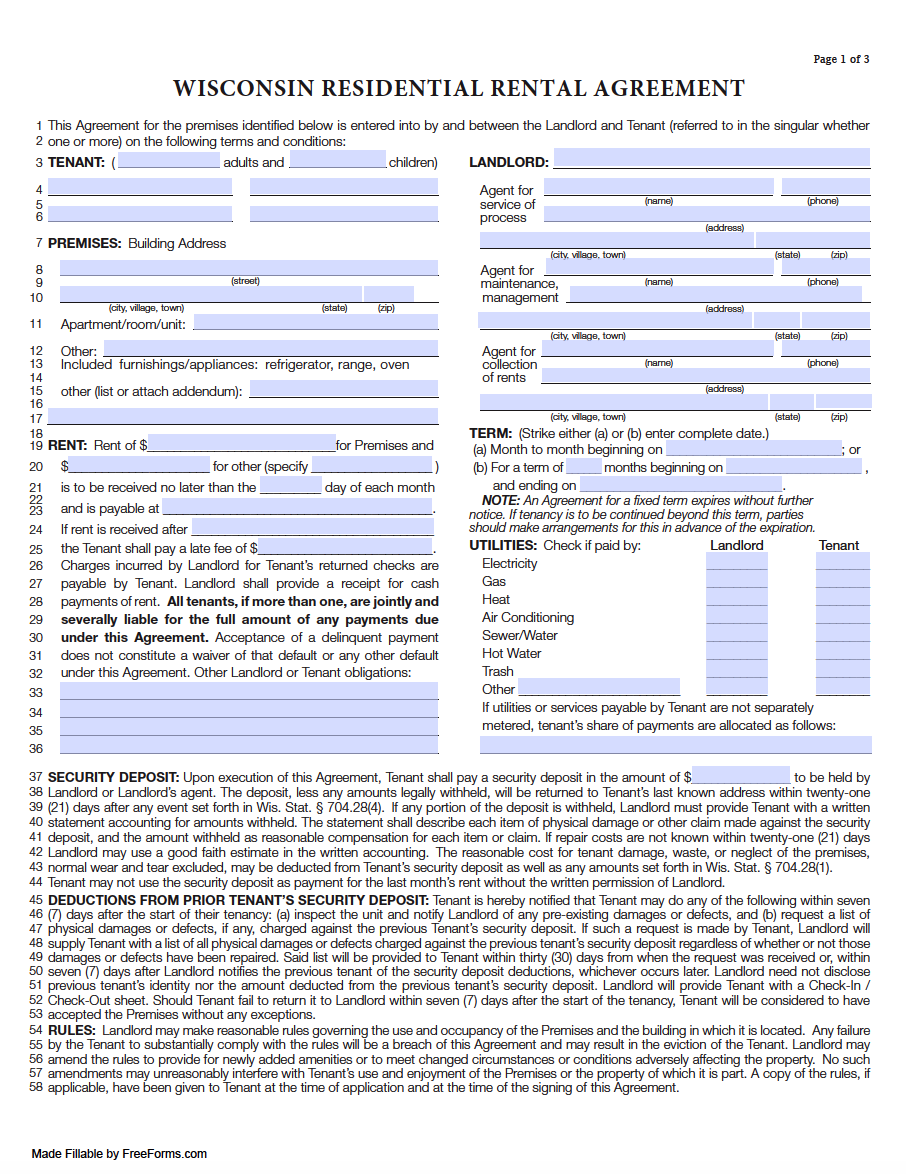
Lease Agreements By Type (7)
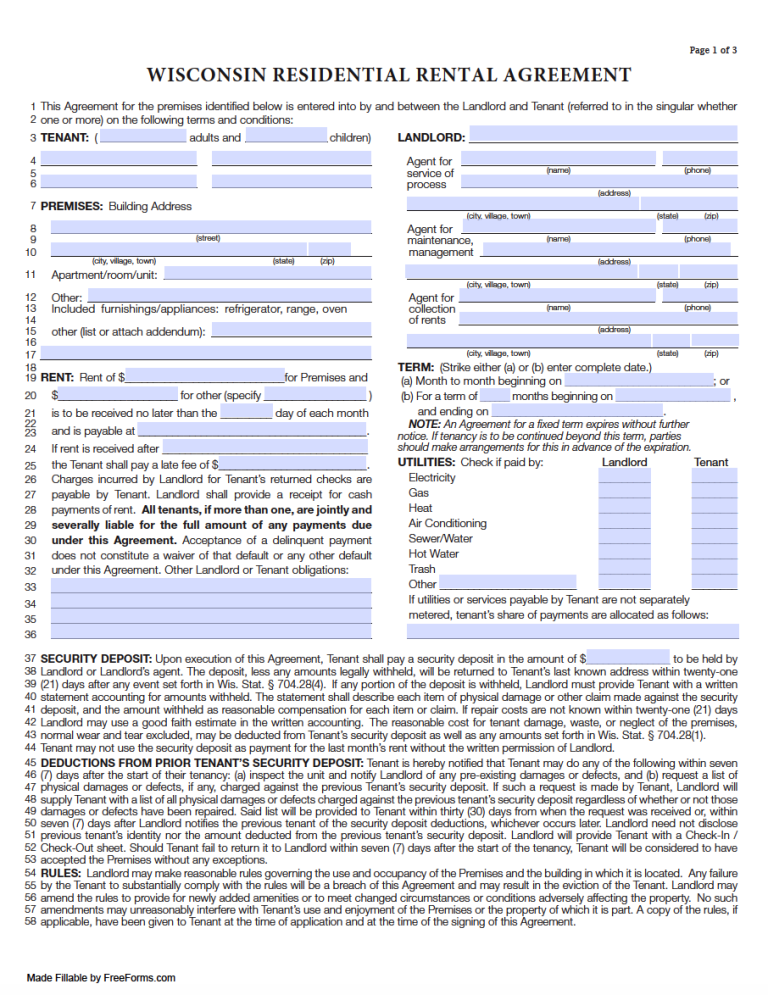
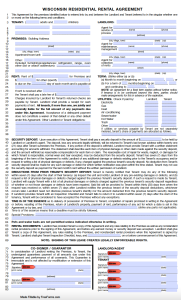
 Association of Realtors Version: An editable lease from the Wisconsin Realtors Association covering the contract provisions describing a residential rental. Association of Realtors Version: An editable lease from the Wisconsin Realtors Association covering the contract provisions describing a residential rental.
Download: PDF |
 Commercial Lease Agreement: The rental contract landlords use whenever renting property to a tenant that is a business entity. Commercial Lease Agreement: The rental contract landlords use whenever renting property to a tenant that is a business entity.
Download: PDF, Word (.docx) |
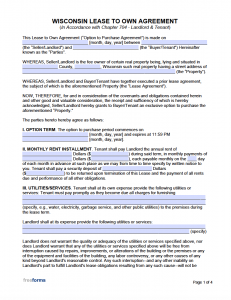 Lease to Own Agreement: A purchase agreement and rental contract specifically describing the tenant’s purchase opportunity for the property. Lease to Own Agreement: A purchase agreement and rental contract specifically describing the tenant’s purchase opportunity for the property.
Download: PDF, Word (.docx) |
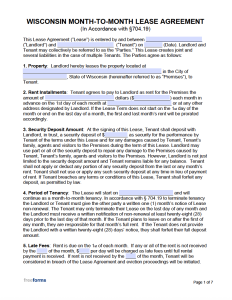 Month-to-Month Lease: An at-will contract to rent property with automatic monthly renewal and termination upon demand and 28 days notice. Month-to-Month Lease: An at-will contract to rent property with automatic monthly renewal and termination upon demand and 28 days notice.
Download: PDF, Word (.docx) |
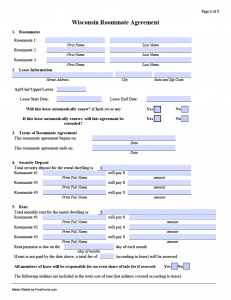 Roommate Agreement: A lease between two or more tenants solidifying the conditions they follow while cohabiting a property. Roommate Agreement: A lease between two or more tenants solidifying the conditions they follow while cohabiting a property.
Download: PDF |
|
Standard Lease Agreement Download: PDF, Word (.docx) |
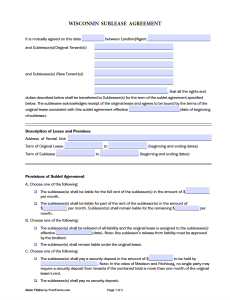 Sublease Agreement: A contract explicitly defining how subtenants will rent space from master tenants who hold the master lease. Sublease Agreement: A contract explicitly defining how subtenants will rent space from master tenants who hold the master lease.
Download: PDF, Word (.docx) |
Additional Forms
Bed Bug Addendum: A voluntary but traditional disclosure describing a property’s bed bug status accordingly.
Nonstandard Rental Provisions Addendum: A disclosure of all fees not present at the time of signing but requiring payment, as well as an acknowledgement.
Renter’s Insurance Disclosure: A document explicitly informing tenants that the landlord does not carry insurance protecting tenant property.
Rules & Regulations Addendum: The code of conduct that landlords expect of tenants on the property accordingly.
Smoke & Carbon Monoxide Detector Notices: An acknowledgement of a property’s detectors as well as the tenant’s maintenance obligations.
Required Landlord Disclosures
1.) Identification of the Landlord or Authorized Agents: The lease must refer to the established landlord, the owner(s), or management officials that are certified to receive rental payments and maintain the residence(§ 134.04).
2.) Shared Utilities: It must be itemized within the document, which utilities will be the responsibility of the tenant, and which will be covered by the landlord. The designation of any specific deposits that must be retained by the tenant should be denoted in this section of the agreement as well (§ 134.04(3)).
3.) Move-in Checklist: The state of Wisconsin mandates a checklist accompany the lease agreement to be filled with the prospective tenant to assess any presented damage on the day the tenant moves into the domicile. The tenant will have 7-days prior to move-in to examine the building for physical defects. Any issues or deterioration notated on the form will not be the tenant’s responsibility upon the completion of the lease (§ 134.06).
4.) Lead-Based Paint (40 CFR § 745.113): For structures built before 1978, the managing official of the building must include within the lease, written notification of exposure risk to hazardous lead-based paint that can be found on the property.
When Rent is Due?
Grace Period: In Wisconsin, rent is due as the lease dictates accordingly (Wis. Stat. § 704.17).
Unpaid Rent: Landlords retain the option of issuing tenants owing rent a 5-day notice to pay or vacate. (Wis. Stat. § 704.17).
Late Fees
NSF Fees
Security Deposit Maximum ($)
Security Deposit Return
Returning to Tenant: Wisconsin explicitly obligates the landlord to return the deposit amount within 21 days from the lease’s termination date.
Itemized List: The landlord must specifically explain all deductions in writing no later than the deposit return date (Wis. Admin. Code ATCP § 134.06(4)).
Landlord’s Right to Enter
Standard Entry: Once landlords obtain consent after giving 12 hours’ notice, they may enter the property ((Wis. Stat. § 704.05(2)); (Wis. Admin. Code ATCP § 134.09(2))
Emergency: Landlords do not need to give advance notice whenever entering to respond properly to “health and safety” emergencies ((Wis. Stat. § 704.05(2)); (Wis. Admin. Code ATCP § 134.09(2))).
Absence
Repair and Deduct
When a Tenant Terminates (early)
Duty to Mitigate: Wisconsin holds landlords responsible for re-renting a property in a reasonable amount of time after abandonment (Wis. Stat. § 704.29).
Domestic Violence: Tenants give appropriate notice for their situation and provide one of the following documents in order to prematurely terminate a lease:
- An injunction (domestic abuse, child abuse, harassment)
- No contact condition of release
- Criminal complaint
- Police Report (Wis. Stat. § 704.16), (Wis. Stat. § 704.21).
Active Military: Service members can terminate their lease (30 days’ notice) specifically when their assignment requires a move (50 USC § 3955).
Landlord Noncompliance: Outside of untenantable conditions, tenants work with the courts for solutions to a landlord’s violations of their lease (Wis. Stat. § 704.07(4)).
Landlord Harassment: While Wisconsin explicitly forbids landlords’ retaliatory actions, tenants cannot terminate leases over harassment but rather seek court instruction ((Wis. Stat. § 704.45), (Wis. Admin. Code ATCP § 134.09(2))).
Inhabitability: Tenants may release possession of the property once it becomes hazardous and the landlord is unable to make it tenantable in a reasonable period (Wis. Stat. § 704.07(4))).
 Chat with a Lawyer