


 Create Document

 Adobe PDF
 Microsoft Word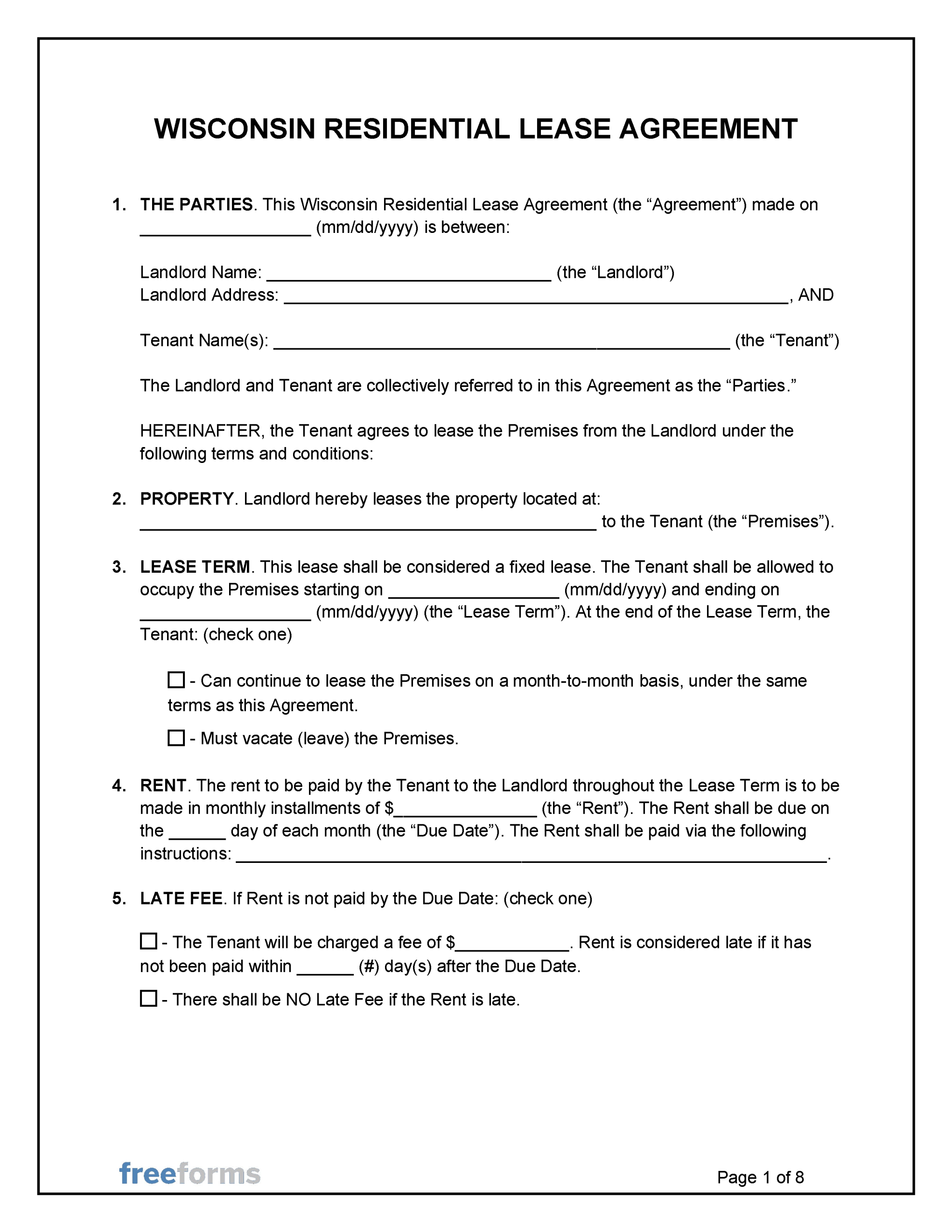
Security Deposit Laws
Maximum Amount: Wisconsin state law does not impose a cap on the amount a landlord may collect as a deposit.
- Receipt Required? Yes. A landlord must immediately issue a receipt upon accepting a security deposit, unless the payment is made with a check with a memo stating its purpose and the tenant does not request one (Wis. Admin. Code ATCP 134.03(2)(a)).
Return Period: The landlord must return the security deposit, minus any lawful deductions, within 21 days after the tenant vacates the premises or is evicted, or the date a new lease begins if the unit is re-rented before the end of the tenancy (Wis. Stat. § 704.28(4)).
- Itemized List Required? Yes. If withholding funds for any reason, the landlord must deliver an itemized written statement detailing the deductions within the 21-day return window (Wis. Admin. Code ATCP 134.06(4)).
Landlord Disclosures
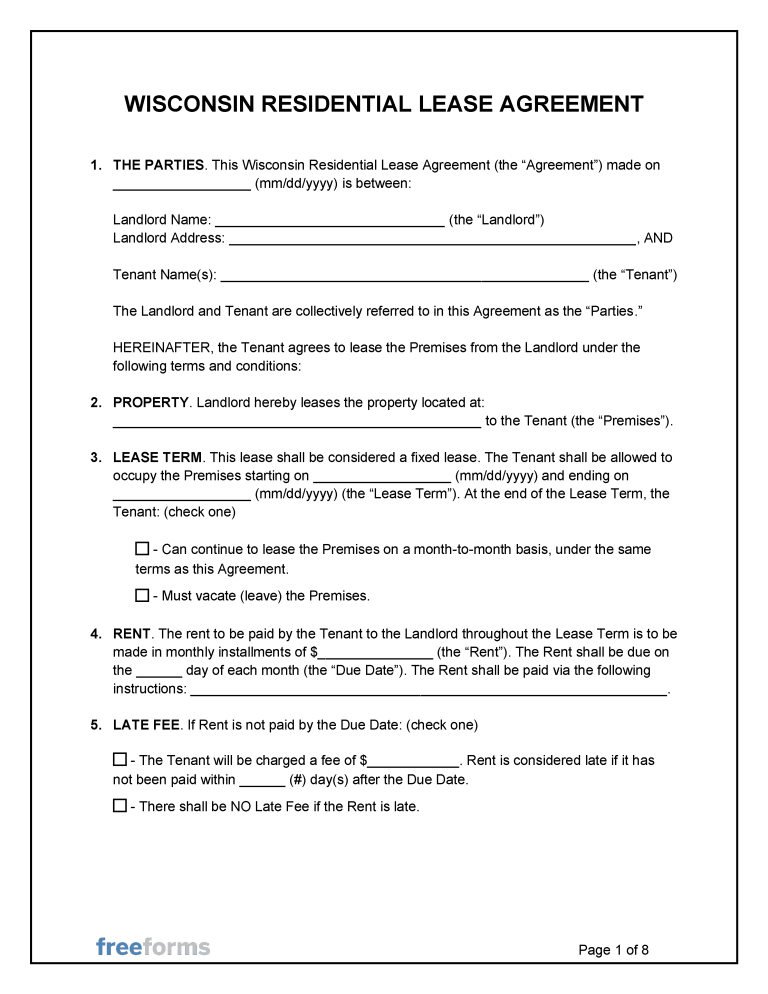
Abandoned Personal Property Policy (if applicable): The landlord must provide written notice in the lease agreement or renewal if they do not intend on holding or storing personal property left behind by a tenant upon moving out or being evicted (Wis. Stat. § 704.05(5)(bf)). This is included in the Wisconsin standard lease agreement.
Check-In Condition Sheet: The landlord must provide any new tenant with a check-in sheet they may use to document the unit’s condition upon move-in. The tenant has 7 days from the beginning of occupancy to complete and return the sheet (Wis. Stat. § 704.08).
Domestic Abuse Protection Notice: Every written residential agreement must include a specific statutory notice informing tenants of the legal protection against eviction, or the right to early termination of a lease, for victims of domestic abuse, sexual assault, or stalking (Wis. Stat. § 704.14). This is included in the Wisconsin standard lease agreement.
Lead-Based Paint Disclosure: For residential structures constructed before January 1, 1978, landlords must distribute the federal EPA Lead Hazard Pamphlet (PDF) and disclose any known lead-based paint hazards before lease execution (40 CFR § 745.113).
Name and Address of Authorized Entities: Before, or at the time of, entering into a rental agreement, the landlord must disclose in writing the name and address of the person authorized to manage the premises, and the owner or person authorized to receive notices and demands on their behalf (Wis. Admin. Code ATCP 134.04(1)).
Uncorrected Code Violation (if applicable): Before entering into a rental agreement or accepting a deposit, the landlord must inform of any uncorrected building or housing code violations of which they have actual knowledge, as well as any conditions affecting habitability (Wis. Admin. Code ATCP 134.04(2)).
Utility Charges (if applicable): Before entering into a rental agreement or accepting a deposit, the landlord must inform the tenant if utilities are not included in the rent, as well as explaining the allocation formula of any shared utility metering (Wis. Admin. Code ATCP 134.04(3)).
Sample
Download: PDF, MS Word (.docx)
 Chat with a Lawyer