


 Create Document

 Adobe PDF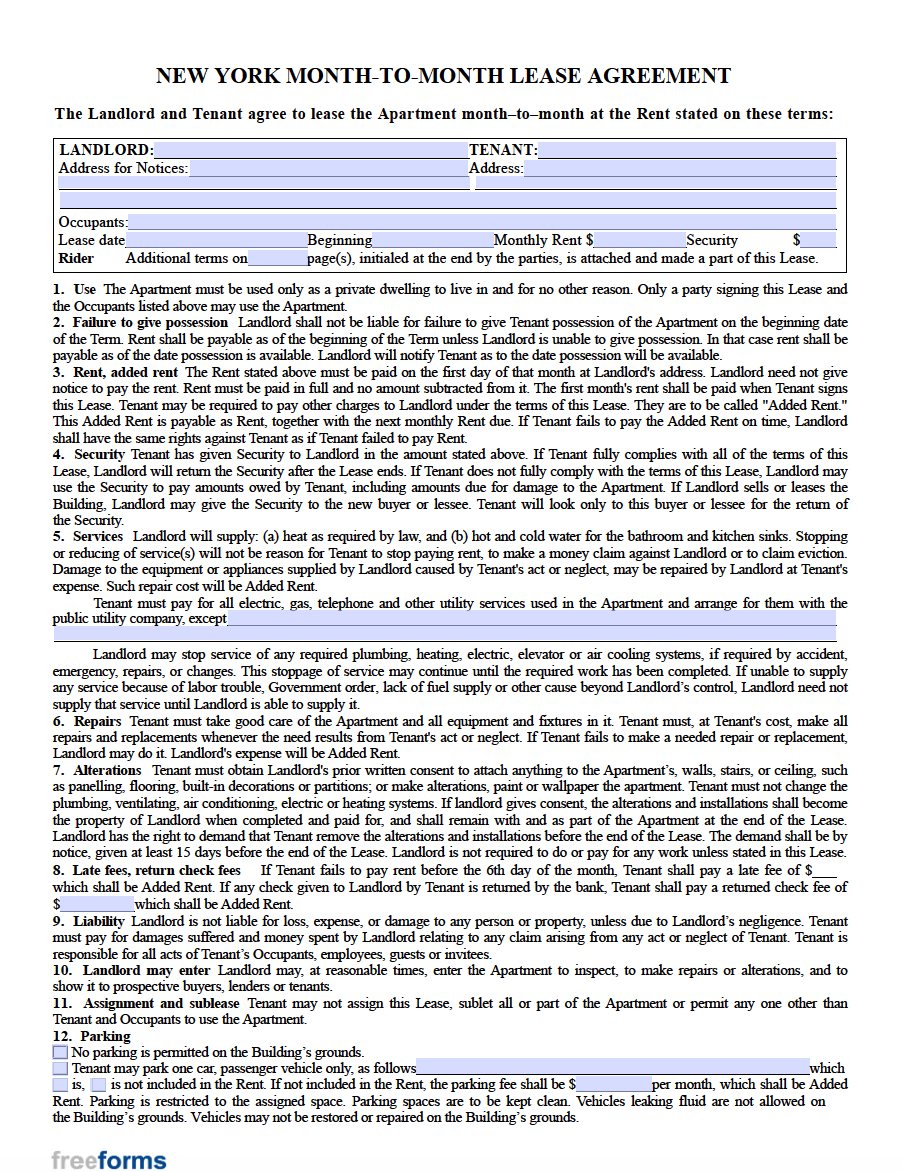
State Laws
Minimum Termination: Tenants outside of New York City must provide at least one month’s written notice to terminate a month-to-month lease (§ 232-b). State law does not require New York City tenants to provide any advance warning, though lease agreements typically require 30 days’ written notice. Landlords statewide must provide an advanced written notice of termination depending on how long the tenant has continuously lived in the unit:
- 30 days: if the tenant has occupied the property for less than one year (§ 226-c(2)(b)).
- 60 days: if the tenant has occupied the property for more than one year but less than two years (§ 226-c(2)(c)).
- 90 days: if the tenant has occupied the unit for more than two years (§ 226-C(2)(d)).
Good Cause Eviction Law: New York City and several other municipalities are subject to the Good Cause Eviction Law, which prohibits landlords from terminating month-to-month leases without “good cause,” such as nonpayment of rent, nuisance, or severe property damage caused by the tenant (§ 212; § 213; § 216). Some properties, such as owner-occupied housing with 10 or fewer units, are exempt from good-cause eviction standards (§ 214). A full list of exempt housing is available here.
Increasing Rent: For any rent increases of 5% or more, New York landlords must provide the same tiered 30/60/90 day notice outlined above before the new rent can legally take effect (§ 226-c(1)(a)). For properties subject to the Good Cause Eviction Law, rent increases are presumed “unreasonable” if they exceed inflation plus 5%, or a 10% maximum, whichever is lower (§ 211(7); § 211(8); § 216(1)(a)(i)). Landlords cannot evict tenants for refusing to pay an increase above this limit unless a court rules the hike was justified by major expenses, such as significant repairs or property tax increases (§ 216(1)(a)(i); § 216(1)(a)(ii)).
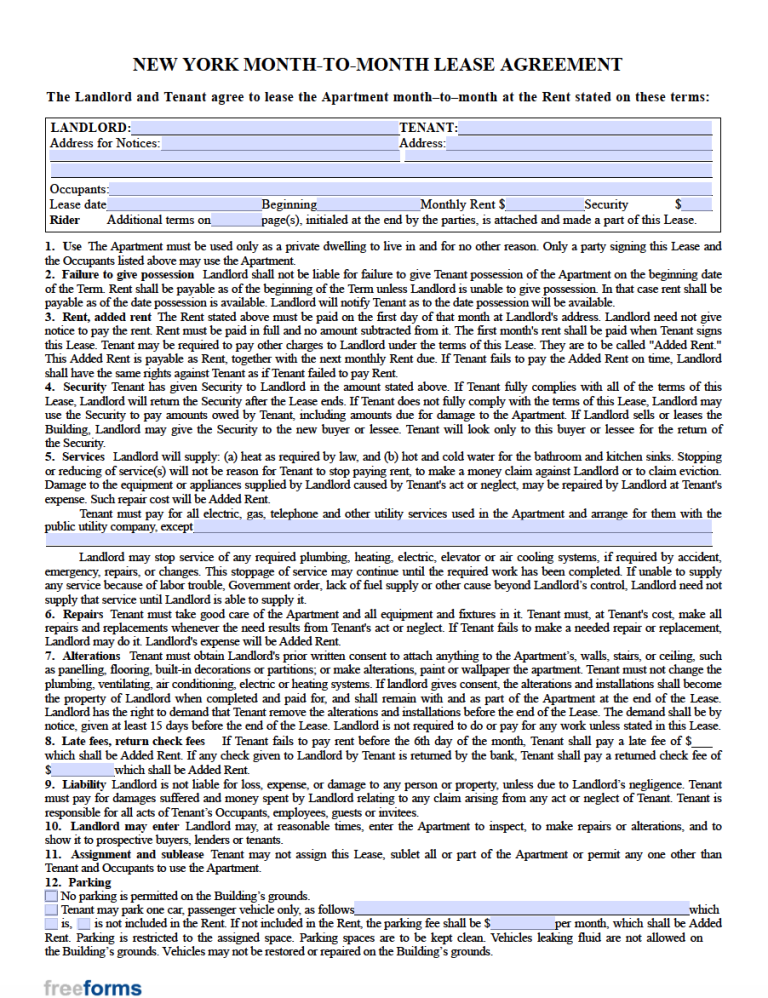
Sample
Download: PDF, MS Word (.docx)
 Chat with a Lawyer