


 Create Document

 Adobe PDF
Lease Agreements By Type (6)
 Commercial Lease Agreement: Introduces the terms and responsibilities of each party in the commitment to rent a unit solely for the sale of services or goods. Commercial Lease Agreement: Introduces the terms and responsibilities of each party in the commitment to rent a unit solely for the sale of services or goods.
Download: PDF, Word (.docx) |
 Lease to Own Agreement: Permits an occupant to rent a piece of property with a supplementary possibility to acquire the leased real estate at the end of the rental period. Lease to Own Agreement: Permits an occupant to rent a piece of property with a supplementary possibility to acquire the leased real estate at the end of the rental period.
Download: PDF, Word (.docx) |
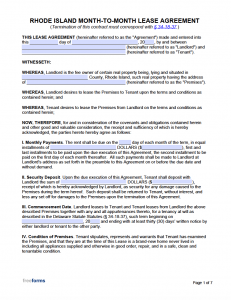 Month-to-Month Lease: Uses a valid contract to rent a space for a specified dollar amount. This particular agreement allows either party to end the agreement early with written notice of thirty (30) days prior to move-out. Month-to-Month Lease: Uses a valid contract to rent a space for a specified dollar amount. This particular agreement allows either party to end the agreement early with written notice of thirty (30) days prior to move-out.
Download: PDF, Word (.docx) |
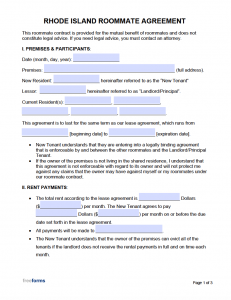 Roommate Agreement: Establishes an arrangement for individuals that wish to rent a portion of a residence from a current tenant or owner. Roommate Agreement: Establishes an arrangement for individuals that wish to rent a portion of a residence from a current tenant or owner.
Download: PDF, Word (.docx) |
|
Standard Lease Agreement Download: PDF, Word (.docx) |
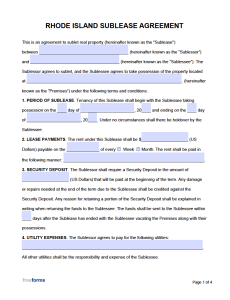 Sublease Agreement: Communicates the intricacies of a lease of a property from a renting tenant to a different party. Sublease Agreement: Communicates the intricacies of a lease of a property from a renting tenant to a different party.
Download: PDF, Word (.docx) |
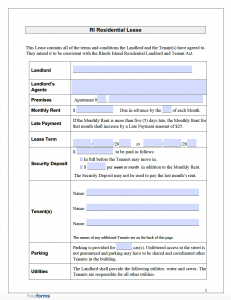
Additional Forms
Required Landlord Disclosures
1.) Identification of the Landlord or Authorized Agents (§ 34-18-20): Any prospective tenant of a rental unit must be notified in writing of the name and address of the owner of the property they are to rent.
2.) Lead-Based Paint (40 CFR § 745.113): Older residences that were constructed in or before 1978 will need an additional notification of the risks involved with contact with paint composed of lead.
3.) Code Infraction (§ 34-18-22.1): When a rental dwelling incurs a housing violation on the local or state level, the tenant must be alerted to the fact within thirty (30) days. If the owner can resolve the issue within the thirty (30) day period, notification is no longer necessary.
When is Rent Due?
Grace Period: Rhode Island does not regulate grace periods; however, it does set up safeguards to protect tenants for 15 days past the due date (R.I. Gen. Laws § 34-18-35).
Mobile Homes: Rhode Island explicitly grants mobile and manufactured home tenants a 7-day grace period before allowing late fees (RI Gen Laws § 31-44-2).
Unpaid Rent: Whenever rent remains delinquent for 15 days, landlords send a 5-day notice to pay or quit (RI Gen Laws § 34-18-35).
Late Fees
Rental agreements set the late fees in Rhode Island, so long as the lease complies with the law (RI Gen L § 34-18-15).
Oral Lease: Both parties put all fees in an oral lease (e.g., late fees) in writing (RI Gen L § 34-18-15).
Security Deposit Maximum ($)
Security Deposit Return
Returning to Tenant: Rhode Island explicitly expects landlords to return the security deposit “within 20 days after the later of:”
- Least termination
- Regaining possession of the property
- Receipt of the tenant’s forwarding address (RI Gen L § 34-18-19).
Itemized List: Landlords must deliver a complete account of all deductions from the deposit amount when returning the security (RI Gen L § 34-18-19).
Landlord’s Right To Enter
Standard Entry: Rhode Island explicitly mandates that landlords give “at least” 2 days’ notice of their intent to gain access (RI Gen L § 34-18-26).
Emergency Entry: Landlords who must enter the property in an emergency do so accordingly without tenant consent (RI Gen L § 34-18-26).
Absence
Landlords are able to assume abandonment specifically when:
- The rent is 15 days or more past due.
- A removal of a significant amount of tenant possessions from the property.
- The landlord receives no reply to a 7-day notice of their intent to re-rent the property due to abandonment in a certified letter (with return receipt) (R.I. Gen. Laws § 34-18-40), (R.I. Gen. Laws § 34-18-11).
Repair and Deduct
If the repair is not the fault of the tenant (or their guests), they may deduct to correct them; however;
- The tenant must send a 20-day notice stating the intent to repair.
- The repair is “less than five hundred dollars ($500) in the aggregate per year.”
- The tenant submits an itemized statement of the money they deduct from the rent (RI Gen L § 34-18-30).
When a Tenant Terminates (early)
Duty to Mitigate: Landlords fulfill their obligations in mitigation, specifically by making a reasonable effort to “re-rent the premises” (RI Gen L § 34-18-40).
Domestic Violence: Rhode Island does not excuse abandonment; therefore, tenants seek relief from the courts (Residential Landlord Tenant Act).
Active Military: Military personnel (as well as their dependents and spouses) cancel their lease with 30 days’ notice if the service member must comply with assignment (50 USC 3955).
Landlord Noncompliance: Generally, tenants terminate if a 30-day notice to repair remains without a remedy for 20 days after receipt (R.I. Gen. Laws § 34-18-28).
Landlord Harassment: Rhode Island does not explicitly allow tenants to terminate; they seek injunctive relief or terminate the agreement (RI Gen L § 34-18-45).
Inhabitability: Tenants issue a 30-day termination (20 days to remedy) notice in cases where landlord negligence significantly impacts habitability ((R.I. Gen. Laws § 34-18-28), (R.I. Gen. Laws § 34-18-22(a))).
Is an Oral Lease enforceable?
Rhode Island does not oversee rent control; however, it requires landlords to issue notice to tenants before a rent increase, specifically:
- 60 days’ notice
- 120 days’ notice for month-to-month tenants at least 62 years old (R.I. Gen. Laws § 34-18-16.1).
 Chat with a Lawyer