


 Create Document


 Adobe PDF
 Microsoft Word
Realtor Version
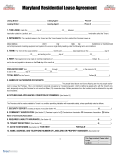 Maryland Assoc. of Realtors Lease Agreement
Download: PDF, MS Word (.docx)
Security Deposit Laws
Maximum Amount: 1 month’s rent (§ 8-203(b)(1)). Landlords can request up to 2 months’ rent only if the tenant qualifies for Department of Human Services utility assistance and utility bills are paid directly to the landlord (§ 8-203(b)(1)).
- Receipt Required? Yes, landlords must include a receipt for the security deposit in the written lease (§ 8-203(c)(1-2)). The receipt must contain specific language outlining the tenant’s rights, including the right to a joint move-in walkthrough (§ 8-203.1). These notice requirements are outlined in full here. Landlords are also required to hold the funds in federally insured, interest-bearing accounts devoted exclusively to security deposits (§ 8-203(d)(1)(i-ii)).
Return Period: The landlord must return the security deposit, plus accrued simple interest for deposits of $50 or more held for at least 6 months, within 45 days after the tenancy terminates (§ 8–203(e)).
- Itemized List Required? Yes, if any portion of the security deposit is withheld, the landlord must send a written list of damages, along with an itemized statement of costs incurred, by first-class mail to the tenant’s last known address within 45 days of the tenancy’s termination (§ 8–203(g)(1)).
Landlord Disclosures
Habitability, Safety and Utility Allocation: The lease must contain a statement that the premises will be delivered in a reasonably safe and habitable condition, along with a clear allocation of both parties’ specific repair obligations and utility payment splits (§ 8-208(c)(1)-(2)).
Landlord / Agent Identity: The landlord must disclose in the lease (or post conspicuously on the property) the written name, physical address, and telephone number of the owner or agent authorized to receive legal notices and lawsuits (§ 8-210).
Lead-Based Paint Disclosure: For residential rentals built before 1978, landlords must disclose any known lead paint hazards and distribute the federal EPA Lead Hazard Pamphlet (PDF), the MDE Lead Poisoning Notice of Tenants’ Rights (PDF), and a physical copy of the property’s current lead inspection certificate (§ 6-820, 6-823; 40 CFR § 745.113).
Move-In / Move-Out Checklist: If a security deposit is collected, the landlord must notify the tenant in writing of their right to a joint physical walkthrough inspection of the property at both the beginning and end of the tenancy (§ 8-203(f)(1); § 8-203.1).
Pets and Eviction Fact Sheet (If Applicable): If a landlord knows a tenant possesses a domestic dog or cat, they must include a physical copy of, or link to, the state’s official guide on sheltering and caring for pets during an eviction process (§ 14-804).
Ratio Utility Billing Systems (RUBS) Disclosure: If a landlord uses an allocation formula to bill tenants for master-metered utilities, they must disclose the mathematical formula used, average monthly bills from the previous calendar year, and the last two actual utility bills (Md. Code, Real Property § 8-212.4).
Security Deposit Escrow Account Location: Within 30 days of receiving a security deposit, the landlord must provide the tenant with written notification disclosing the exact name of the bank and the specific interest-bearing escrow account number where the deposit is being held (§ 8-203(d)(1)).
Security Deposit Receipt: Landlords must provide a written security deposit receipt that includes specific statutory language detailing the tenant’s rights (§ 8-203.1).
Tenant’s Bill of Rights: The latest version of this document must be attached to every residential lease agreement (§8–208(c)(4)).
Sample
Download: PDF, MS Word (.docx)
 Chat with a Lawyer