


 Create Document
 Adobe PDF
 Microsoft Word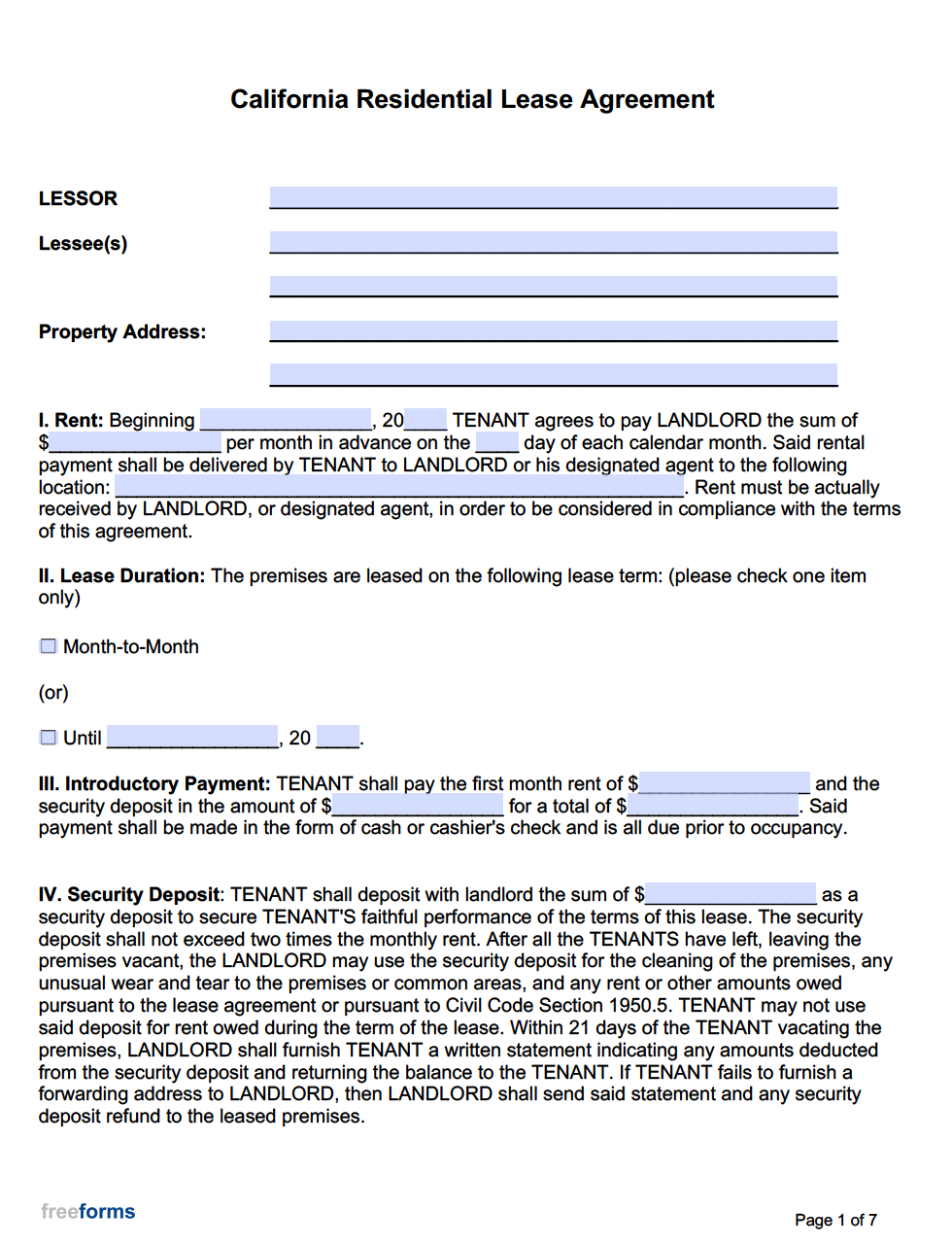
Lease Agreements (7)
|
Download: PDF |
|
Download: PDF, Word (.docx) |
|
Download: PDF, Word (.docx) |
|
Download: PDF, Word (.docx) |
|
Download: PDF, Word (.docx) |
|
Download: PDF, Word (.docx) |
|
Download: PDF, Word (.docx) |
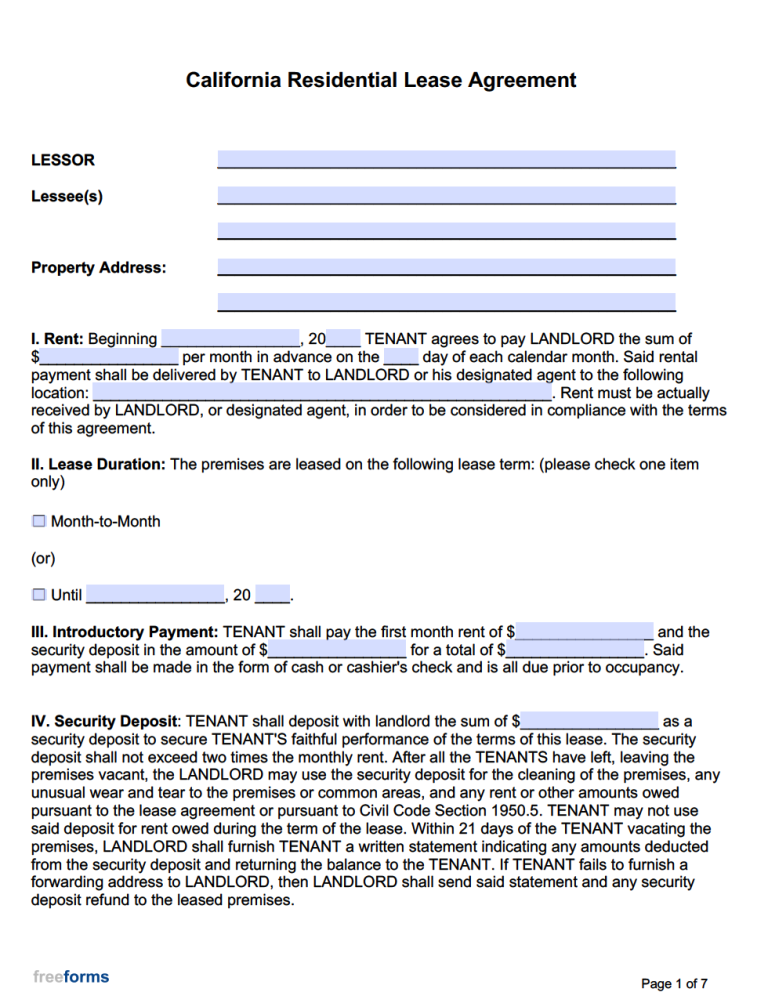
Required Disclosures
1.) Asbestos (§ 25915 – § 25915.5): If a pre-1979 property contains asbestos, landlords must notify all concerned individuals and tenants.
2.) Bed Bug Addendum (§ 1954.603): As of January 1st, 2018, landlords provide a bed bug addendum to tenants concerning the insect, prevention, and how to notify the landlord of a possible infestation.
3.) Contact Details (§ 1962): Landlords identify each individual who is officially acting on their behalf and any relevant rent payment instructions.
4.) Death (§ 1710.2): Landlords inform prospective tenants of deaths on the property within the previous 3 years (excluding HIV deaths).
5.) Demolition (§ 1940.6): Landlords inform prospective tenants of any permit application to demolish the structure before finalizing the lease.
6.) Flood Hazard (§ 8589.45): If the rental property is in a location where there is a high risk of flooding, the landlord must disclose this knowledge within the lease agreement that is provided to the new tenant (as of July 1st, 2018).
7.) Lead-Based Paint (42 U.S. Code § 4852d): The EPA & HUD put forth a federal regulation requiring that all rental properties that were constructed prior to 1978 and contain lead paint come equipped with a leasing agreement explicitly disclosing the potential risks of coming into contact with the noxious substance.
8.) Megan’s Law (§ 2079.10(a)): New tenants must be notified (in writing within the content of the lease agreement) that the California Department of Justice operates a website that shares reports concerning registered sex offenders.
9.) Methamphetamine Contamination (§ 25400.45): Landlords are liable to disclose any information regarding a property that has been exposed to dangerous chemicals used to manufacture the illicit drug methamphetamine (for more info, review the Methamphetamine Contaminated Property Cleanup Act of 2005).
10.) Mold (§ 26147): Landlords aware of harmful mold within the structure notify tenants (and applicants); additionally, tenants must inform landlords.
11.) Pest Control (§ 1940.8): Landlords must supply all new tenants with a notice informing the future occupants of any existing contract between the landlord and a pest control company. The company that maintains the building’s pest control will then notify all parties regarding the application of pesticide/treatment (§ 8538).
12.) Proximity to Former Ordinance (§ 1940.7): Owners/Landlords disclose each residence they lease must disclose all knowledge they have of “any former federal or state ordnance locations in the neighborhood”.
13.) Smoking Policy(§ 1947.5): Prior to the tenancy, the landlord must furnish the rental agreement with a full disclosure outlining the rules and regulations for smoking cigarettes (tobacco) on the property, or stipulating that smoking on the premises is prohibited entirely. (The HCD offers a guide on How Landlords Can Prohibit Smoking in Rental Housing.)
14.) Utilities (§ 1940.9): Landlords specifically detail how utilities are split between common areas and the tenant’s unit.
When is Rent Due?
Grace Period: There is no state-mandated grace period beyond the date provided within the lease agreement (CA Civ Code § 1947).
Unpaid Rent: Landlords issue a 3-day pay-or-quit notice whenever the tenant neglects to pay overdue rent (CA Civ Pro Code § 1161).
Late Fees
NSF Fee
Tenants submitting bounced checks are liable for the resulting penalties that the banks charge the landlord’s account (HCD’s guide).
Tenants are responsible for the check amount as well as specific service fees:
- Under $25 for the first check
- $35 for subsequent checks (CA Civ Code § 1719).
Security Deposit Maximum ($)
California limits landlords to one-month rent security deposits except for “small landlords” who may request two months’ security. (CA Civ Code § 1950.5).
Security Deposit Return
Returning to Tenant: Landlords have twenty-one (21) days to return the security (CA Civ Code § 1950.5(g)).
Itemized List: Landlords deduct from the security and then return the balance with an itemized list of such deductions (CA Civ Code 1950.5).
Landlord’s Right to Enter
Standard Entry: Landlords give tenants twenty-four (24) hours’ notice (in writing) before entering/accessing the rental property, which states:
- Date
- Time (must be a reasonable time during the day)
- Reason for Entry(CA Civ Code § 1954(a)).
Emergency Entry: California gives landlords the right to enter premises for emergencies while forbidding “the right of access” abuse (CA Civ Code § 1954(a)).
Absence
Landlords issue a notice of belief of abandonment to terminate the lease 15 days from the date of service (or 18 days whenever using first-class mail) (CA Civ Code § 1951.3).
Repair and Deduct
- There is no word from the landlord during or after the thirty-day notice period to complete the repair
- They deduct less than one month’s rent to effect the repair
- They do not hire a relative for the work (CA Civ Code § 1942).
Tenant Breaking a Lease (Early):
- Restraining order
- Court Order
- Police Report (CA Civ Code § 1946.7).
 Chat with a Lawyer