


 Create Document

 Adobe PDF
 Microsoft Word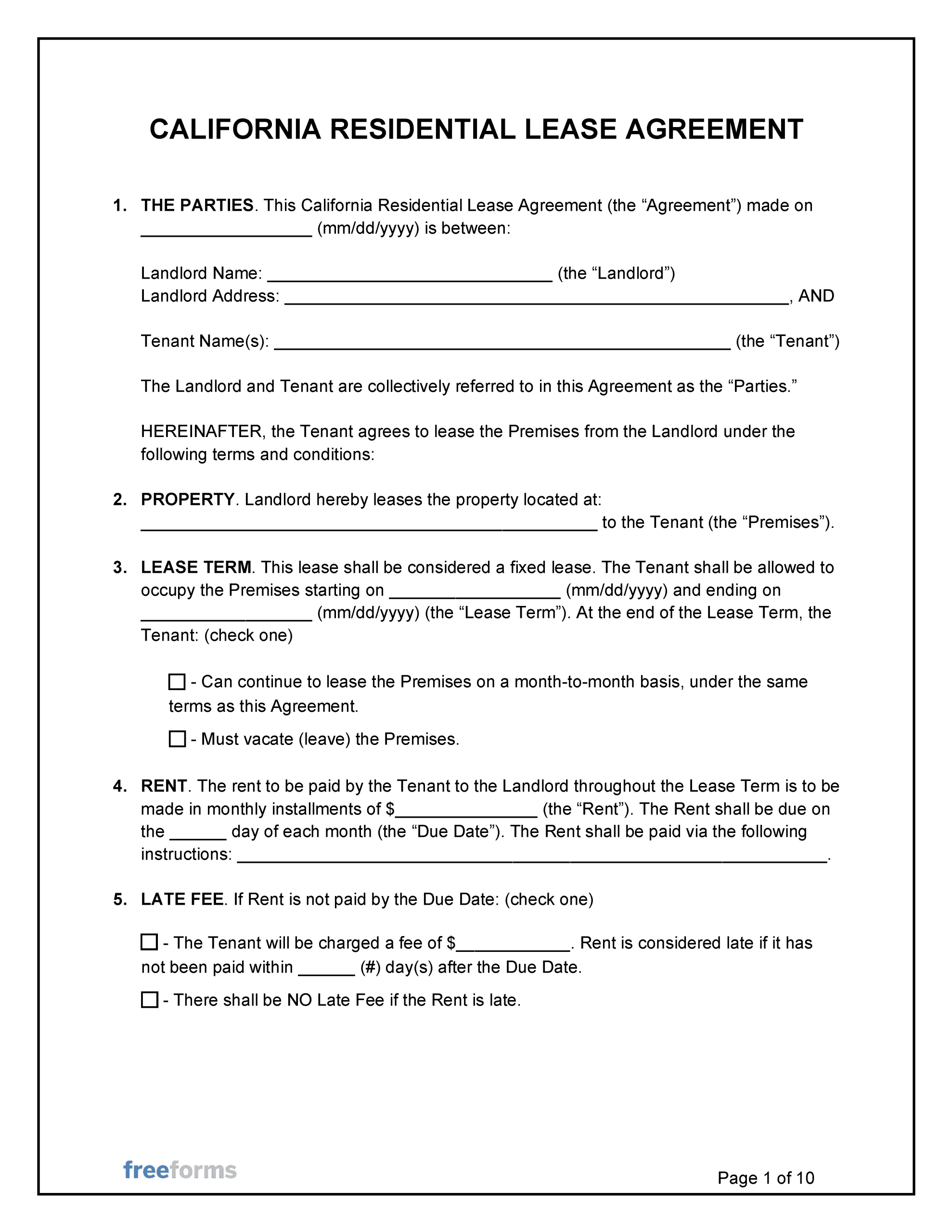
Security Deposit Laws
Maximum Amount: A landlord may collect a security deposit of up to 1 month’s rent (§ 1950.5(c)(1)). Small landlords who own no more than two properties totaling no more than four units may collect up to 2 months’ rent (§ 1950.5(A)).
- Receipt Required? No.
Return Period: The landlord must return the security deposit, minus lawful deductions, within 21 days after the tenant vacates the premises (§ 1950.5(h)(1)).
- Itemized List Required? Yes. If any portion of the deposit is withheld for unpaid rent, cleaning fees, or physical damage beyond normal wear and tear, the landlord must deliver an itemized written statement within the 21-day return window (§ 1950.5(h)(1)).
Landlord Disclosures
Asbestos Hazard Disclosure (if applicable): For any residential properties constructed before 1979, if the landlord has actual knowledge of asbestos in the building, they must provide written notice to tenants detailing known locations, potential health risks, and general precautions (§ 25915).
Bed Bug Information Sheet: The landlord must provide the prospective tenant with specific educational material detailing general information about bed bugs, prevention methods, and reporting procedures (§ 1954.603).
Contact Information of Authorized Entities: At or before the start of a tenancy, the landlord must inform the tenant in writing of the name, phone number, and address of the property manager, and the owner of the premises or person authorized to act on their behalf (§ 1962).
Death on Property Disclosure (if applicable): The landlord must disclose if an occupant has died on the residential property within the last three years, unless the death resulted from HIV/AIDS (§ 1710.2). The landlord is not required to volunteer whether a non-occupant has died on the property within the last three years, but must respond truthfully if asked by a prospective tenant (§ 1710.2(d)).
Demolition Permit Disclosure (if applicable): Landlords who have applied for or obtained an official permit to demolish the unit must disclose this in writing to any prospective tenants before accepting any fee or deposit (§ 1940.6).
Flood Hazard Area Notice: All written residential leases must include special statutory flood information in at least 8-point font (§ 8589.45(a)). This is included in the California standard lease agreement. If the landlord has any actual knowledge of the property being located in a designated special flood hazard area, an area of potential flooding, or the owner holds a flood insurance policy, this must be disclosed in the written lease (§ 8589.45(a)(1)).
Lead-Based Paint Disclosure: For residential structures constructed before January 1, 1978, the landlord must distribute the federal EPA Lead Hazard Pamphlet (PDF) and disclose any known lead-based paint hazards before executing the lease (40 CFR § 745.113).
Methamphetamine Contamination Disclosure (if applicable): If the property has been contaminated by methamphetamine or fentanyl production and has not been properly remediated, the landlord must disclose this in writing and provide a copy of the remediation order to prospective tenants before entering into a lease agreement (§ 25400.28, § 25400.25).
Military Ordnance Location Notice (if applicable): If the property is located within one mile of a former military base known to contain explosive munitions, the landlord must disclose this in writing before lease execution (§ 1940.7).
Pest Control Services Disclosure (if applicable): Landlords who contract a pest control company must provide a written copy of the company’s notice detailing the frequency of treatment, any pesticides used, and associated health risks (§ 8538; § 1940.8).
Proposition 65 Hazard Warning (if applicable): Landlords of properties with known exposure to carcinogens or toxic chemicals above state safety threshold levels must provide a clear warning notice to any prospective tenants (§ 25249.6; § 25607.34).
Registered Sex Offender’s Registry (Megan’s Law) Notice: All California residential leases must include specific language informing the tenant about the Department of Justice’s sex offender registry available on their public website (§ 2079.10a). This notice is included in the California Standard Lease Agreement.
Rent Control and Just Cause Prevention Notice (AB 1482): The written lease must include specific statutory language specifying whether the unit is subject to the statewide rent cap and just cause eviction rules, or claiming an exemption (§ 1947.12, §1946.2).
Shared Utility Billing Allocation Notice (if applicable): If the tenant’s gas or electric service also serves other units or common areas, the landlord must disclose this and detail in writing how the costs are allocated before the lease is signed (§ 1940.9).
Smoking Policy Disclosure (if applicable): If the landlord restricts smoking tobacco on the property, the written lease must explicitly state where smoking is prohibited (§ 1947.5).
Toxic Mold Disclosure (if applicable): Any landlord who is aware, or has reason to be aware, of mold that poses a health risk or exceeds permissible exposure limits must provide a written disclosure to any prospective tenants before entering into a lease agreement (§ 26147).
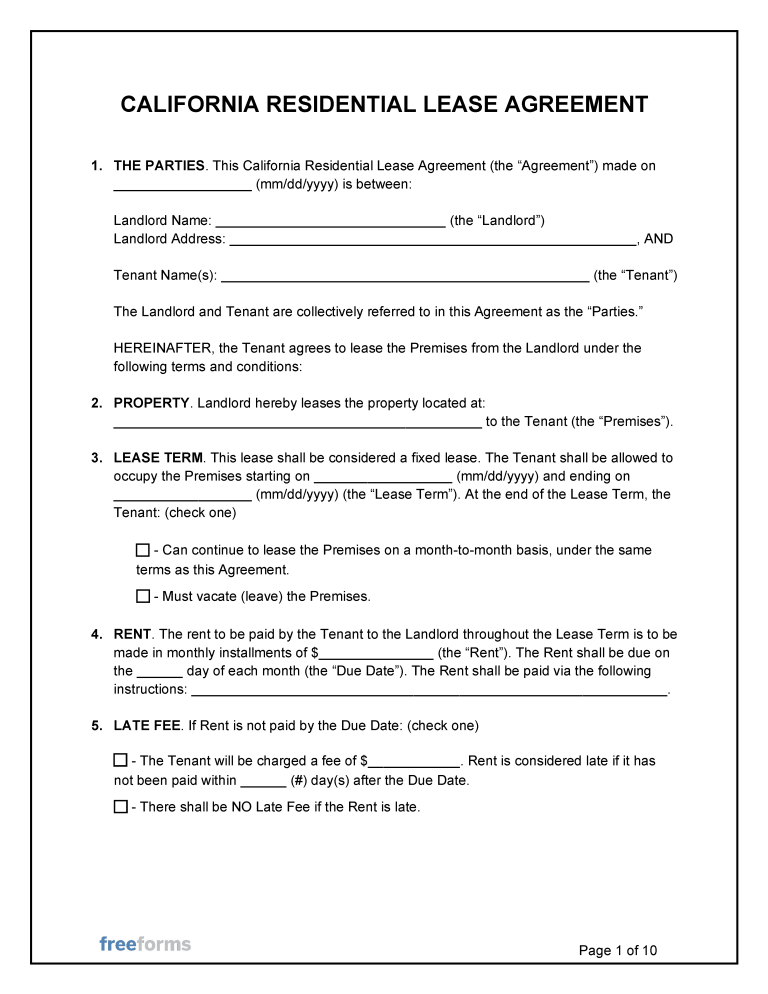
Sample
Download: PDF, MS Word (.docx)
 Chat with a Lawyer