


 Create Document


 Adobe PDF
 Microsoft Word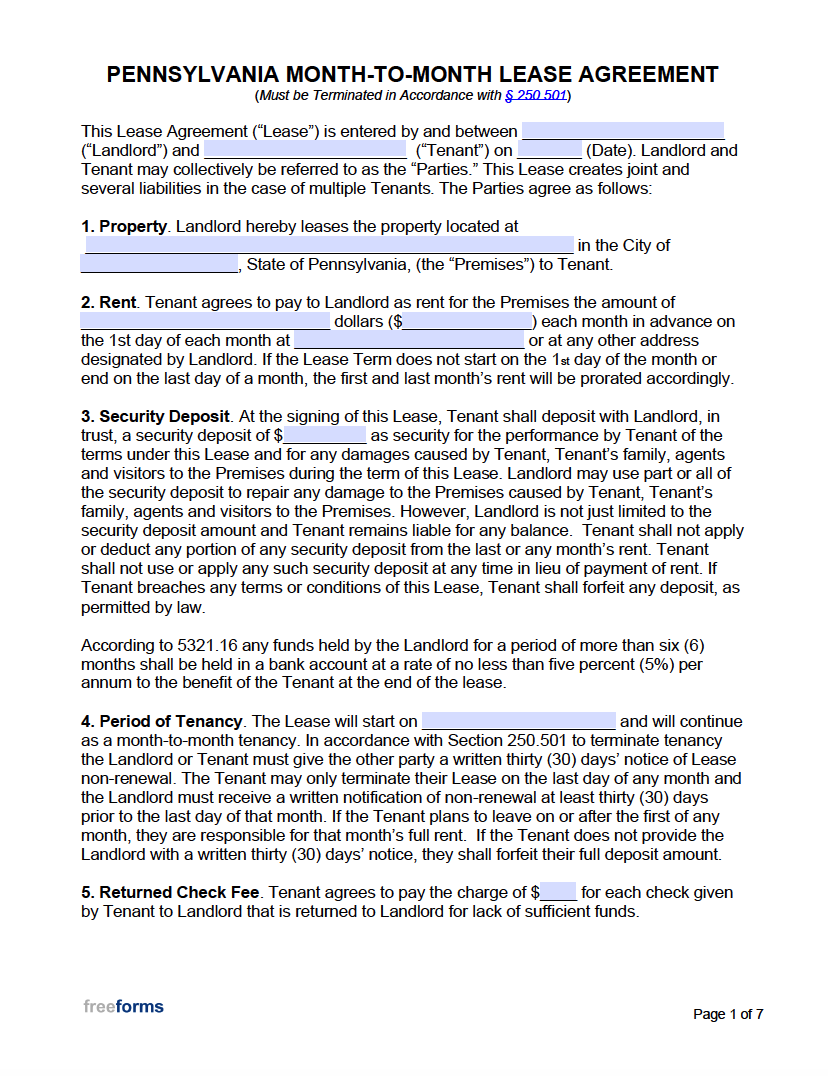
State Laws
Minimum Termination: Unless the lease terms specify otherwise, common law requires tenants to provide 30 days’ notice to end a month-to-month lease (Hollis v. Burns (1882); Mercer Cty. Arg. Soc. v. Barnhardt (1983)). Landlords may terminate a tenancy for any reason with 15 days’ notice (§ 250.501(b)), though both parties can negotiate a longer minimum notice period in the lease. The only statutory exceptions to the 15-day rule are:
- Nonpayment of Rent: Landlords need only provide 10 days’ notice to terminate the lease (§ 250.501(b)).
- The Waiver Exception: Pennsylvania law permits the tenant and landlord to agree to a shorter notice period, or to waive the notice requirement entirely, if it is explicitly written into the lease (§ 250.501(e)). If the lease contains a waiver of notice, the landlord is not legally required to provide advance warning before filing for eviction.
Increasing Rent: Pennsylvania has no caps on rent increases, and state law does not specify a notice period. Unless a specific timeline for rent increases is written into the agreement, landlords can effectively raise the rent by giving standard termination notice—15 days by default, or the timeframe specified in the lease—and offering a new contract at a higher rate (§ 250.501(b)).
Sample
Download: PDF, MS Word (.docx)
 Chat with a Lawyer