


 Create Document

 Adobe PDF
 Microsoft Word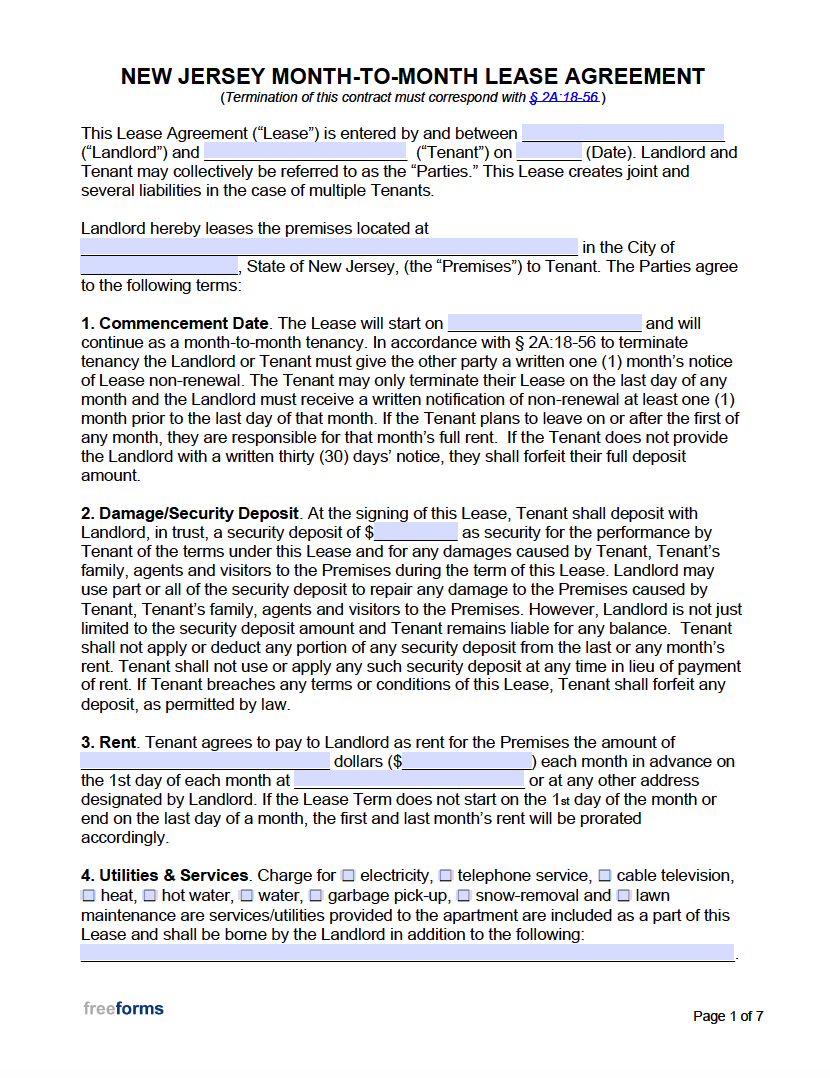
State Laws
Minimum Termination: A tenant may terminate a month-to-month lease tenancy at any time by providing one full month’s written notice to the landlord (N.J.S.A. 2A:18-56(b)). Under the New Jersey Anti-Eviction Act, landlords cannot terminate the lease without “good cause,” such as non-payment of rent, destruction of property, or permanently retiring the building from residential use (N.J.S.A. 2A:18-61.1). The required notice period varies based on the specific cause of termination.
- Owner-Occupied Building Exception: The Anti-Eviction Act does not apply to owner-occupied properties with two or fewer rental units. For these specific properties, landlords can terminate a month-to-month lease by providing the tenant with one month’s written notice (N.J.S.A. 2A:18-61.1(1)).
Increasing Rent: New Jersey has no specific cap on rent increases, but prohibits increases that are “unconscionable” (N.J.S.A. 2A:18-61.1(f)). To raise the rent, the landlord must serve a formal “Notice to Quit and Notice of Rent Increase” at least one full month before the higher rent takes effect (N.J.S.A. 2A:18-56(b)). If the tenant refuses to pay the increase because they consider it legally “unconscionable,” the landlord can take them to eviction court, where a judge will determine if the increase was fair and reasonable (Fromet Properties, Inc. v. Buel (1996); N.J.S.A. 2A:18-61.1(f)).
- Local Rent-Stabilization Laws: New Jersey allows municipalities to enact and enforce their own rent-stabilization ordinances. Currently, over 100 cities and townships in New Jersey have active rent control boards that typically cap rent increases to a specific percentage and govern how frequently rent can be raised.
- New-Construction Exception: Under New Jersey’s New Constructed Multiple Dwellings law, all newly built rental units are exempt from local rent control ordinances for 30 years following their completion (N.J.S.A. 2A:42-84.2).
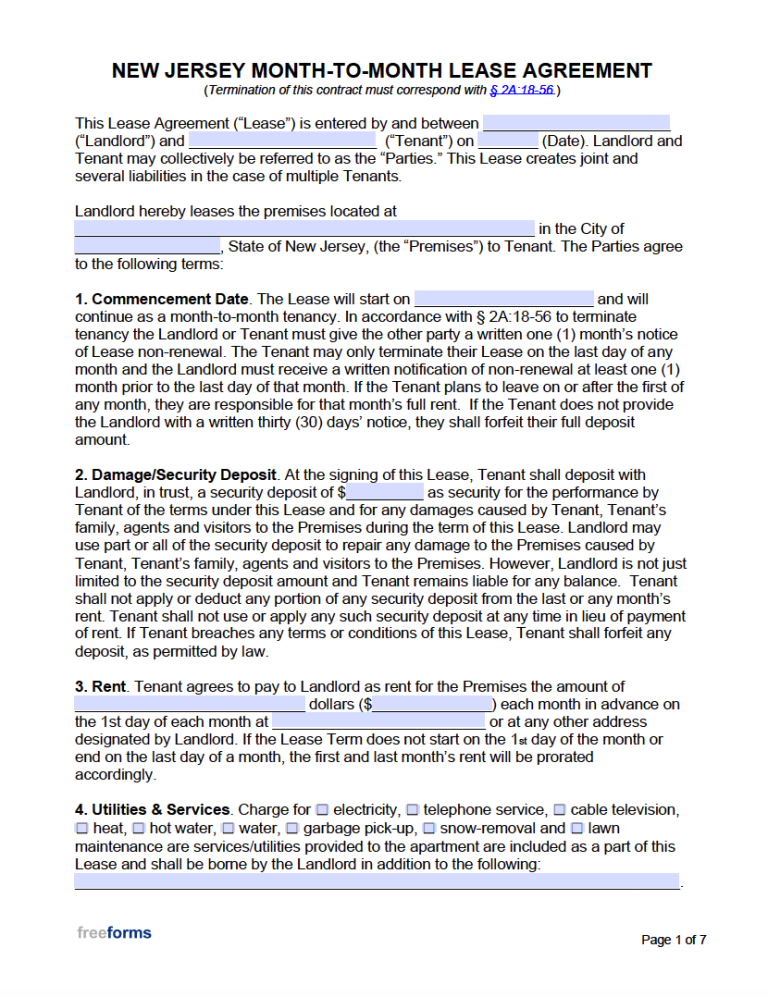
Sample
Download: PDF, MS Word (.docx)
 Chat with a Lawyer