


 Create Document

 Adobe PDF
 Microsoft Word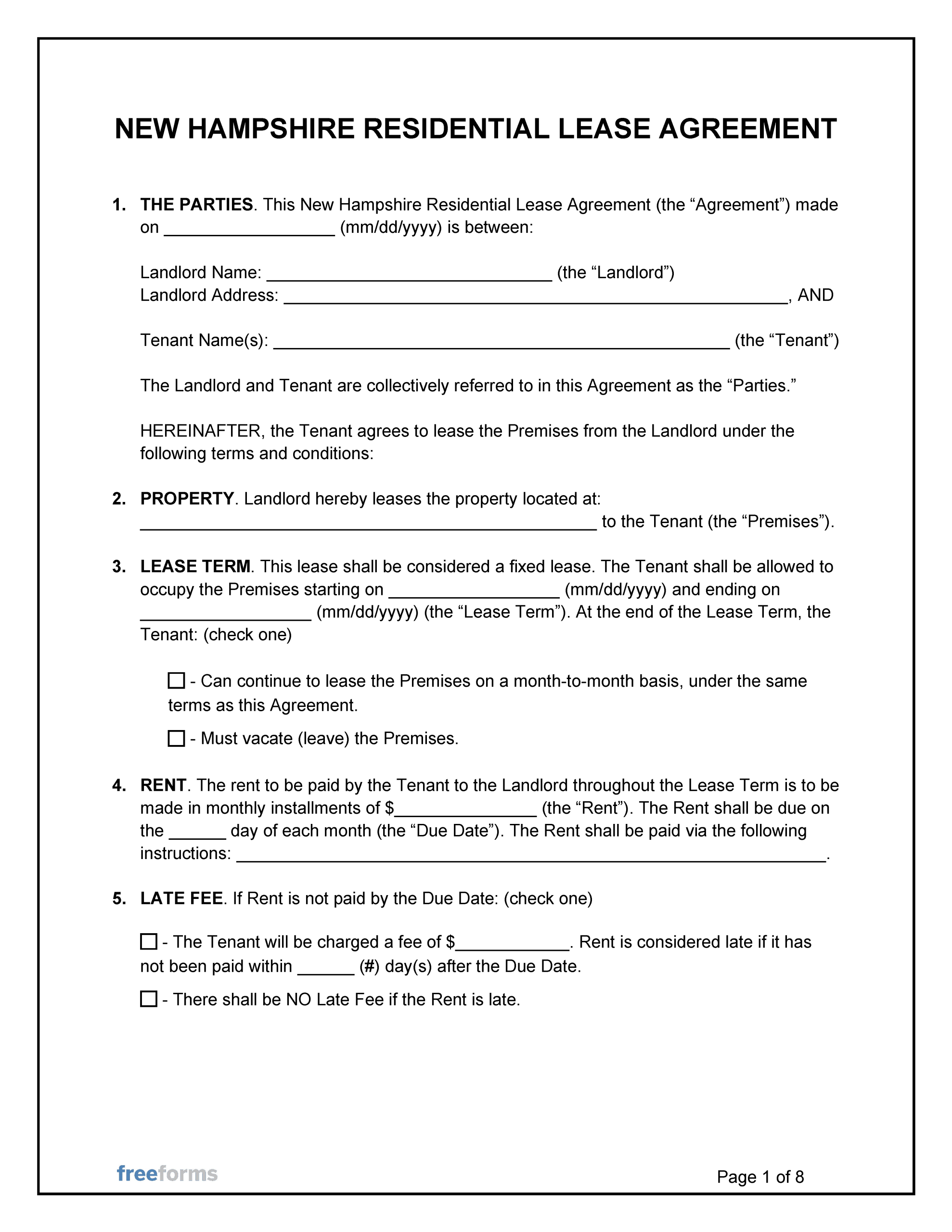
Security Deposit Laws
Maximum Amount: One month’s rent or $100, whichever is greater (§ 540-A:6, I(a)).
- Receipt Required? Yes. Upon receiving a security deposit, the landlord must deliver a signed receipt stating the amount and specifying the financial institution where the deposit or bond will be held (§ 540-A:6, I(b)). While a signed receipt is exempt if paid by personal or bank check, written disclosure of the bank location and the mandatory 5-day condition notice remains in (§ 540-A:6, I(c)).
Return Period: The landlord must return the security deposit plus accrued interest (for deposits held for 1 year or longer) within 30 days after the termination of the tenancy and delivery of possession (§ 540-A:7, I; § 540-A:6, IV(a)).
- Itemized List Required? Yes. If withholding funds for unpaid rent, taxes, or actual property damage beyond normal wear, the landlord must provide an itemized written statement accompanied by satisfactory evidence of repair costs (e.g., invoices or estimates) within the 30-day window (§ 540-A:7, I-II).
Landlord Disclosures
Application Fee Disclosure: Prior to collecting an application or renewal fee, the landlord must clearly disclose in writing the exact fee amount and background or credit check requirements (§ 540-A:3, VIII).
Condition and Repair Notice (already included in the lease template): Upon receipt of a deposit or at the commencement of the lease, the landlord must provide a written notice informing the tenant that they have 5 days from occupancy to submit a written list of pre-existing unit defects or needed repairs (§ 540-A:6, I(c)). This notice is already included in the New Hampshire Standard Lease Agreement Template.
Lead-Based Paint Disclosure: For residential structures constructed before January 1, 1978, landlords must distribute the federal EPA Lead Hazard Pamphlet and disclose any known lead-based paint hazards before lease execution (40 CFR § 745.113).
Security Deposit Receipt and Bank Escrow Notice: The landlord must disclose in writing the name and physical location of the New Hampshire financial institution where the security deposit or surety bond is held (§ 540-A:6, I(b)-(c)).
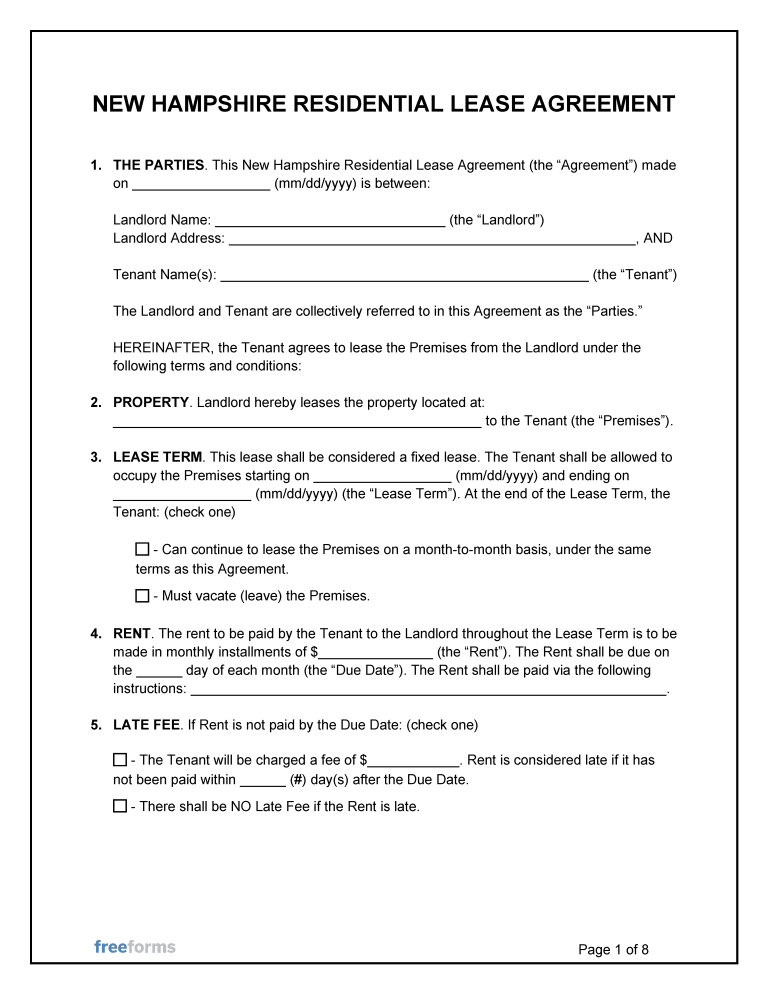
Sample
Download: PDF, MS Word (.docx)
 Chat with a Lawyer