Free Vermont Firearm (Gun) Bill of Sale Form | PDF | Word

Vermont Firearm (Gun) Bill of Sale Form

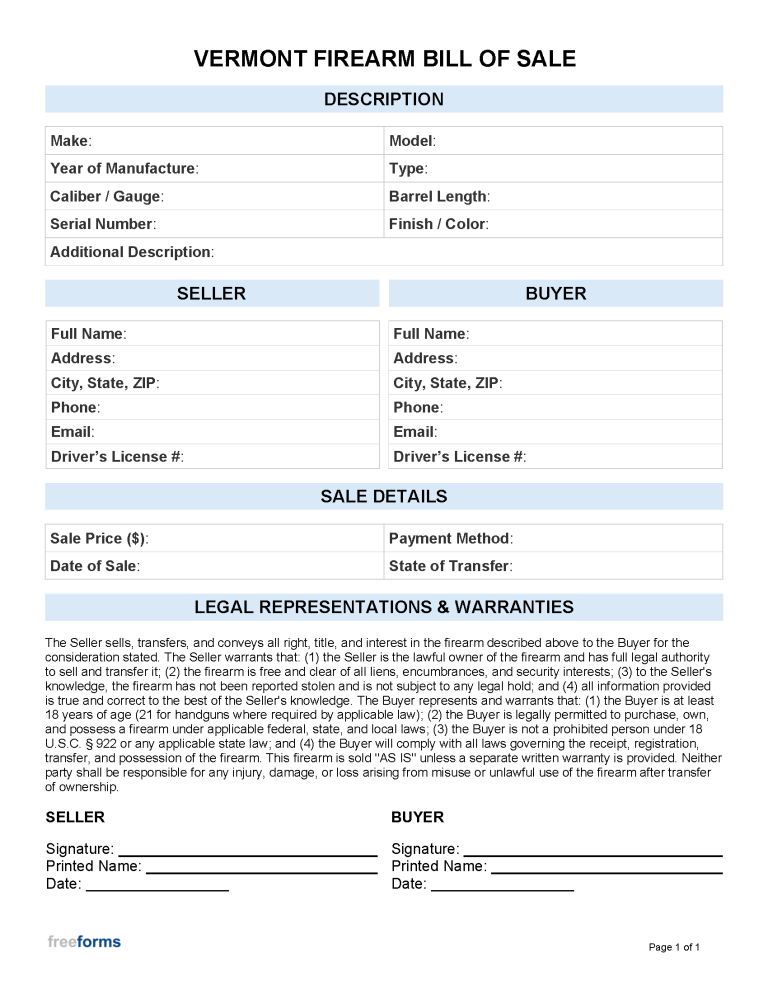
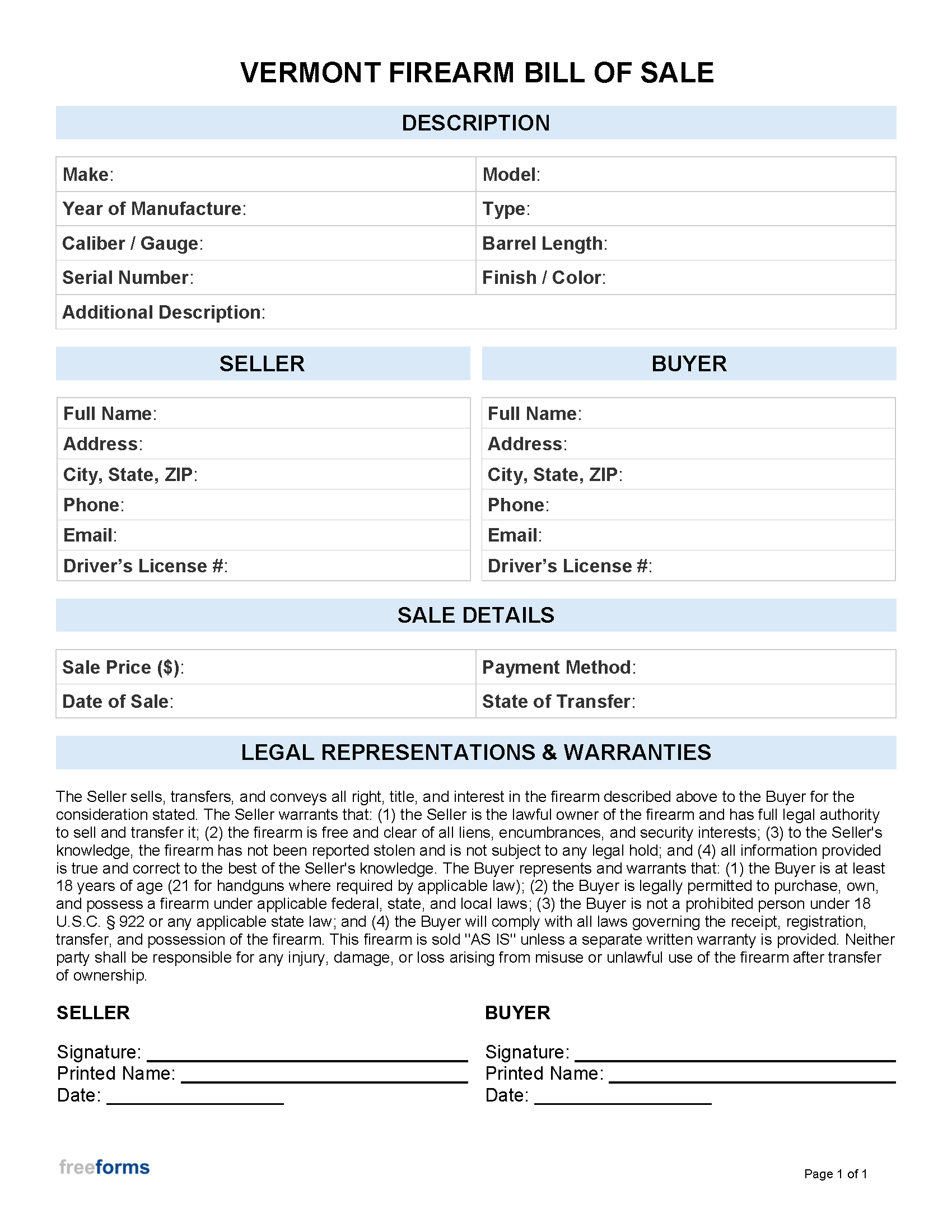
A Vermont firearm bill of sale records the key details behind a firearm transfer, including the parties involved, the firearm itself, and the agreed purchase price. Beyond just documenting the sale, it can also serve as useful proof that the buyer took ownership on a specific date. Private sales in Vermont generally must go through a licensed dealer.

Start here!
Create Document

Last updated April 28th, 2026

A Vermont firearm bill of sale records the key details behind a firearm transfer, including the parties involved, the firearm itself, and the agreed purchase price. Beyond just documenting the sale, it can also serve as useful proof that the buyer took ownership on a specific date. Private sales in Vermont generally must go through a licensed dealer.

  1. Home »
  2. Bill of Sale »
  3. Vermont »
  4. Firearm

How to Register a Gun

Vermont maintains a lenient approach to its regulatory laws surrounding the documentation of firearms and its carrying policy. There are no governing statutes involving the registration of guns for those residing in the state of Vermont. In addition, there is also no rule stating that you must have a permit to purchase a firearm. However, background checks are mandated for those buying both new and used long guns and handguns and can be carried out through a federally approved dealer. To lawfully purchase a firearm, you must be age 21 or over or, for those aged 18-20, have completed an accredited hunter safety program.

Although there is no need to register a firearm, there are compulsory restrictions on magazine quantity (per 13 V.S.A. § 4021), enforcing the illegality of magazines containing more than ten rounds for a long gun or 15 for any handgun. Vermont does not require gun owners to obtain a concealed or open carry permit to carry a firearm as long as they are lawfully entitled to use a gun in-state and are a citizen or legal alien of the US.

Prohibited from Purchasing

  • If renounced U.S. citizenship.
  • If convicted of a felony.
  • If subject to a qualifying court order involving harassment, stalking, or threats against an intimate partner or child.
  • If a fugitive from justice.
  • If unlawfully using or addicted to controlled substances.
  • If illegally in the country or admitted under a non-immigrant visa.
  • If dishonorably discharged from the U.S. Armed Forces.
  • If convicted of a misdemeanor offense of domestic violence.
  • If under the legal age.
  • If adjudicated as mentally defective or committed to a mental institution.

Source: 18 U.S.C. § 922(g)

Sample

Download: PDFWord (.docx)

Comments