


 Create Document
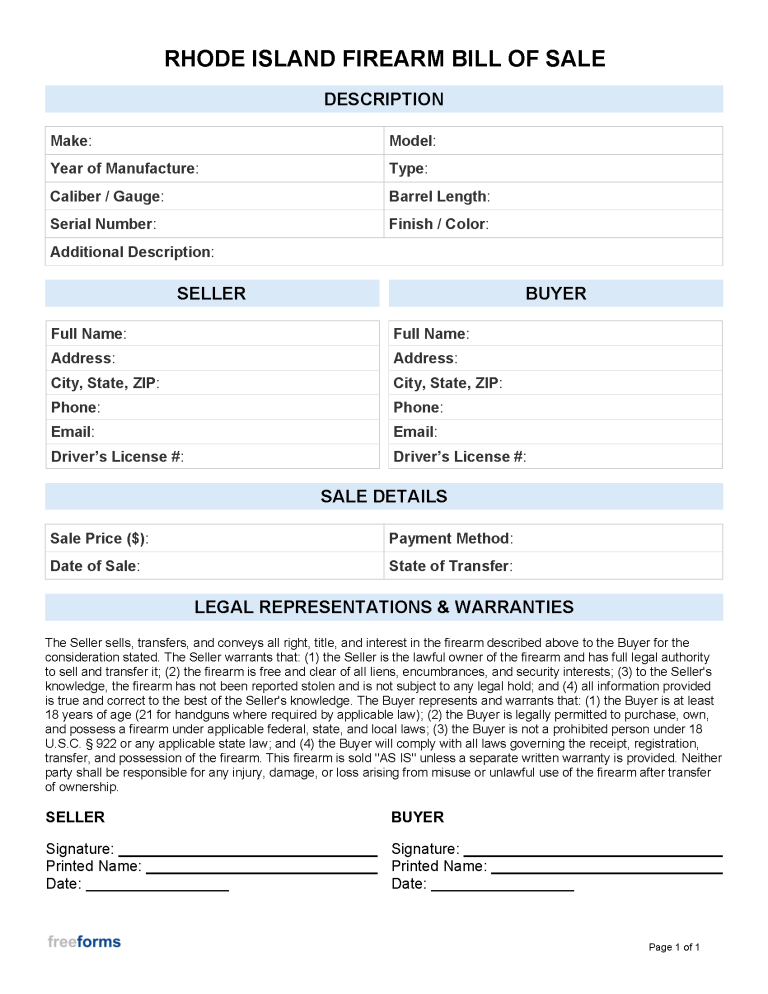

 Adobe PDF
 Microsoft Word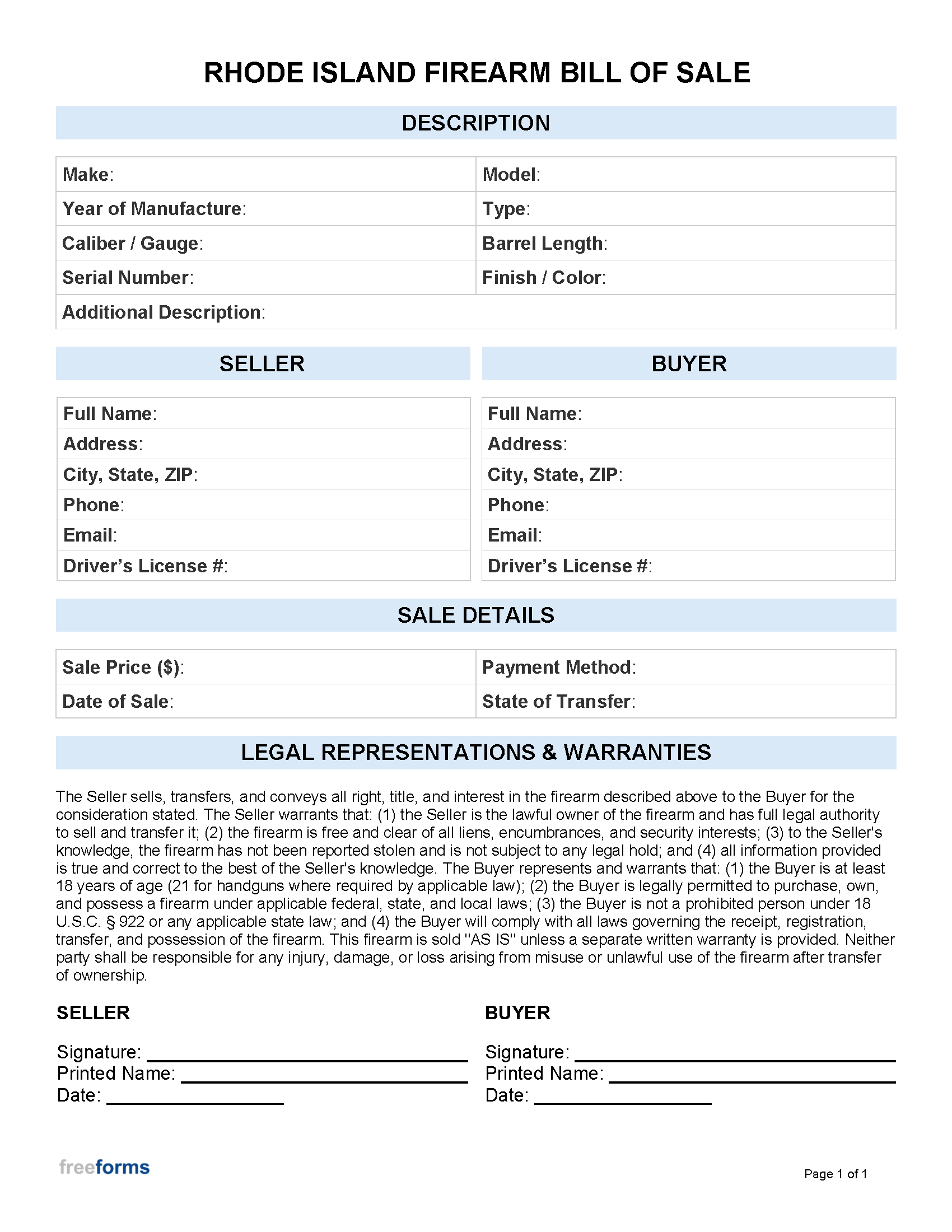
Rhode Island Firearm Laws
- Background Check Required?
- Private Sale: Yes, Rhode Island generally requires a background check for private firearm transfers.
- Licensed Dealer: Yes, federally licensed dealers must conduct a background check before completing the transfer.
- Waiting Period: 7 days.
- Registration Requirement: None.
- Permit Required (to purchase): Yes, a purchaser of a handgun generally must complete the state’s safety test and application process.
- Concealed Carry Permit: Yes, a license or permit is generally required to carry a concealed pistol or revolver.
- Magazine Capacity Limits: Yes, Rhode Island restricts large-capacity feeding devices.
- Assault Weapons Limits: No statewide assault weapons ban is currently in effect.
Source: R.I. Gen. Laws §§ 11-47-35, 11-47-11, 11-47.1, 11-47.2, 18 U.S.C. § 922(t)
Prohibited from Purchasing
- Convicted felons.
- Anyone convicted of a misdemeanor offense of domestic violence.
- Fugitives from justice.
- Unlawful users of, or persons addicted to, controlled substances.
- Anyone adjudicated as a mental defective or committed to a mental institution.
- Anyone dishonorably discharged from the U.S. Armed Forces.
- Anyone subject to a qualifying restraining order involving an intimate partner or child.
- Minors.
- Aliens unlawfully present in the United States or admitted under a non-immigrant visa.
- Anyone who has renounced U.S. citizenship.
 Chat with a Lawyer