


 Create Document
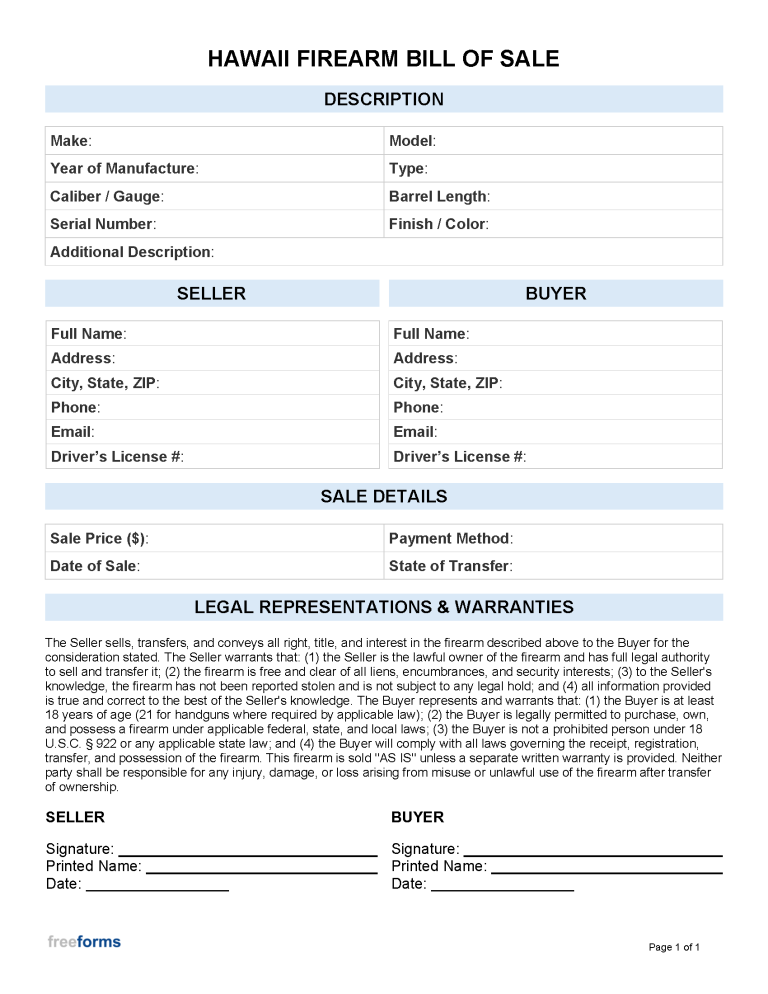

 Adobe PDF
 Microsoft Word
Hawaii Firearm Laws
- Background Check Required?
- Private Sale: Yes, Hawaii generally requires a permit to acquire a firearm, which includes a background check process.
- Licensed Dealer: Yes, federally licensed dealers must conduct a background check before completing the transfer.
- Waiting Period: Yes, a permit to acquire is generally subject to a waiting period before issuance.
- Registration Requirement: Yes, firearms must generally be registered with the county police chief after acquisition or arrival in the state.
- Permit Required (to purchase): Yes, a permit to acquire is generally required before purchasing or otherwise acquiring a firearm.
- Concealed Carry Permit: Yes, a license is normally required to carry a pistol or revolver concealed.
- Magazine Capacity Limits: Yes, Hawaii restricts magazines over 10 rounds that can be used with a pistol.
- Assault Weapons Limits: Yes, Hawaii restricts assault pistols under state law.
Source: HRS §§ 134-2, 134-3, 134-9, 134-8, 18 U.S.C. § 922(t)
Prohibited from Purchasing
- If convicted of a felony.
- If subject to a qualifying court order involving harassment, stalking, or threats against an intimate partner or child.
- If dishonorably discharged from the U.S. Armed Forces.
- If unlawfully using or addicted to controlled substances.
- If illegally in the country or admitted under a non-immigrant visa.
- If convicted of a misdemeanor offense of domestic violence.
- If under the legal age.
- If a fugitive from justice.
- If renounced U.S. citizenship.
- If adjudicated as mentally defective or committed to a mental institution.
 Chat with a Lawyer