


 Create Document

 Adobe PDF
 Microsoft Word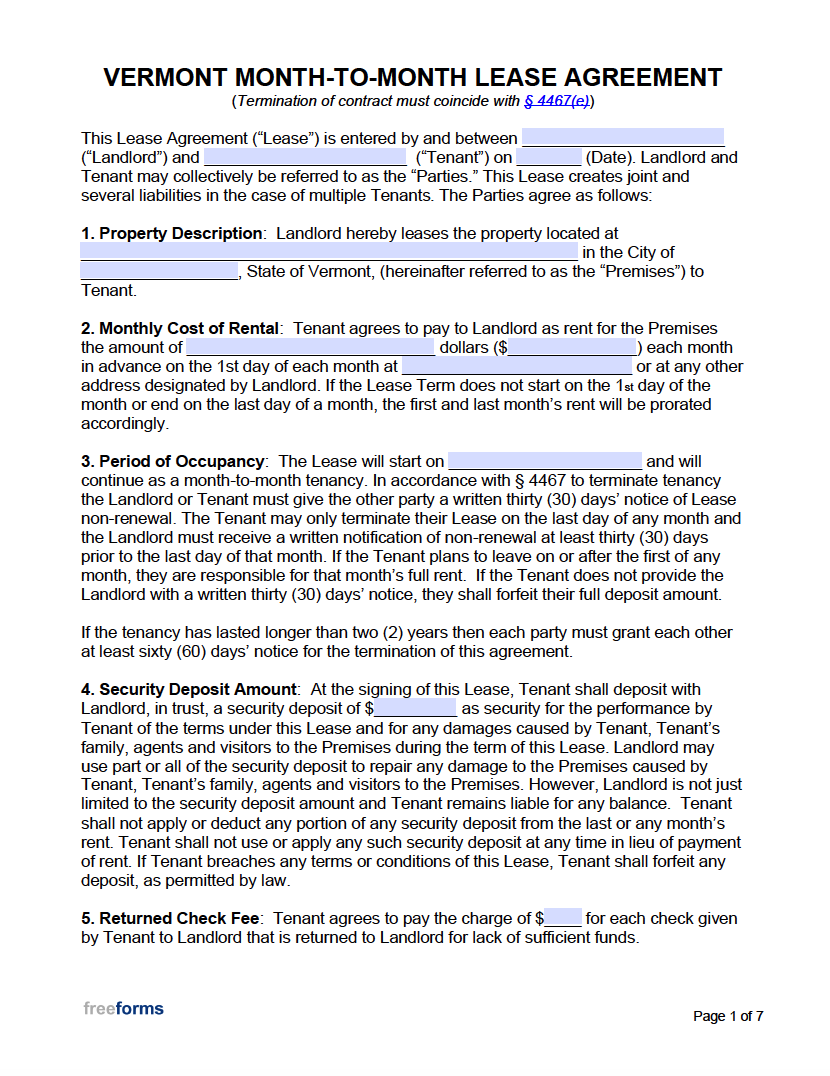
State Laws
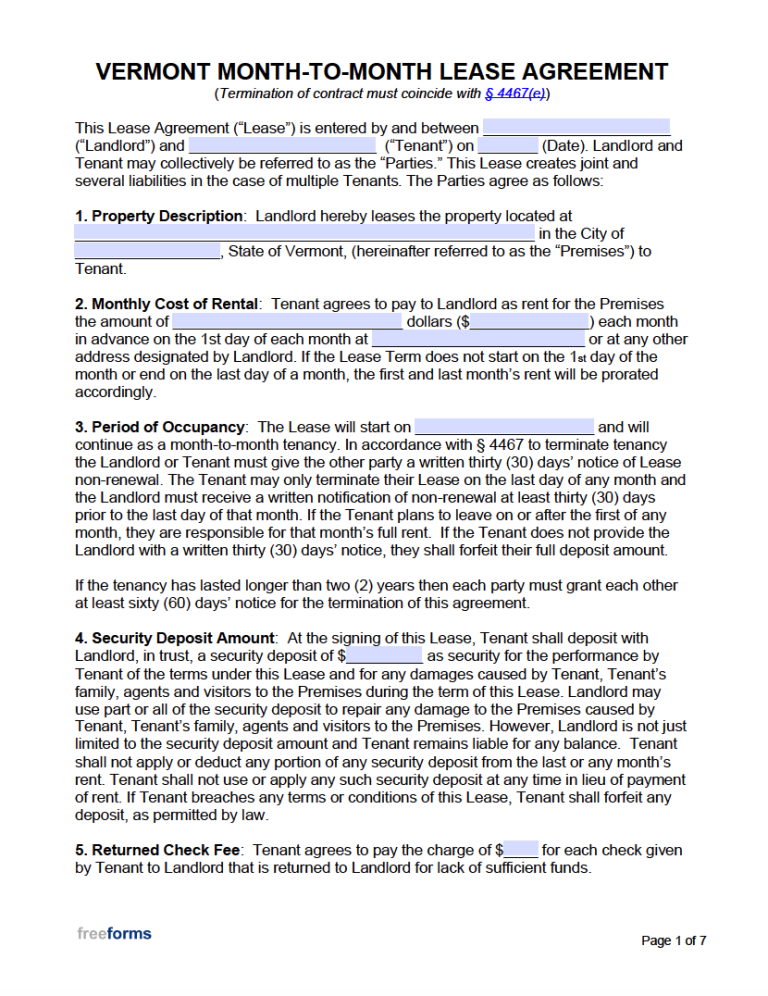
Minimum Termination: Tenants may terminate a month-to-month lease with one month’s notice, or with the timeline specified in a written lease (Maniatty v. Carroll Co. (1945)). A landlord’s required notice for a no-fault termination depends on the lease format and how long the tenant has occupied the unit:
- Written lease: 30 days’ written notice for tenancies under two years; 60 days’ notice for tenancies over two years (§ 4467(e)).
- No written lease: 60 days’ written notice for tenancies under two years; 90 days’ written notice for tenancies over two years (§ 4467(c)(1)).
Increasing Rent: Vermont has no rent control laws. Landlords must provide at least 60 days’ notice before a rent increase can legally take effect (§ 4455(b)). Additional rules apply for the following property types:
- Age-Restricted Housing: Landlords must contact The DHCD Housing Division to request a specific 60-day rent increase notice form. This state-prepared document will detail the increased rent amount, the percentage increase, and a copy of the resident’s rights. It must be submitted to both the affected tenants and the state (§ 4468a).
- Mobile Home Parks: Landlords must submit additional forms that outline the breakdown of capital improvement surcharges and detail residents’ statutory right to mediation if the increase exceeds a specified percentage (§ 6251). These forms and further compliance information are available on Vermont’s ACCD Mobile Park Owners Page.
Sample
Download: PDF, MS Word (.docx)
 Chat with a Lawyer