


 Create Document

 Adobe PDF
 Microsoft Word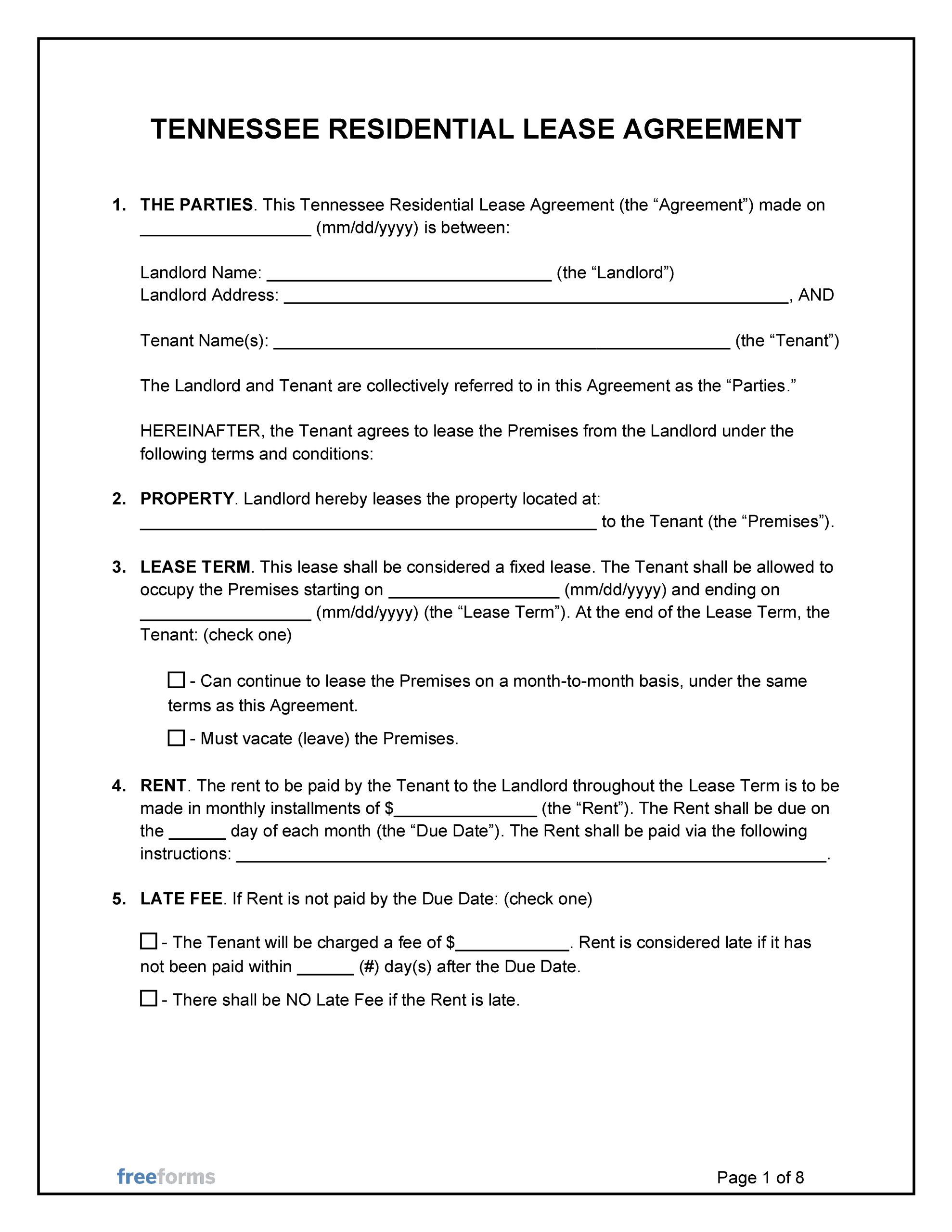
Security Deposit Laws
Maximum Amount: Tennessee state law does not cap security deposit amounts. Landlords may collect any amount agreed upon in the lease.
- Receipt Required? No, Tennessee state law does not require a landlord to issue a written security deposit receipt.
Return Period: The landlord must send written notification of the refund amount to the tenant’s last known address within 30 days of vacating (§ 66-28-301(f)). If the tenant does not claim or respond to the notice within 60 days of sending, the landlord may retain the deposit (§ 66-28-301(f)).
- Itemized List Required? Yes. Landlords must inspect the unit and compile an itemized list of damages and estimated repair costs (§ 66-28-301(b)). Tenants have the right to request a joint mutual move-out inspection (§ 66-28-301(b)(1)(A)).
Landlord Disclosures
Lead-Based Paint Disclosure: For residential structures constructed before January 1, 1978, landlords must distribute the federal EPA Lead Hazard Pamphlet and disclose any known lead-based paint hazards before lease execution (40 CFR § 745.113).
Owner and Agent Contact Information: At or before the commencement of tenancy, the landlord must disclose in writing the name, address, and telephone number (or maintenance email/portal) of the property manager, as well as the owner or authorized agent designated for receiving notices and service of process (§ 66-28-302).
Right of Access for Showings: If a landlord intends to enter the rental unit during the final 30 days of tenancy to show the premises to prospective renters, this explicit right of access must be written into the lease agreement (§ 66-28-403(e)(5)). A Right of Access clause is included in the Tennessee Standard Lease Agreement Template.
Security Deposit Account Location Disclosure (if applicable): If the unit is in a jurisdiction subject to the Uniform Residential Landlord and Tenant Act (all counties with a population over 75,000), the landlord must inform the tenant of the financial institution where the security deposit is held (§ 66-28-301(a)).
Tenant Personal Property Insurance Advisory: Landlords are required to advise tenants in writing that the landlord’s property insurance policy does not cover, nor provide coverage for, the tenant’s personal property (§ 66-28-201(a)).
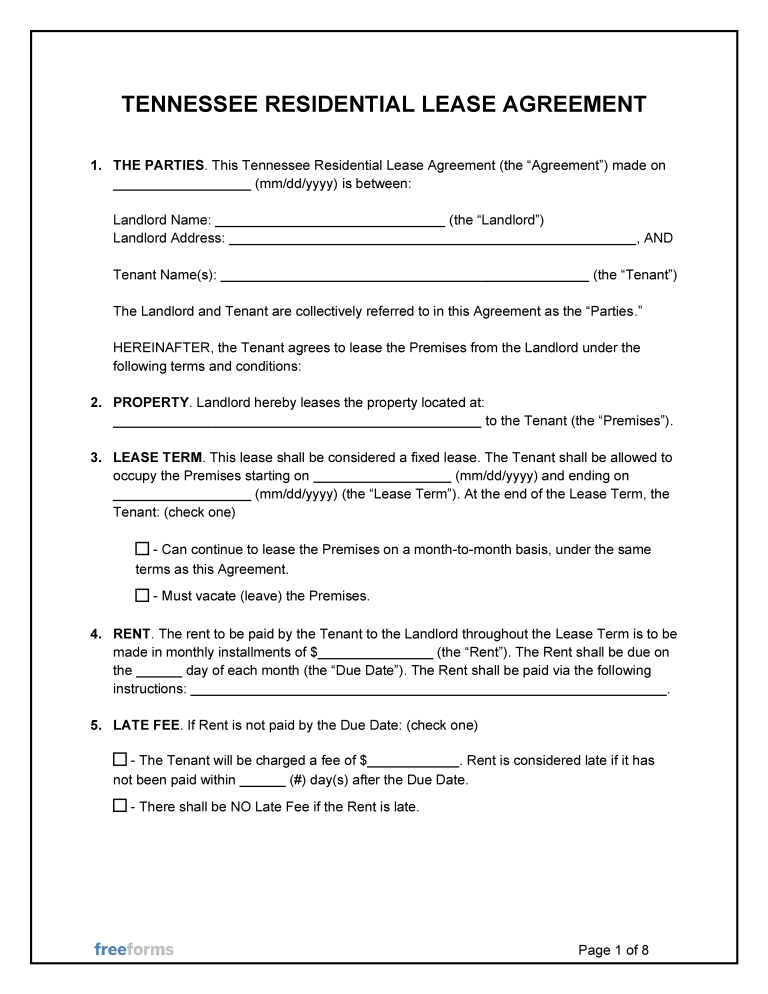
Sample
Download: PDF, MS Word (.docx)
 Chat with a Lawyer