


 Create Document

 Adobe PDF
 Microsoft Word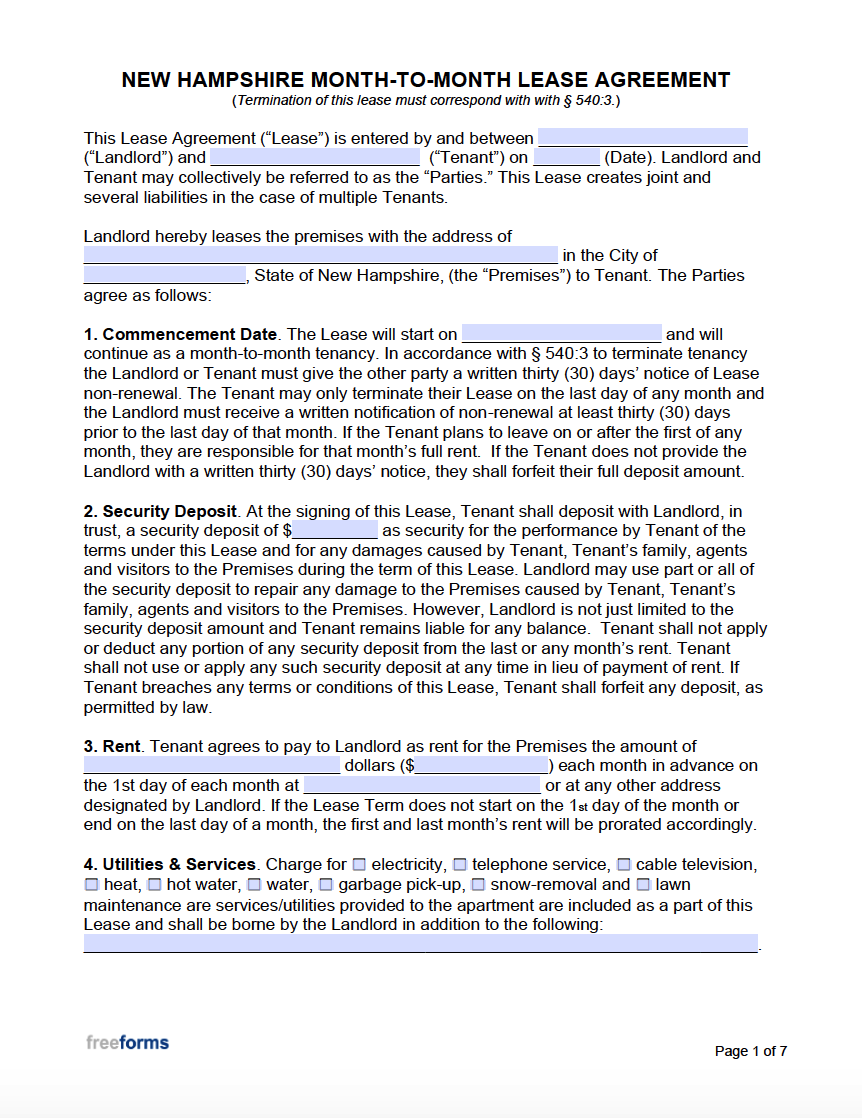
State Laws
Minimum Termination: Tenants may terminate a month-to-month tenancy by providing the landlord with 30 days’ written notice (RSA 540:11(II)). If the termination date in the notice does not coincide with the rent due date, the tenant must pay rent for the entire month in which the notice expires, unless the lease states otherwise (RSA 540:11(II)).
A landlord’s ability to terminate the lease depends on the property type:
- Nonrestricted Properties (e.g., single-family homes where the owner owns three or fewer, or owner-occupied buildings with four or fewer units): Landlords can terminate the lease without specifying the cause by providing 30 days’ written notice (RSA 540:2(I); RSA 540:3(II)).
- Restricted Properties (e.g., standard apartment buildings): Landlords cannot terminate a lease without “good cause,” such as nonpayment, property damage, or legitimate business/economic reasons. The required notice period varies depending on the specific cause cited (RSA 540:2(II)).
Increasing Rent: There are no statewide or local caps on rent increases in New Hampshire. Landlords must provide at least 30 days’ written notice before the higher rent goes into effect. If a tenant refuses to agree to the rent increase after receiving a 30-day notice, state law considers this “good cause” for the landlord to terminate the tenancy (RSA 540:2(IV)).
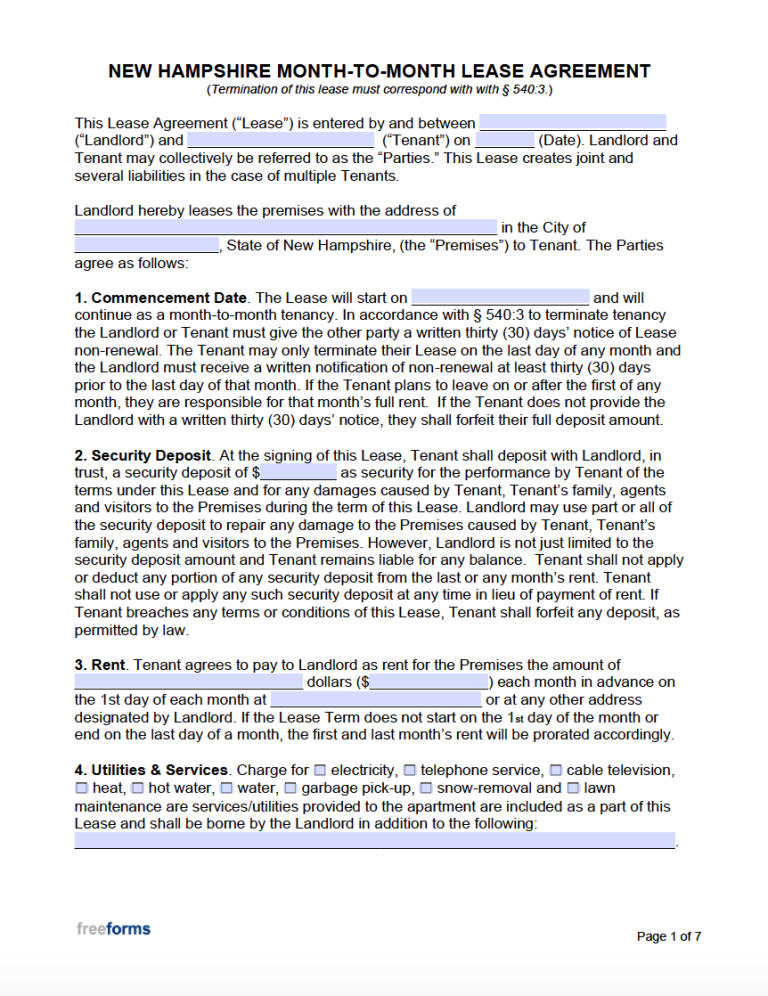
Sample
Download: PDF, MS Word (.docx)
 Chat with a Lawyer