


 Create Document

 Adobe PDF
 Microsoft Word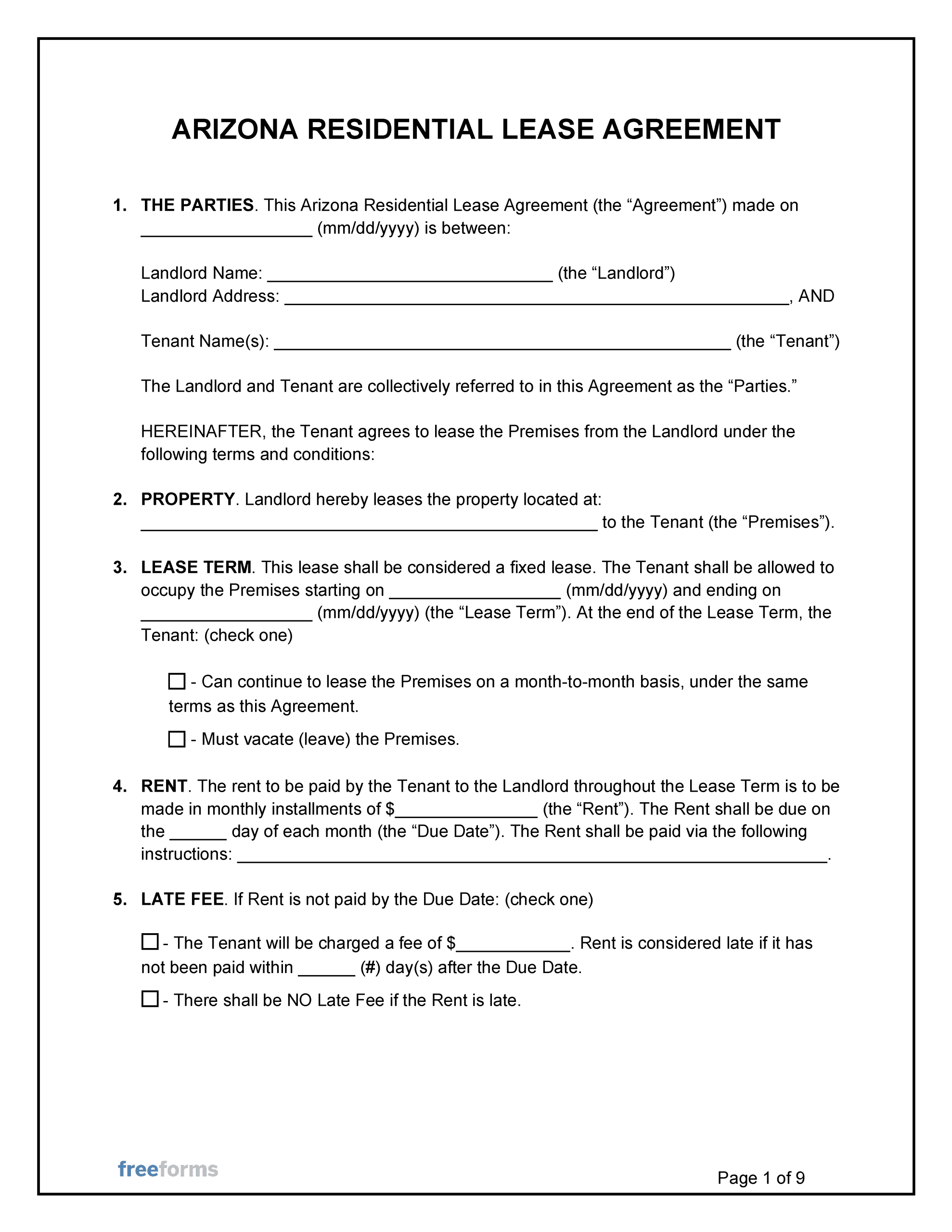
Security Deposit Laws
Maximum Amount: 1.5 months’ rent. A tenant may voluntarily pay a larger deposit, but a landlord cannot legally demand it (A.R.S. § 33-1321(A)).
- Receipt Required? No, Arizona law does not require landlords to submit a formal receipt for security deposits.
Return Period: Within 14 days after the tenancy has terminated, the tenant has moved out of the unit, and has demanded a refund of the security deposit. Saturdays, Sundays, and legal holidays are not included in this 14-day countdown (A.R.S. § 33-1321(D)).
- Itemized List Required? Yes, if the landlord wishes to withhold any part of the deposit for damages or unpaid rent, they must mail the tenant an itemized list of all deductions along with any remaining balance via first-class mail to the tenant’s last known address (A.R.S. § 33-1321(D)).
Landlord Disclosures
Bedbug Educational Materials: Landlords must provide educational materials on bedbug prevention (A.R.S. § 33-1319(A)(1)). Landlords are prohibited from entering into a lease agreement for a dwelling with a known, active bedbug infestation (A.R.S. § 33-1319(A)(2)).
Foreclosure Notice (if applicable): If the property is actively undergoing foreclosure, the owner must disclose this in the lease agreement (A.R.S. § 33-1331(A)). Landlords are exempt from this disclosure for properties containing four or more units, such as large apartment complexes (A.R.S. § 33-1331(D)).
Landlord and Tenant Act Availability: Landlords must inform tenants in writing that a free copy of the Arizona Residential Landlord and Tenant Act is available online through the Arizona Department of Housing’s website (A.R.S. § 33-1322(B)).
Lead-Based Paint Disclosure: For residential units built prior to January 1, 1978, the landlord must disclose the presence of known lead-based hazards and provide an EPA-approved informational pamphlet (40 CFR § 745.113).
Move-In Checklist: On the move-in date, the landlord must give the tenant a form listing any existing property damage and written notice that the tenant has the right to be present during the final move-out inspection.
Name and Address of Authorized Entities: The landlords must disclose the name and address of the property manager and the owner, or the person authorized to act on the owner’s behalf (A.R.S. § 33-1322(A-B).
Nonrefundable Fees: The purpose of all nonrefundable fees or deposits must be stated in the lease agreement. Any fee not designated as nonrefundable in this manner is refundable (A.R.S. § 33-1321(B).
Shared Utility Metering Allocation (if applicable): If a landlord uses submetering or an allocation system (e.g., as ratio utility billing) to split utility bills among tenants, the exact distribution formula and any additional administrative fees must be detailed in the rental agreement (A.R.S. § 33-1314.01(G)).
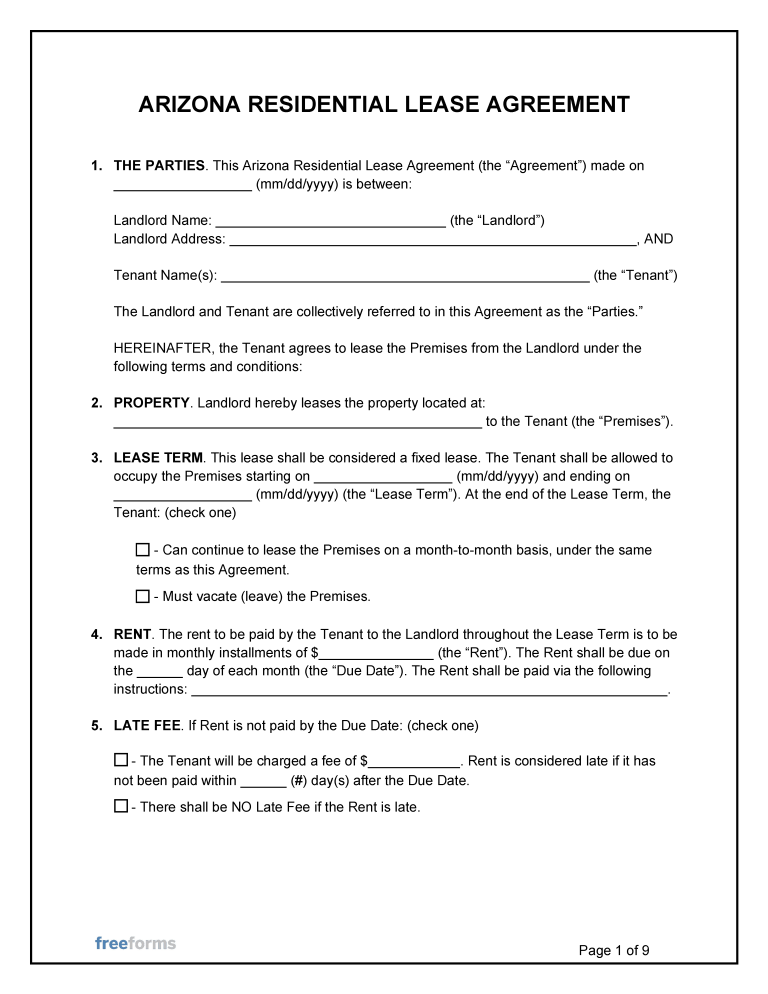
Sample
Download: PDF, MS Word (.docx)
 Chat with a Lawyer