


 Create Document

 Adobe PDF
 Microsoft Word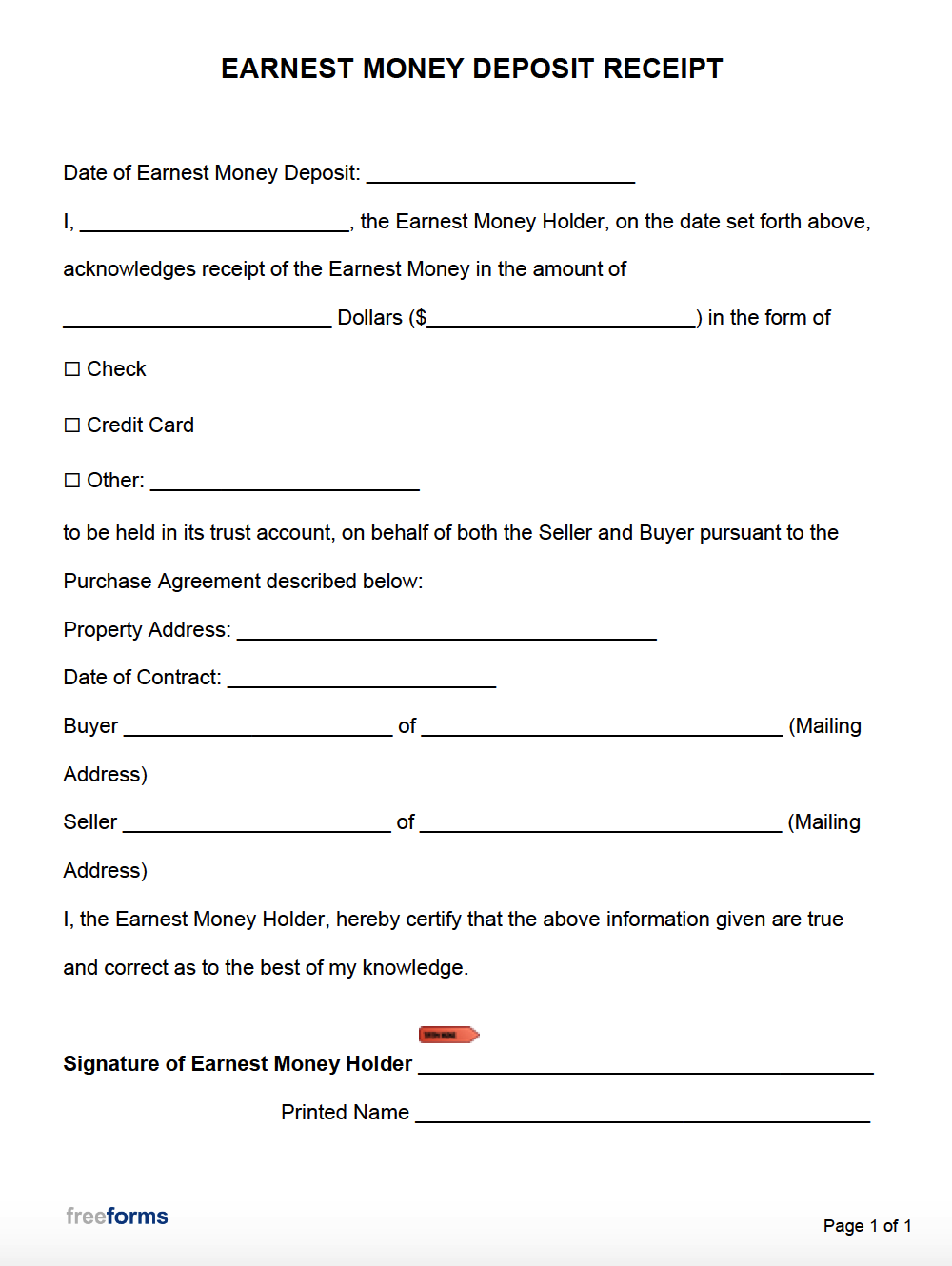
How it Works (3 steps)
1. Buyer Makes an Offer
The buyer makes an offer on the property that includes the purchase price, earnest money amount, and any conditional language needed to close on the property.
2. Seller Accepts the Offer
The seller either makes a counter-offer or accepts the terms of the purchase agreement. This usually demands that the buyer make the earnest money deposit within 3-5 days of acceptance.
3. Buyer Pays the Earnest Money
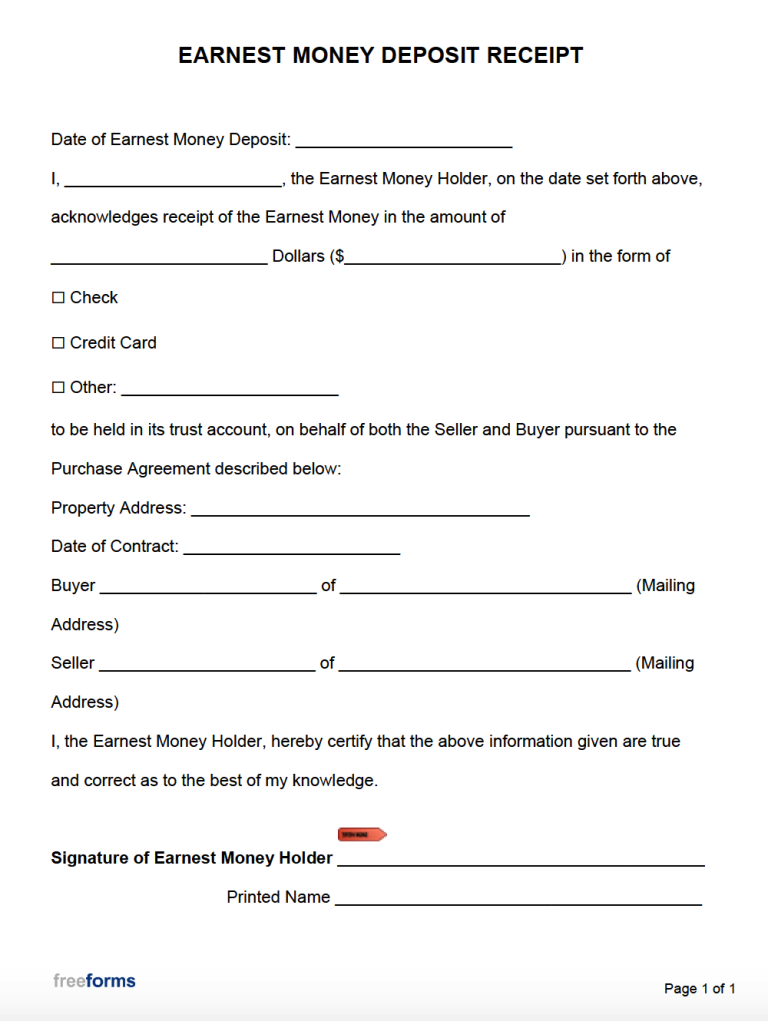
The buyer will usually make a bank wire to the seller (or their real estate agent) equal to the earnest money amount. Once the funds have been confirmed, the earnest monery deposit receipt will be signed by the receiver and given to the buyer.
 Chat with a Lawyer